Horticulture and Product Physiology Group, Wageningen University and Research, Wageningen, The Netherlands.
Centre for Crop System Analysis, Wageningen University and Research, Wageningen, The Netherlands.
PLoS One. 2020 May 29;15(5):e0233210. doi: 10.1371/journal.pone.0233210. eCollection 2020.
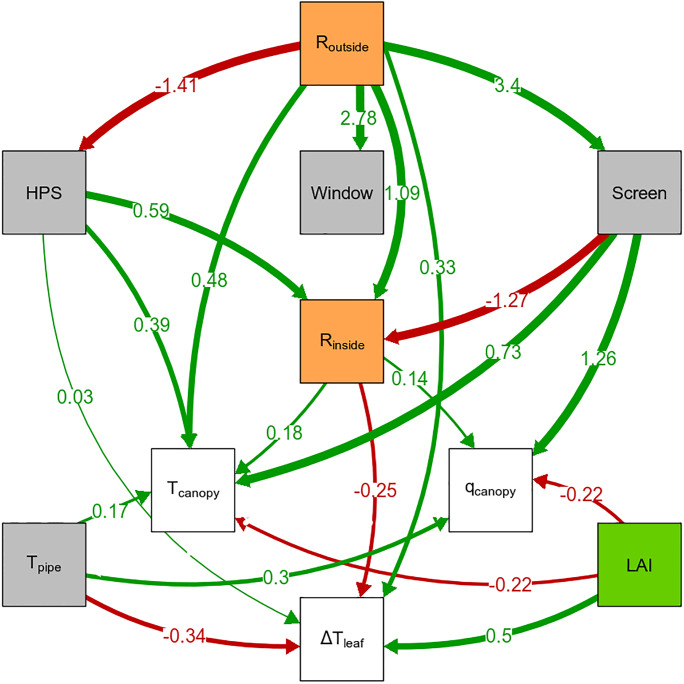
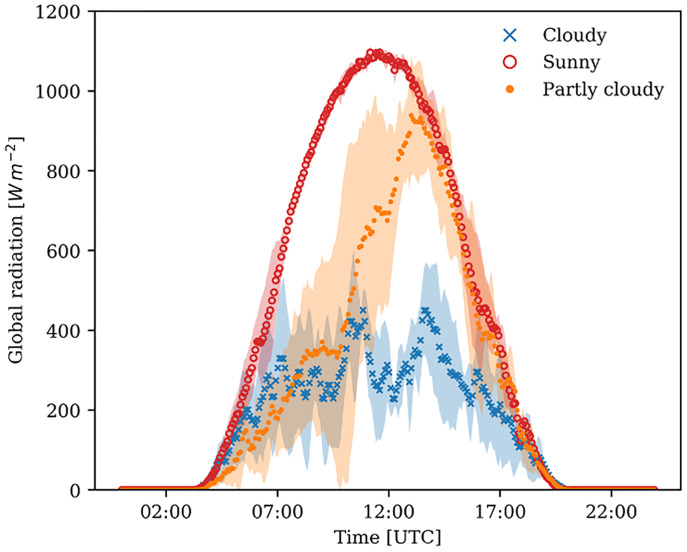
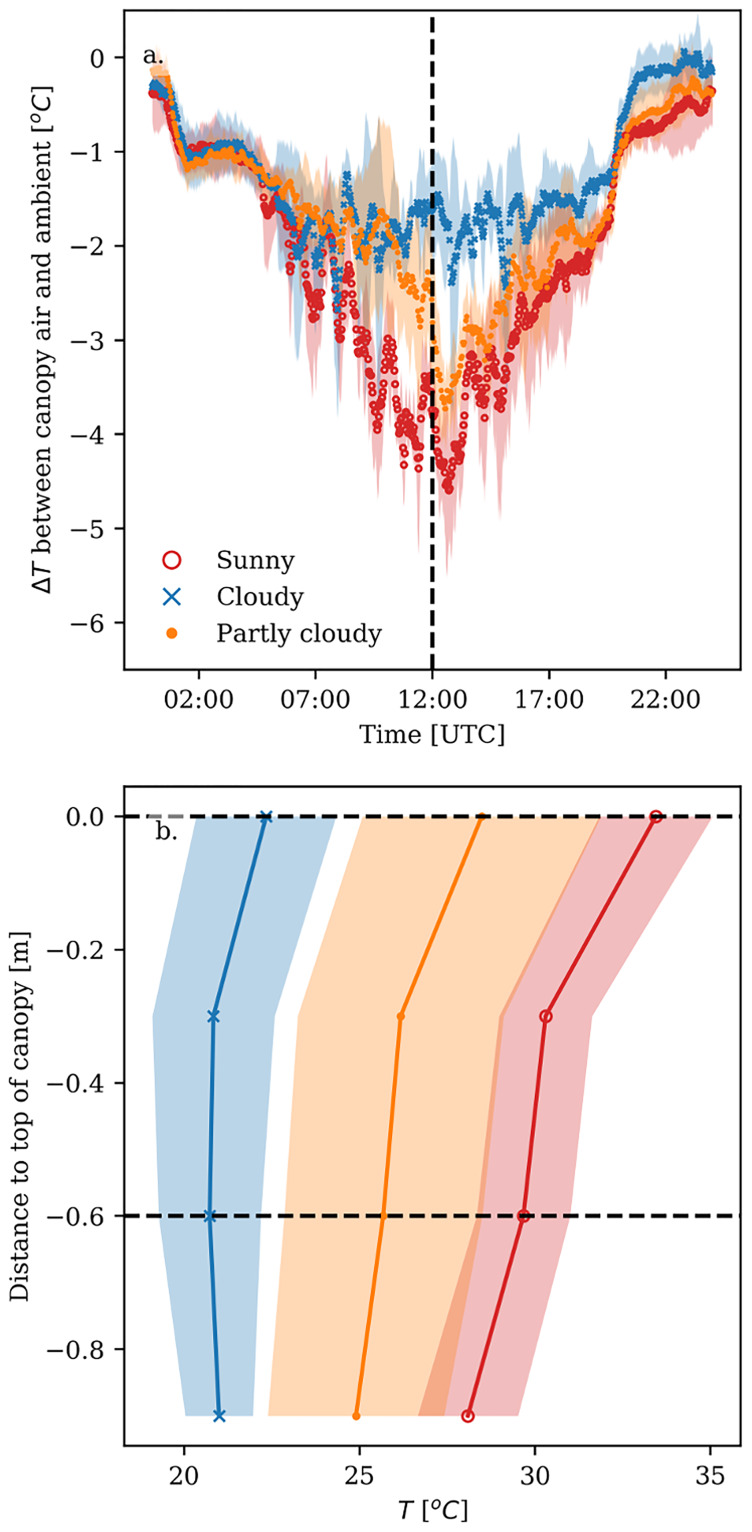
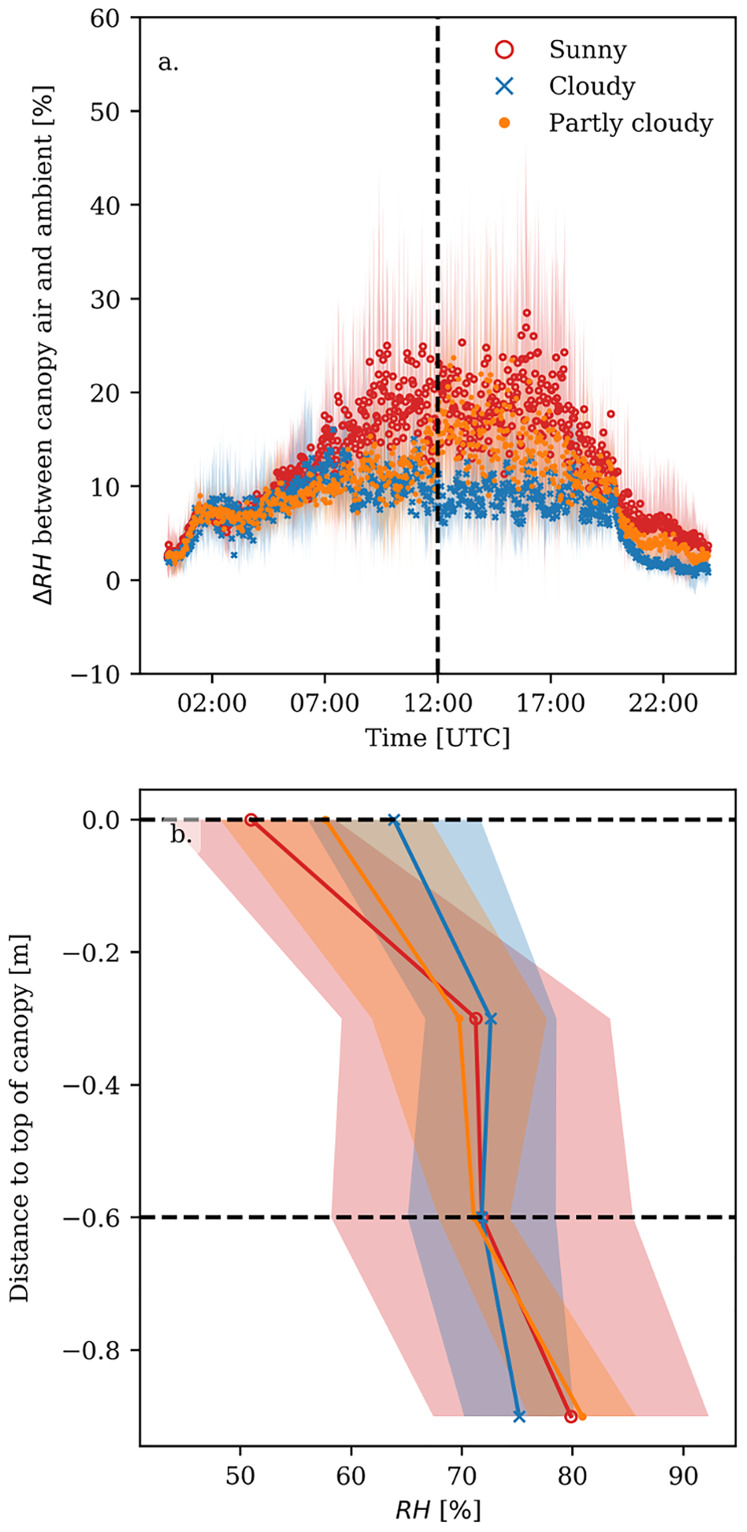
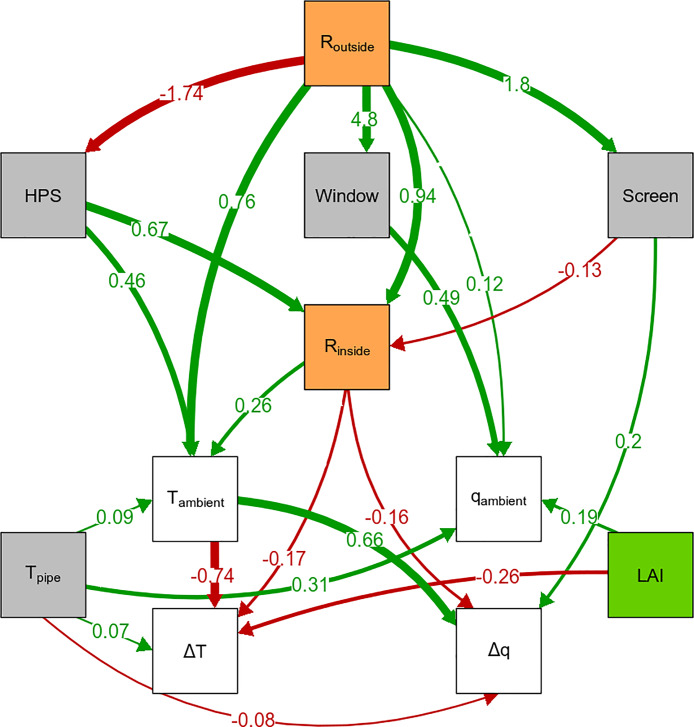
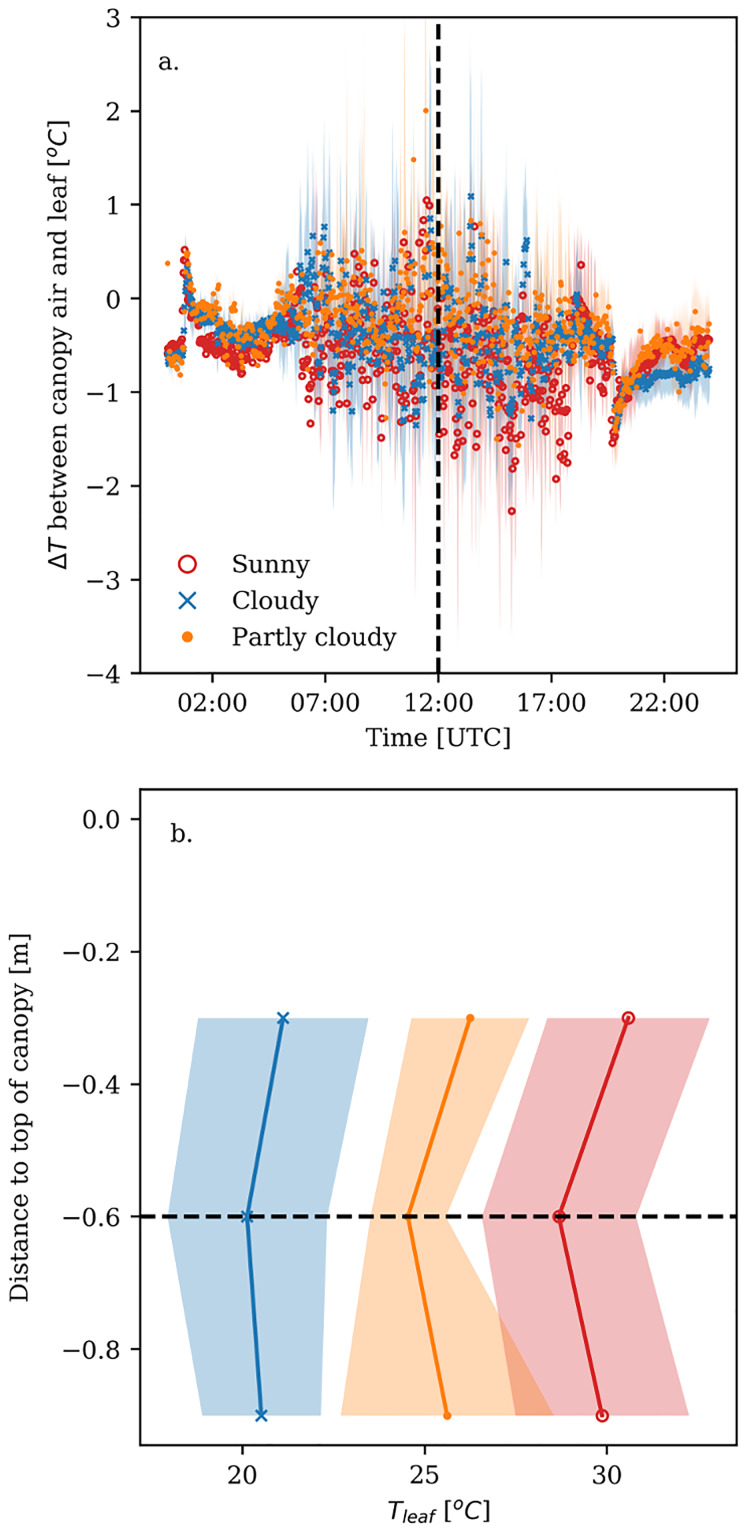
Organ temperature and variation therein plays a key role in plant functioning and its responses to e.g. climate change. There is a strong feedback between organ, especially leaf, temperature and the climate within the canopy (canopy climate), which in turn interacts with the climate outside the canopy (ambient climate). For greenhouses, the determinants of this interplay and how they drive differences between canopy and ambient climate are poorly understood. Yet, as many experiments on both regular greenhouse crops and field crops are done in greenhouses, this is crucial to know. Therefore, we designed an experiment to quantify the differences between ambient and canopy climate and leaf temperature. A path analysis was performed to quantify the interactions between components of the greenhouse canopy-climate system. We found that with high radiation the canopy climate can be up to 5°C cooler than the ambient climate, while for cloudy days this was only 2°C. Canopy relative humidity (RH) was up to 25% higher compared to ambient RH. We showed that radiation is very important for these climate differences, but that this effect could be partly counteracted by turning off supplementary light (i.e. due to its indirect effects e.g. changing light distribution). Leaf temperature was substantially different, both higher and lower, from the canopy air temperature. This difference was determined by leaf area index (LAI), temperature of the heating pipe and the use of supplementary light, which all strongly influence radiation, either shortwave or thermal radiation. The difference between leaf and ambient air temperature could be decreased by decreasing the LAI or increasing the temperature of the heating pipe.
器官温度及其变化在植物功能及其对气候变化等的响应中起着关键作用。器官,尤其是叶片温度与树冠内的气候(树冠气候)之间存在强烈的反馈关系,而树冠气候又与树冠外的气候(环境气候)相互作用。对于温室来说,这种相互作用的决定因素以及它们如何导致树冠和环境气候之间的差异还知之甚少。然而,由于许多关于常规温室作物和大田作物的实验都是在温室中进行的,因此了解这一点至关重要。因此,我们设计了一个实验来量化环境气候和叶片温度之间的差异。我们进行了路径分析,以量化温室树冠气候系统各组成部分之间的相互作用。我们发现,在辐射较强的情况下,树冠气候可比环境气候低 5°C,而在阴天时,这一差异仅为 2°C。树冠相对湿度(RH)比环境 RH 高 25%。我们表明,辐射对这些气候差异非常重要,但关闭补充光照(例如,由于其间接影响,如改变光分布)可以部分抵消这种影响。叶片温度与树冠空气温度存在显著差异,无论是偏高还是偏低。这种差异由叶面积指数(LAI)、加热管温度和补充光照的使用决定,这些因素都会强烈影响辐射,无论是短波辐射还是热辐射。通过降低 LAI 或提高加热管温度,可以降低叶片与环境空气温度之间的差异。