Bengtsson Anders A, Tyden Helena, Lood Christian
Division of Rheumatology, Department of Clinical Sciences Lund, Lund University, Lund, Sweden.
Division of Rheumatology, Department of Medicine, University of Washington, 750 Republican Street, Room E-545, Seattle, WA, 98109, USA.
Arthritis Res Ther. 2020 May 29;22(1):126. doi: 10.1186/s13075-020-02221-z.
Immune complexes (ICs) are detectable in a variety of inflammatory diseases, including systemic lupus erythematosus (SLE), reflecting autoantibody binding to antigens. Though ICs are the main contributors to disease pathogenesis through FcγR-mediated inflammation and organ damage, IC levels are not part of the clinical assessment of SLE. The aim of this study was to explore the clinical utility of analyzing levels of ICs in SLE patients using a novel technology, IC-FLOW.
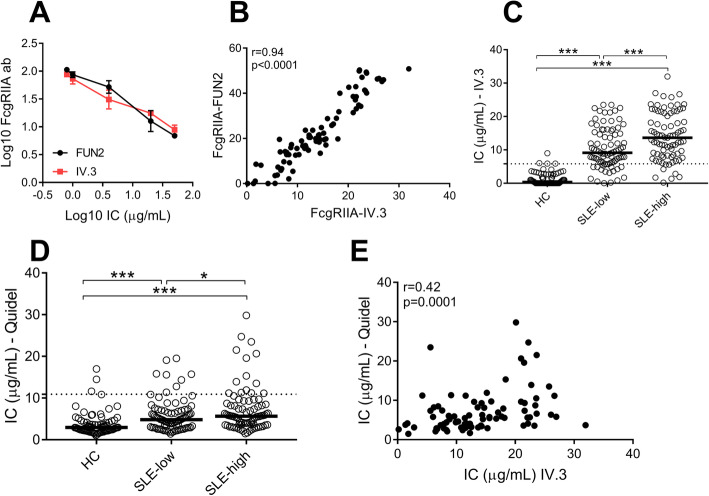
Paired serum samples, at the time point of high and low disease activity (n = 92), were analyzed using two assays: an IC ELISA from a commercial company and a novel in-house flow cytometry-based method, IC-FLOW. IC-FLOW measures FcγRIIA availability on the neutrophil cell surface by flow cytometry, whereas the commercial ELISA measures IC binding to C1q.
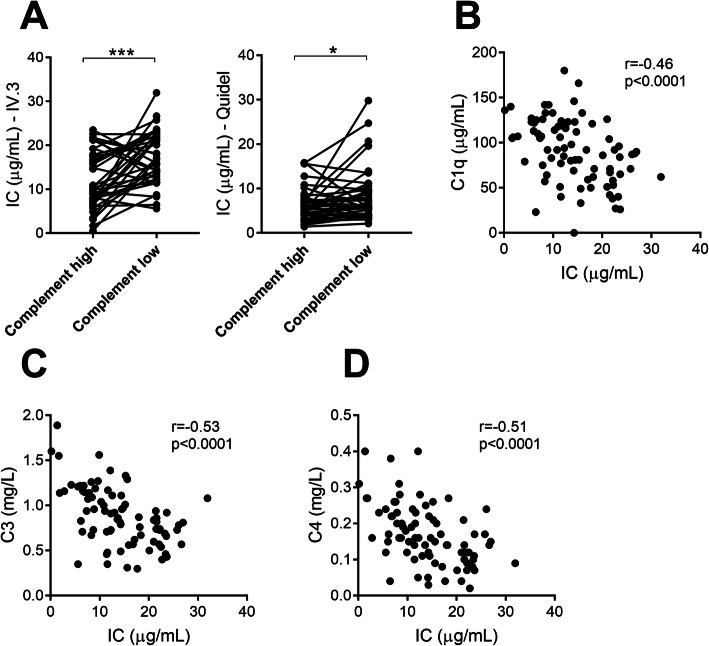
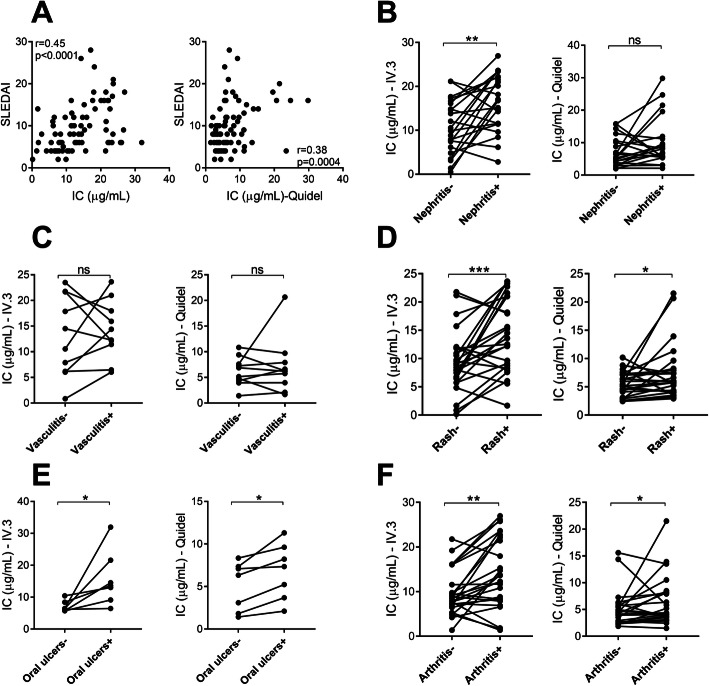
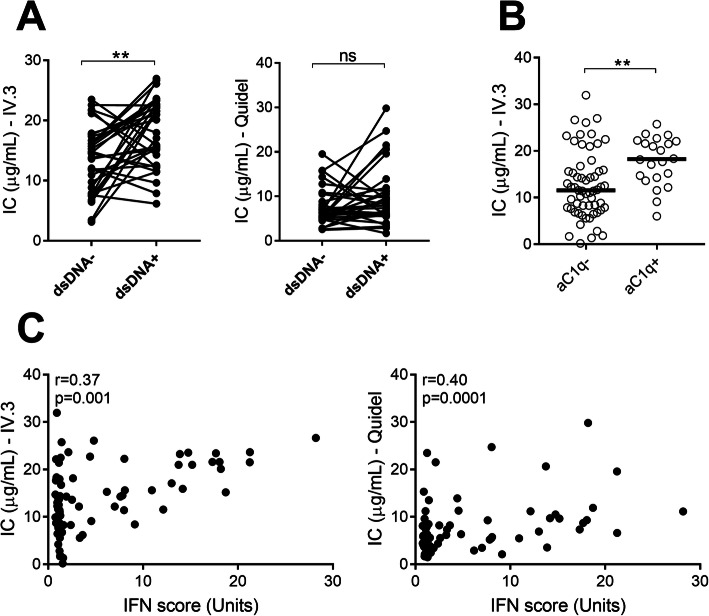
Using IC-FLOW, 90% of SLE patients with active disease had elevated levels of circulating ICs (p < 0.0001). Using the commercial assay, only 17% of SLE patients had elevated levels of circulating ICs. For both assays, levels of ICs reflected active disease as determined by SLEDAI (r = 0.45, p < 0.0001) and were associated with type I IFN activity (r = 0.37, p = 0.001), and complement consumption (p = 0.0002). Levels of ICs measured with IC-FLOW, but not with the commercial ELISA, were associated with active lupus nephritis (p = 0.004).
This novel FcγRIIA-IC assay can detect levels of circulating ICs in patients with SLE. Analyzing IC levels may facilitate monitoring of disease activity, as well as identify patients at risk of lupus nephritis, allowing for early preventive interventions.
免疫复合物(ICs)在包括系统性红斑狼疮(SLE)在内的多种炎症性疾病中均可检测到,反映了自身抗体与抗原的结合。尽管免疫复合物通过FcγR介导的炎症和器官损伤是疾病发病机制的主要促成因素,但免疫复合物水平并非系统性红斑狼疮临床评估的一部分。本研究的目的是探索使用新技术IC-FLOW分析系统性红斑狼疮患者免疫复合物水平的临床实用性。
在疾病活动度高和低的时间点采集配对血清样本(n = 92),使用两种检测方法进行分析:一种是来自商业公司的IC ELISA,另一种是基于流式细胞术的新型内部检测方法IC-FLOW。IC-FLOW通过流式细胞术测量中性粒细胞表面FcγRIIA的可用性,而商业ELISA测量免疫复合物与C1q的结合。
使用IC-FLOW,90%疾病活动的系统性红斑狼疮患者循环免疫复合物水平升高(p < 0.0001)。使用商业检测方法,只有17%的系统性红斑狼疮患者循环免疫复合物水平升高。对于这两种检测方法,免疫复合物水平均反映了由SLEDAI确定的疾病活动(r = 0.45,p < 0.0001),并与I型干扰素活性(r = 0.37,p = 0.001)和补体消耗(p = 0.0002)相关。用IC-FLOW而非商业ELISA测量的免疫复合物水平与活动性狼疮性肾炎相关(p = 0.004)。
这种新型的FcγRIIA-IC检测方法可以检测系统性红斑狼疮患者循环免疫复合物的水平。分析免疫复合物水平可能有助于监测疾病活动,以及识别有狼疮性肾炎风险的患者,从而实现早期预防性干预。