Department of Emergency Medicine, Icahn School of Medicine at Mount Sinai, 1 Gustave L. Levy Place New York, New York, 11029, United States of America.
Am J Emerg Med. 2020 Oct;38(10):2246.e3-2246.e6. doi: 10.1016/j.ajem.2020.05.058. Epub 2020 May 23.
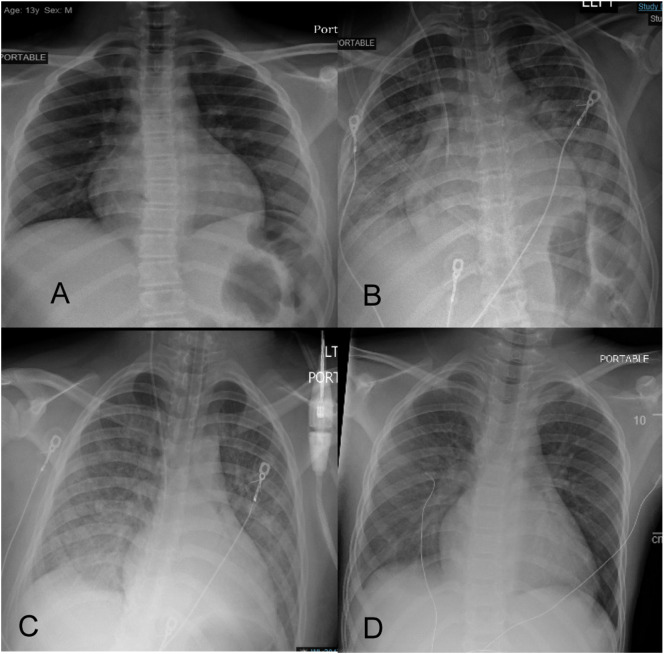
The 2019 coronavirus disease (COVID-19) has not appeared to affect children as severely as adults. However, approximately 1 month after the COVID-19 peak in New York City in April 2020, cases of children with prolonged fevers abruptly developing inflammatory shock-like states have been reported in Western Europe and the United States. This case series describes four previously healthy children with COVID-19 infection confirmed by serologic antibody testing, but negative by nasopharyngeal RT-PCR swab, presenting to the Pediatric Emergency Department (PED) with prolonged fever (5 or more days) and abrupt onset of hemodynamic instability with elevated serologic inflammatory markers and cytokine levels (IL-6, IL-8 and TNF-α). Emergency physicians must maintain a high clinical suspicion for this COVID-19 associated post-infectious cytokine release syndrome, with features that overlap with Kawasaki Disease (KD) and Toxic Shock Syndrome (TSS) in children with recent or current COVID-19 infection, as patients can decompensate quickly.
2019 年冠状病毒病(COVID-19)似乎并未对儿童造成像成年人那样严重的影响。然而,在 2020 年 4 月纽约市 COVID-19 达到高峰后大约 1 个月,在西欧和美国报告了一些患有持续性发热的儿童突然出现类似炎症性休克的情况。本病例系列描述了 4 名先前健康的 COVID-19 感染儿童,通过血清学抗体检测得到证实,但鼻咽 RT-PCR 拭子检测结果为阴性,他们因持续性发热(5 天或以上)就诊于儿科急诊部(PED),并突然出现血流动力学不稳定,伴有血清学炎症标志物和细胞因子水平升高(IL-6、IL-8 和 TNF-α)。急诊医生必须对这种与 COVID-19 相关的感染后细胞因子释放综合征保持高度的临床警惕,其特征与近期或当前 COVID-19 感染的儿童的川崎病(KD)和中毒性休克综合征(TSS)重叠,因为患者可能会迅速恶化。