Department of Neurology, Nanfang Hospital, Southern Medical University, Guangzhou, China.
Department of General Surgery, Nanfang Hospital, Southern Medical University, Guangzhou, China.
JPEN J Parenter Enteral Nutr. 2021 Mar;45(3):518-529. doi: 10.1002/jpen.1861. Epub 2020 May 30.
The intestinal microbiota and its metabolites have been reported to play an important role in stroke. Gut microbiota-originating short-chain fatty acids (SCFAs) modulate brain functions directly or indirectly through immune, endocrine, vagal, and other humoral pathways. However, relatively few investigations have evaluated the gut microbiome and SCFAs spectrum or their potential associations with stroke outcomes in acute ischemic stroke (AIS) patients with different stroke severities.
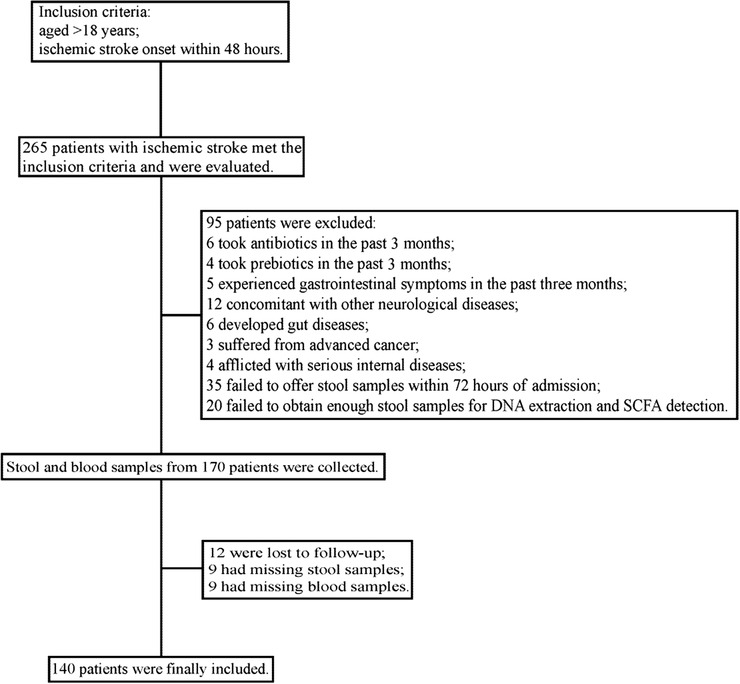
We used 16S rRNA gene sequencing and gas chromatography to compare the fecal microbial composition and SCFA spectrum between AIS patients (n = 140) and healthy controls (n = 92). Their associations with 90-day poor functional outcomes were evaluated by logistic regression models.
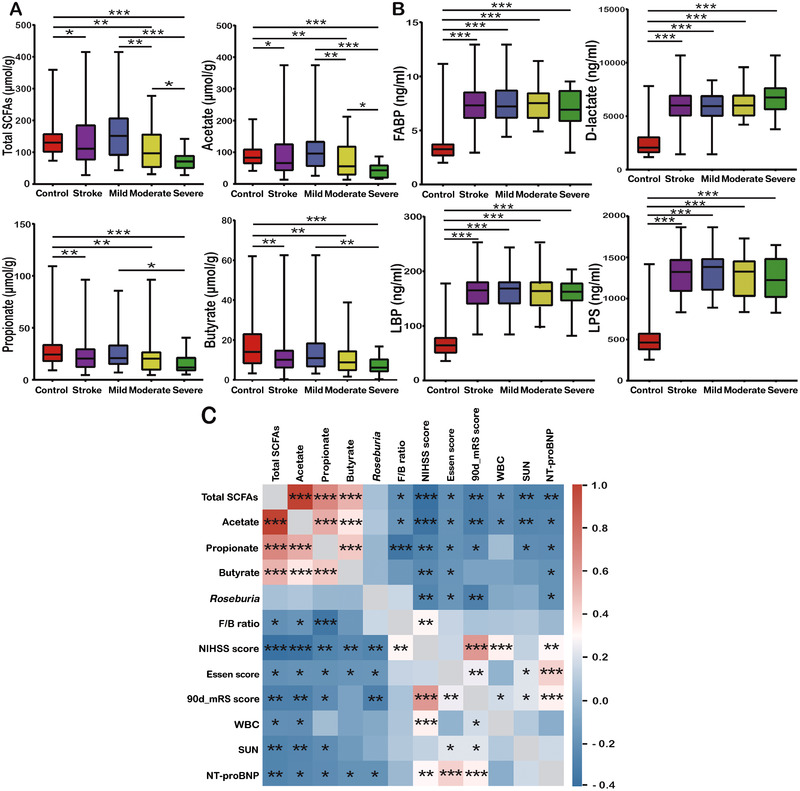
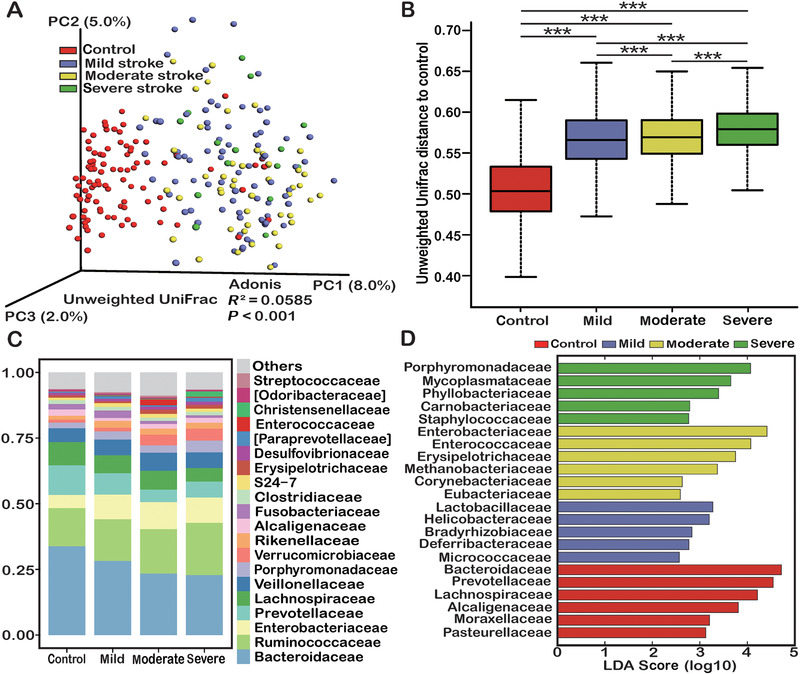
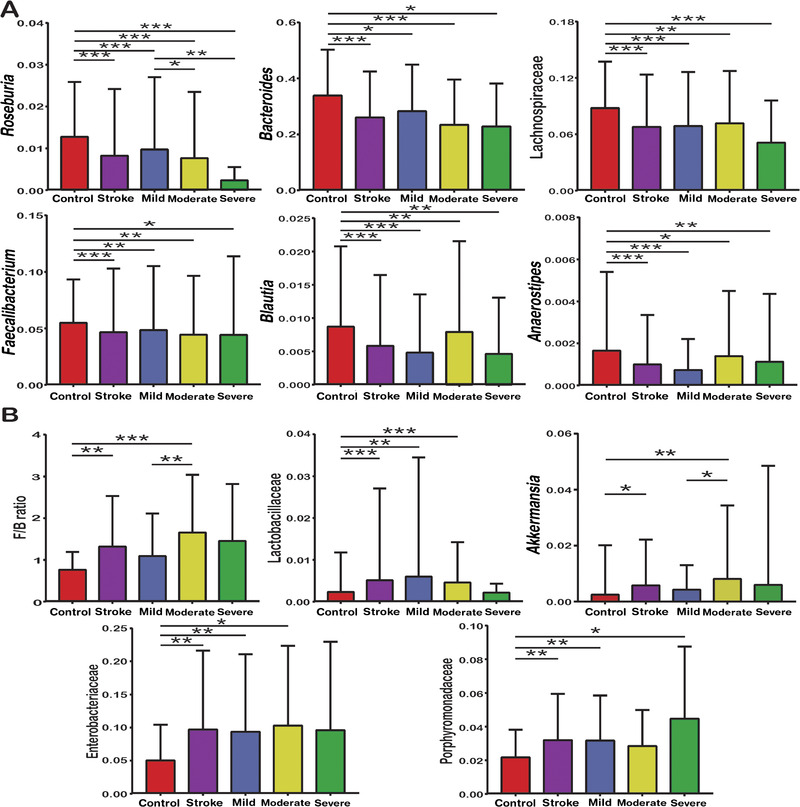
We found that the intestinal microbiota distinguished AIS patients from healthy controls. A lack of SCFAs-producing bacteria and a low fecal SCFAs level defined dysbiosis in AIS patients, especially those with increased stroke severity. The SCFAs levels were negatively correlated with stroke severity and prognosis. Reduced SCFAs levels, especially acetate, were associated with an increased risk of 90-day poor functional outcomes even after adjustments.
Dysbiosis of SCFAs-producing bacteria and SCFAs in AIS patients increased the subsequent risk for poor functional outcomes, indicating that SCFAs could be potential prognostic markers and therapeutic targets for stroke.
肠道微生物群及其代谢产物在中风中起着重要作用。肠道微生物群衍生的短链脂肪酸(SCFAs)通过免疫、内分泌、迷走神经和其他体液途径直接或间接地调节大脑功能。然而,很少有研究评估急性缺血性中风(AIS)患者不同中风严重程度的肠道微生物组和 SCFA 谱或它们与中风结果的潜在关联。
我们使用 16S rRNA 基因测序和气相色谱法比较了 AIS 患者(n=140)和健康对照者(n=92)粪便微生物组成和 SCFA 谱。通过逻辑回归模型评估它们与 90 天不良功能结局的关联。
我们发现肠道微生物群将 AIS 患者与健康对照者区分开来。AIS 患者缺乏产生 SCFAs 的细菌和低粪便 SCFAs 水平定义为肠道菌群失调,尤其是那些中风严重程度增加的患者。SCFAs 水平与中风严重程度和预后呈负相关。即使在调整后,降低的 SCFAs 水平,尤其是乙酸盐,与 90 天不良功能结局的风险增加相关。
AIS 患者产生 SCFAs 的细菌和 SCFAs 的菌群失调增加了随后不良功能结局的风险,表明 SCFAs 可能是中风的潜在预后标志物和治疗靶点。