School of Medical and Health Sciences, Edith Cowan University, Joondalup, Western Australia, WA, Australia.
Cooperative Research Centre (CRC) for Mental Health, Australia.
J Alzheimers Dis. 2020;76(1):303-315. doi: 10.3233/JAD-191304.
Lipid metabolism is altered in Alzheimer's disease (AD); however, the relationship between AD risk factors (age, APOEɛ4, and gender) and lipid metabolism is not well defined.
We investigated whether altered lipid metabolism associated with increased age, gender, and APOE status may contribute to the development of AD by examining these risk factors in healthy controls and also clinically diagnosed AD individuals.
We performed plasma lipidomic profiling (582 lipid species) of the Australian Imaging, Biomarkers and Lifestyle flagship study of aging cohort (AIBL) using liquid chromatography-mass spectrometry. Linear regression and interaction analysis were used to explore the relationship between risk factors and plasma lipid species.
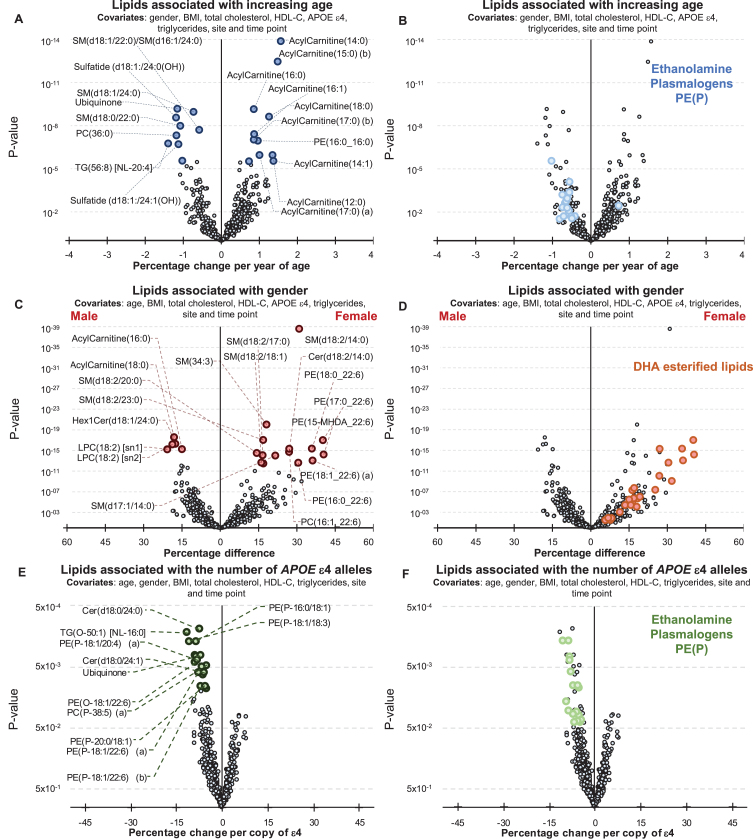
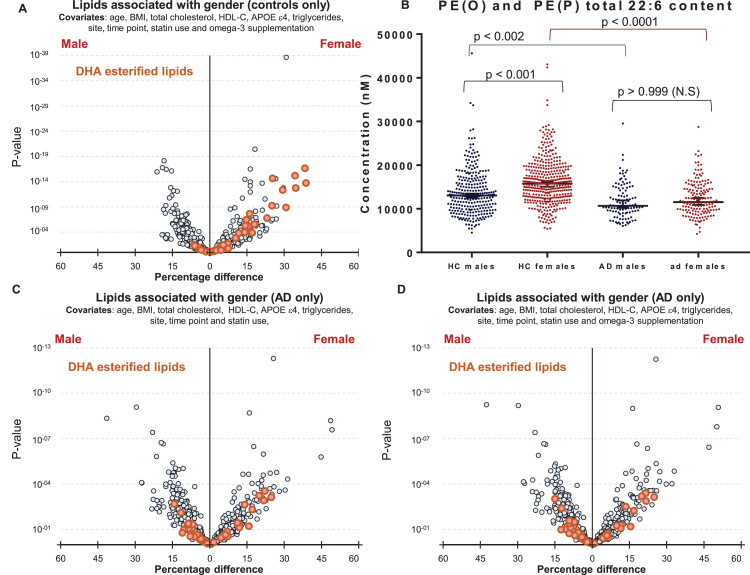
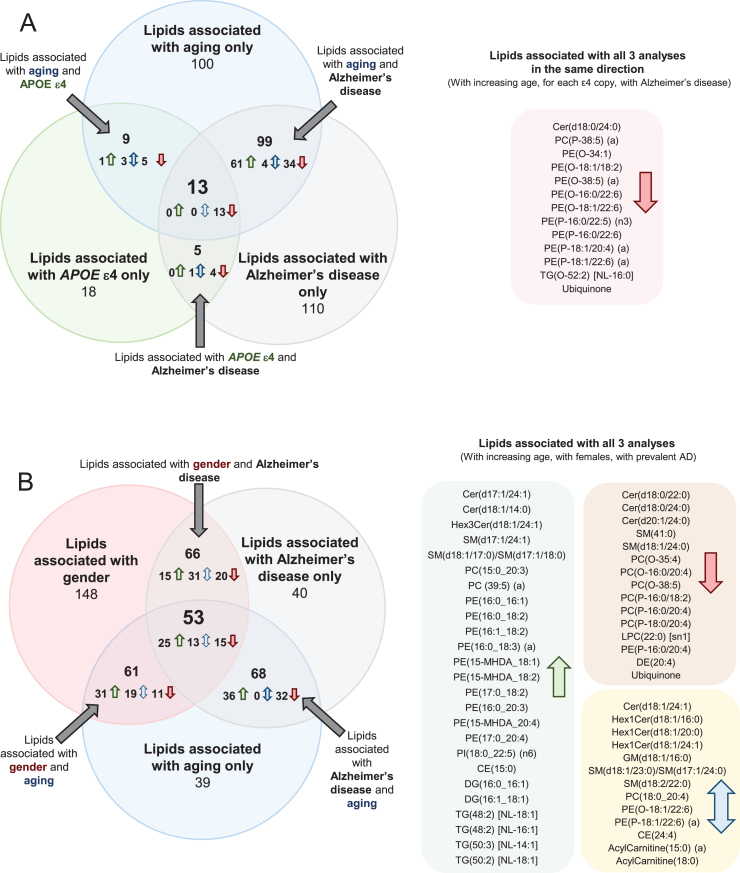
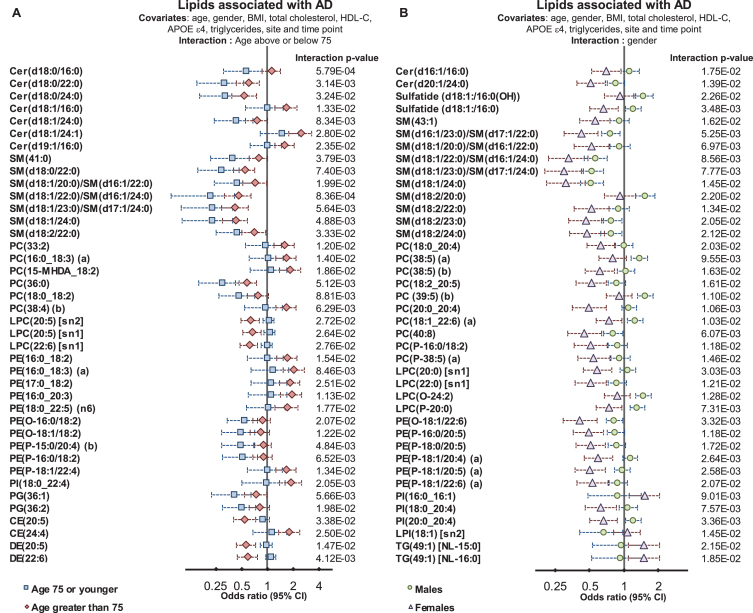
We observed strong associations between plasma lipid species with gender and increasing age in cognitively normal individuals. However, APOEɛ4 was relatively weakly associated with plasma lipid species. Interaction analysis identified differential associations of sphingolipids and polyunsaturated fatty acid esterified lipid species with AD based on age and gender, respectively. These data indicate that the risk associated with age, gender, and APOEɛ4 may, in part, be mediated by changes in lipid metabolism.
This study extends our existing knowledge of the relationship between the lipidome and AD and highlights the complexity of the relationships between lipid metabolism and AD at different ages and between men and women. This has important implications for how we assess AD risk and also for potential therapeutic strategies involving modulation of lipid metabolic pathways.
阿尔茨海默病(AD)患者的脂质代谢发生改变;然而,AD 风险因素(年龄、APOEɛ4 和性别)与脂质代谢之间的关系尚未明确。
通过检查健康对照者和临床诊断为 AD 的个体中的这些风险因素,我们研究了与年龄增长、性别和 APOE 状态相关的脂质代谢改变是否可能导致 AD 的发生。
我们使用液相色谱-质谱法对澳大利亚成像、生物标志物和生活方式老龄化队列研究(AIBL)中的澳大利亚成像、生物标志物和生活方式老化队列的血浆脂质组进行了分析(582 种脂质)。线性回归和交互分析用于探索风险因素与血浆脂质种类之间的关系。
我们观察到在认知正常个体中,血浆脂质种类与性别和年龄增长之间存在强烈关联。然而,APOEɛ4 与血浆脂质种类的相关性相对较弱。交互分析根据年龄和性别分别确定了鞘脂和多不饱和脂肪酸酯化脂质种类与 AD 的不同关联。这些数据表明,与年龄、性别和 APOEɛ4 相关的风险可能部分是由脂质代谢的变化介导的。
本研究扩展了我们对脂质组与 AD 之间关系的现有认识,并强调了脂质代谢与 AD 之间在不同年龄和男女之间的关系的复杂性。这对我们评估 AD 风险以及涉及调节脂质代谢途径的潜在治疗策略具有重要意义。