Boquimpani Carla Maria, Abdo André Neder Ramires, Martins Denise Pires, Lima Luciana Britto de Abreu, Torriani Mayde Seadi, Bendit Israel
HEMORIO, Rio de Janeiro, RJ, Brazil.
Hospital Alemão Oswaldo Cruz (HAOC), São Paulo, SP, Brazil.
Hematol Transfus Cell Ther. 2021 Jan-Mar;43(1):50-57. doi: 10.1016/j.htct.2020.02.002. Epub 2020 May 25.
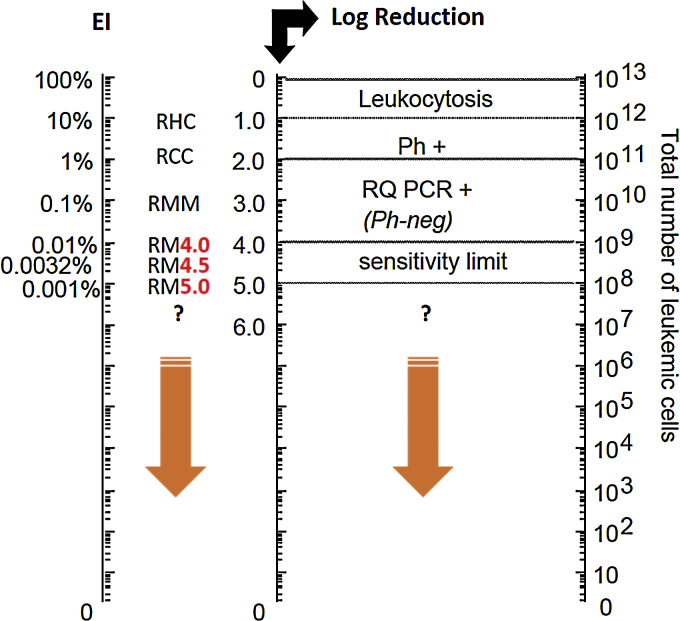
Chronic Myeloid Leukemia (CML) is a myeloproliferative disease that affects mainly adults between 50 and 55 years. In Brazil, information from the Sistema Único de Saúde (SUS) Outpatient Information System indicates that 12,531 patients had the Autorização de Procedimento Ambulatorial (APAC) approved for the CML treatment in 2017. Disease monitoring through molecular response evaluation is critical to the care of CML patients. The quantitative PCR test (real-time polymerase chain reaction) provides adequate evaluation parameters that allow the health professional to intervene at the right moments in order to reduce the chance of progression of the disease, providing the best outcome to the patient, including the possibility of treatment discontinuation for eligible patients. Although the test is included in the Clinical Protocol and Therapeutic Guidelines (PCDT) of CML, it is not possible to monitor the molecular response within SUS since there is no reimbursement for this test.
Obtain expert recommendations on the importance, financing, and reimbursement of molecular monitoring in SUS.
Six CML experts with different perspectives participated in the panel. The discussion was based in the main publications about the quantitative PCR test in CML monitoring.
Experts' recommendations: CONCLUSION: A solution for the molecular test (BCR-ABL1) funding is urgent to ensure the monitoring of CML patients in SUS. The savings that might be generated with patients that stop taking the medication when adequately monitored may finance the test.
慢性髓性白血病(CML)是一种骨髓增殖性疾病,主要影响50至55岁的成年人。在巴西,统一卫生系统(SUS)门诊信息系统的数据显示,2017年有12531名患者的门诊治疗授权(APAC)获批用于CML治疗。通过分子反应评估进行疾病监测对CML患者的护理至关重要。定量PCR检测(实时聚合酶链反应)提供了足够的评估参数,使医疗专业人员能够在适当的时候进行干预,以降低疾病进展的可能性,为患者提供最佳治疗效果,包括符合条件的患者有可能停止治疗。尽管该检测已纳入CML的临床方案和治疗指南(PCDT),但由于该检测无法报销,因此无法在SUS系统内监测分子反应。
获取关于SUS系统中分子监测的重要性、资金投入和报销的专家建议。
六位具有不同观点的CML专家参与了小组讨论。讨论基于关于CML监测中定量PCR检测的主要出版物。
专家建议:结论:迫切需要为分子检测(BCR-ABL1)提供资金解决方案,以确保在SUS系统中对CML患者进行监测。对得到充分监测后停药的患者可能产生的节省费用可用于支付该检测费用。