Huang Zhangqiong, Li Yun, Jiang Qinfang, Wang Yixuan, Ma Kaili, Li Qihan
Institute of Medical Biology, Chinese Academy of Medical Sciences and Peking Union Medical College, Kunming 650118, China.
Medical Primate Research Center & Neuroscience Center, Chinese Academy of Medical Sciences and Peking Union Medical College, Beijing 100005, China.
J Vet Sci. 2020 May;21(3):e48. doi: 10.4142/jvs.2020.21.e48.
Mature oocytes at the metaphase II status (MII-stage oocytes) played an important role in assisted reproductive technology in non-human primates.
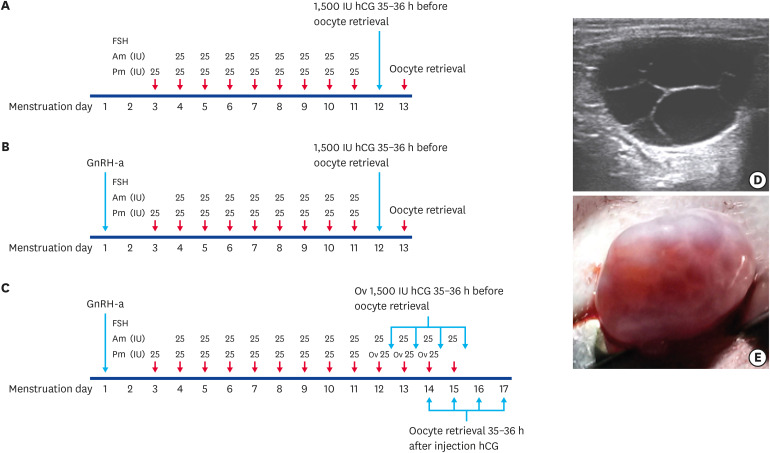
In order to improve the proportion of MII-stage oocytes retrieval, three different superovulation protocols were performed on 24 female cynomolgus monkeys.
All the monkeys received once-daily injection of follicle-stimulating hormone (25 international unit [IU]) on day 3 of the menstruation, 3-day intervals, twice daily for 8-12 days until the time of human chorionic gonadotropin (1,500 IU) injection, on the 14-17th day of menstruation collecting oocytes. The difference between protocol I and protocol II was that 0.1 mg the gonadotropin-releasing hormone agonist was injected on day 1 of the menstruation, while the difference between personalized superovulation protocol and protocol II was that oocytes could be collected on the 14-17th day of menstrual cycle according to the length of each monkey.
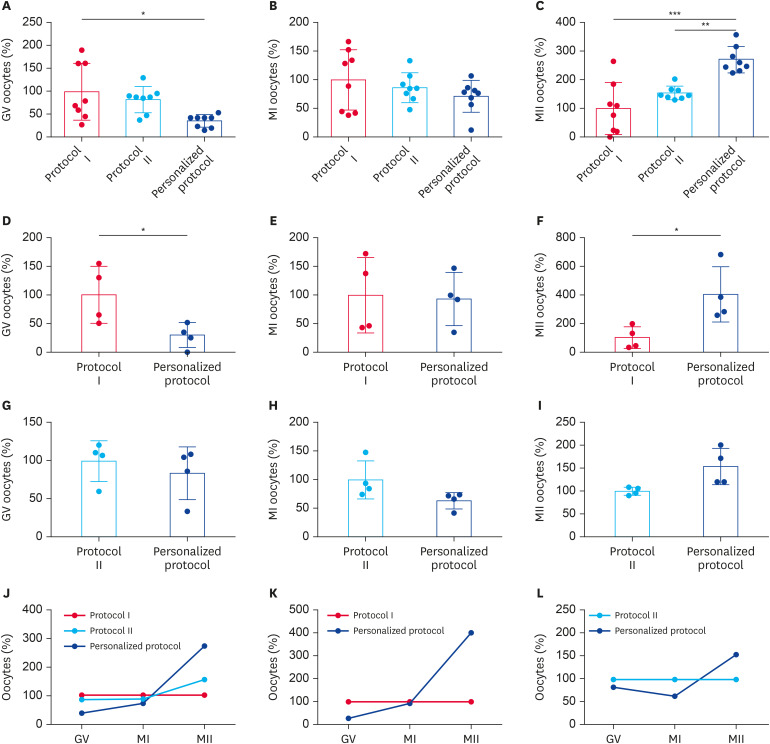
The total number of oocytes harvested using the personalized superovulation protocol was much higher than that using protocol I ( < 0.05), and the proportion of MII-stage oocytes was significantly greater than that from either superovulation protocol I or II ( < 0.001 and < 0.01 respectively), while the proportion of immature oocytes at the germinal vesicle was less than that from superovulation protocol I ( < 0.05).
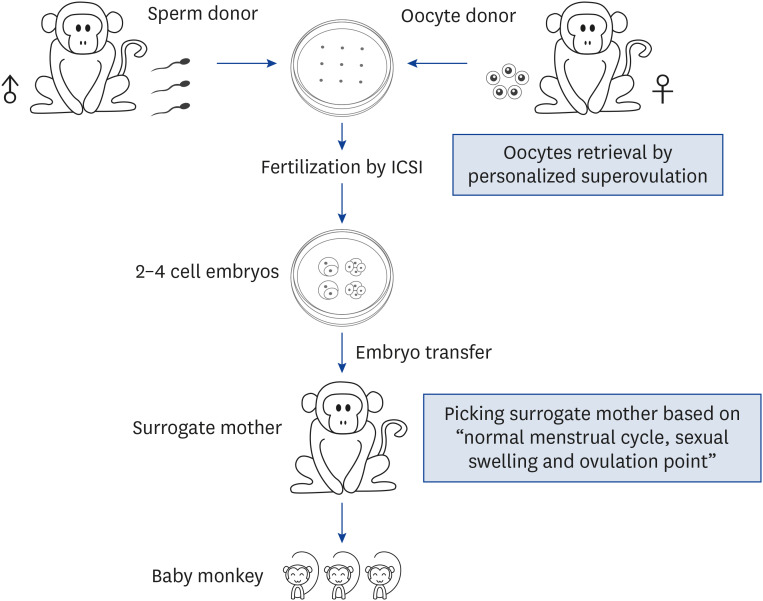
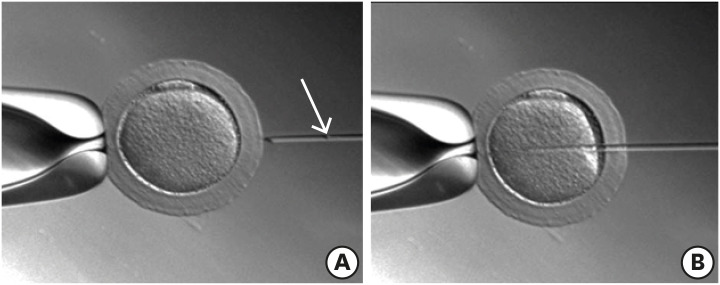
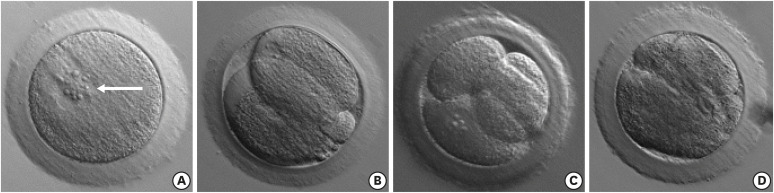
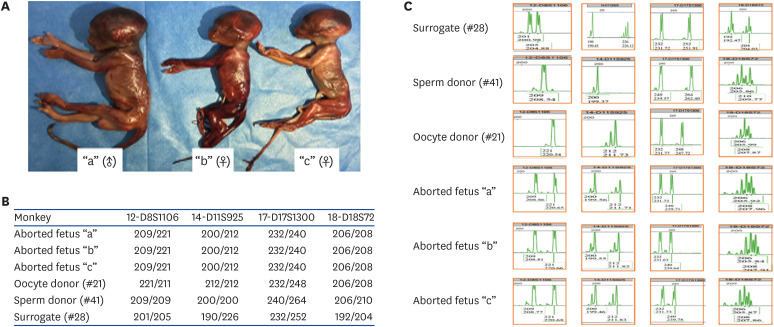
The personalized superovulation protocol could increase the rate of MII-stage oocytes acquired, and successfully develop into embryos after intracytoplasmic sperm injection, and eventually generated fetus.
处于减数分裂中期II期的成熟卵母细胞(MII期卵母细胞)在非人灵长类动物辅助生殖技术中发挥着重要作用。
为提高MII期卵母细胞的获取比例,对24只雌性食蟹猴实施了三种不同的超排卵方案。
所有猴子在月经周期第3天开始每天注射一次促卵泡激素(25国际单位[IU]),间隔3天,每天两次,共8 - 12天,直至注射人绒毛膜促性腺激素(1500 IU),在月经周期第14 - 17天采集卵母细胞。方案I与方案II的区别在于月经周期第1天注射0.1 mg促性腺激素释放激素激动剂,而个性化超排卵方案与方案II的区别在于根据每只猴子的月经周期长度在第14 - 17天采集卵母细胞。
采用个性化超排卵方案采集的卵母细胞总数远高于方案I(<0.05),MII期卵母细胞的比例显著高于超排卵方案I或II(分别为<0.001和<0.01),而生发泡期未成熟卵母细胞的比例低于超排卵方案I(<0.05)。
个性化超排卵方案可提高MII期卵母细胞的获取率,经卵胞浆内单精子注射后可成功发育成胚胎,并最终产生胎儿。