Shaalan Aly A M, El-Sherbiny Mohamed, El-Abaseri Taghrid B, Shoaeir Mohamed Z, Abdel-Aziz Tarek M, Mohamed Magda I, Zaitone Sawsan A, Mohammad Hala M F
Department of Histology and Cell Biology, Faculty of Medicine, Suez Canal University, Ismailia, Egypt.
Department of Anatomy, Faculty of Medicine, Jazan University, Jazan, Saudi Arabia.
Front Pharmacol. 2020 May 13;11:583. doi: 10.3389/fphar.2020.00583. eCollection 2020.
Rabeprazole, a proton pump inhibitor (PPIs) is much endorsed to patients with increased gastric acidity. PPIs were accused to have osteoporotic effects on patients who chronically use them. The point of the current investigation was to decide the impact of rabeprazole on osteoporosis and to explore the modulatory effects of dietary calcium or alendronate on this side effect.
80 female mice were alienated into four groups maintained for 18 weeks: [1] Vehicle group: given distilled water in 12 ml/kg, P.O. [2] Rabeprazole control group: given rabeprazole in a dose equals 10 mg/kg every 48 h, P.O. [3] Rabeprazole + calcium: given rabeprazole (10 mg/kg every 48 h) along with calcium supplement. [4] Rabeprazole + alendronate: given rabeprazole (10 mg/kg every 48 h) and alendronate (1 mg/kg per week, i.p.). Serum calcium, phosphorus and parathyroid hormone were measured. Both femurs were kept in paraformaldehyde, and then the right one was used for X-ray examination with analysis by Digora software and the left one for histopathological examination (H&E) and immunohistochemical stains for osteopontin and tartrate resistant acid phosphatase (TRAP).
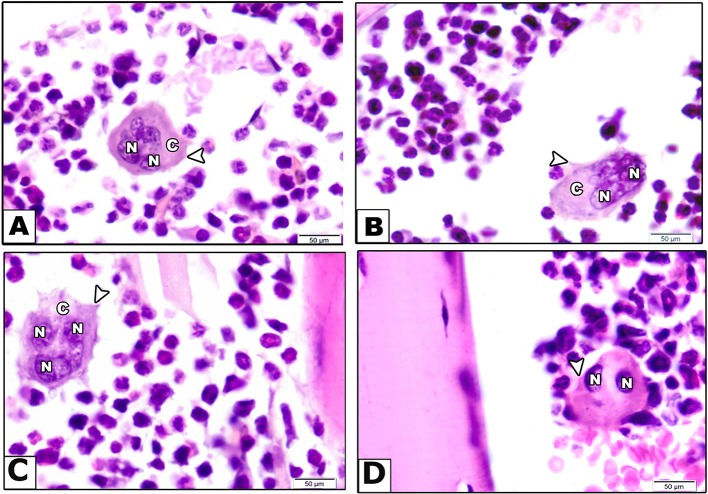
Calcium supplementation or administration of alendronate along with rabeprazole significantly restored the mean bone density as shown by X-ray analysis. Femurs from mice received rabeprazole showed widely separated, thin-walled bone trabeculae and increased number of osteoclasts. Calcium or alendronate with rabeprazole showed thick bone trabeculae without full recovery from rabeprazole induced damage. Adding calcium supplementation to rabeprazole did not affect the histological abnormalities related to osteoclasts meanwhile alendronate produced inactivation of osteoclasts. Both calcium and alendronate decreased the rabeprazole-induced increment in the femur osteopontin level.
Calcium or alendronate can be recommended for female patients on PPI therapy who are at risk of osteopenia.
雷贝拉唑是一种质子泵抑制剂(PPIs),被广泛应用于胃酸分泌过多的患者。PPIs被指控对长期使用的患者有骨质疏松作用。本研究的目的是确定雷贝拉唑对骨质疏松的影响,并探讨膳食钙或阿仑膦酸钠对这种副作用的调节作用。
将80只雌性小鼠分为四组,每组维持18周:[1] 载体组:口服给予12 ml/kg蒸馏水。[2] 雷贝拉唑对照组:每48小时口服给予剂量为10 mg/kg的雷贝拉唑。[3] 雷贝拉唑+钙:给予雷贝拉唑(每小时10 mg/kg)并补充钙。[4] 雷贝拉唑+阿仑膦酸钠:给予雷贝拉唑(每48小时10 mg/kg)和阿仑膦酸钠(每周1 mg/kg,腹腔注射)。测量血清钙、磷和甲状旁腺激素。将双侧股骨保存在多聚甲醛中,然后右侧股骨用于X线检查,用Digora软件分析,左侧股骨用于组织病理学检查(苏木精-伊红染色)和骨桥蛋白及抗酒石酸酸性磷酸酶(TRAP)的免疫组化染色。
X线分析显示,补充钙或与雷贝拉唑联合使用阿仑膦酸钠可显著恢复平均骨密度。接受雷贝拉唑的小鼠股骨显示骨小梁分离广泛、壁薄且破骨细胞数量增加。钙或阿仑膦酸钠与雷贝拉唑联合使用显示骨小梁增厚,但未完全从雷贝拉唑诱导的损伤中恢复。在雷贝拉唑中添加钙补充剂不影响与破骨细胞相关的组织学异常,而阿仑膦酸钠可使破骨细胞失活。钙和阿仑膦酸钠均降低了雷贝拉唑诱导的股骨骨桥蛋白水平升高。
对于有骨质减少风险的接受PPI治疗的女性患者,可推荐使用钙或阿仑膦酸钠。