Tissue Analysis Core, Immunology Laboratory, Vaccine Research Center, NIAID, National Institutes of Health (NIH), Bethesda, MD, United States.
Center for Biologics Evaluation and Research, Food and Drug Administration, Silver Spring, MD, United States.
Front Immunol. 2020 May 14;11:791. doi: 10.3389/fimmu.2020.00791. eCollection 2020.
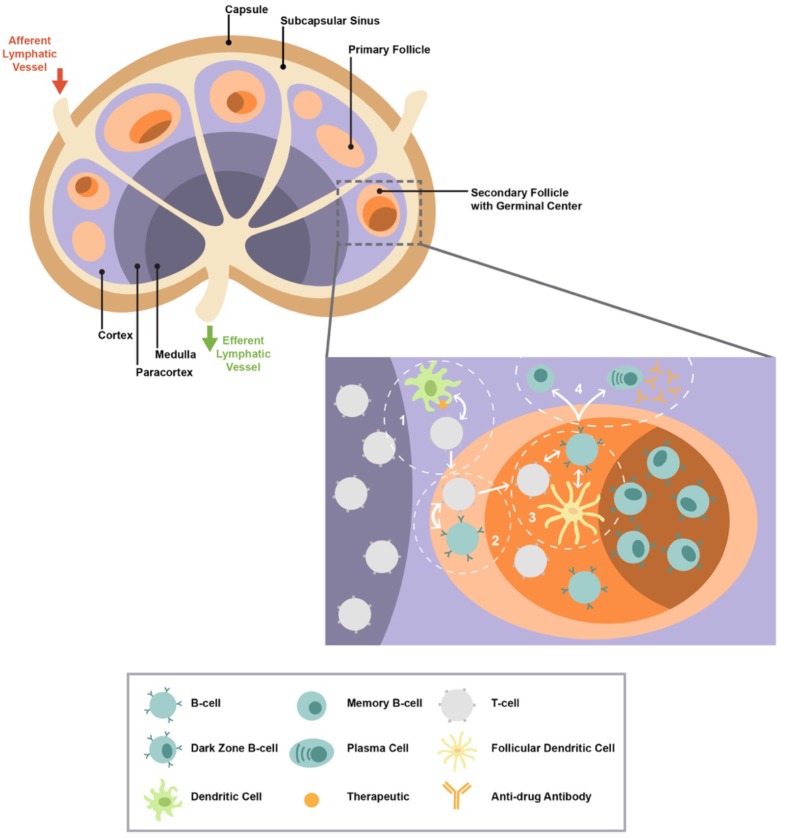
The continuous development of molecular biology and protein engineering technologies enables the expansion of the breadth and complexity of protein therapeutics for administration. However, the immunogenicity and associated development of antibodies against therapeutics are a major restriction factor for their usage. The B cell follicular and particularly germinal center areas in secondary lymphoid organs are the anatomical sites where the development of antibody responses against pathogens and immunogens takes place. A growing body of data has revealed the importance of the orchestrated function of highly differentiated adaptive immunity cells, including follicular helper CD4 T cells and germinal center B cells, for the optimal generation of these antibody responses. Understanding the cellular and molecular mechanisms mediating the antibody responses against therapeutics could lead to novel strategies to reduce their immunogenicity and increase their efficacy.
分子生物学和蛋白质工程技术的不断发展,使蛋白质治疗药物的给药广度和复杂性得以扩展。然而,治疗药物的免疫原性和相关抗体的产生是其应用的主要限制因素。次级淋巴器官的 B 细胞滤泡,特别是生发中心区域,是针对病原体和免疫原产生抗体反应的解剖部位。越来越多的数据显示,高度分化的适应性免疫细胞(包括滤泡辅助性 CD4 T 细胞和生发中心 B 细胞)的协调功能对于最佳产生这些抗体反应非常重要。了解介导治疗药物抗体反应的细胞和分子机制,可能会导致减少其免疫原性和提高疗效的新策略。