Laboratory of Immunoregulation, National Institute of Allergy and Infectious Diseases, National Institutes of Health, Bethesda, MD 20892, USA.
Multiscale Systems Biology Section, Laboratory of Immune System Biology, National Institute of Allergy and Infectious Diseases, National Institutes of Health, Bethesda, MD 20892, USA.
Sci Transl Med. 2019 Nov 27;11(520). doi: 10.1126/scitranslmed.aax0904.
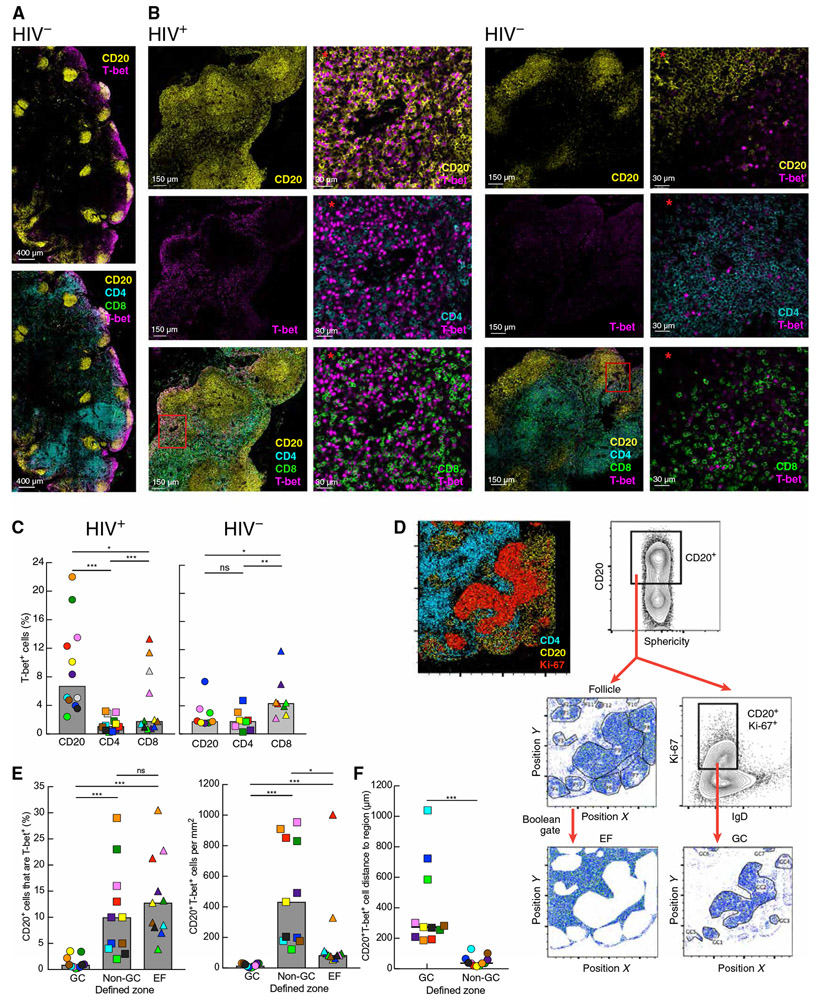
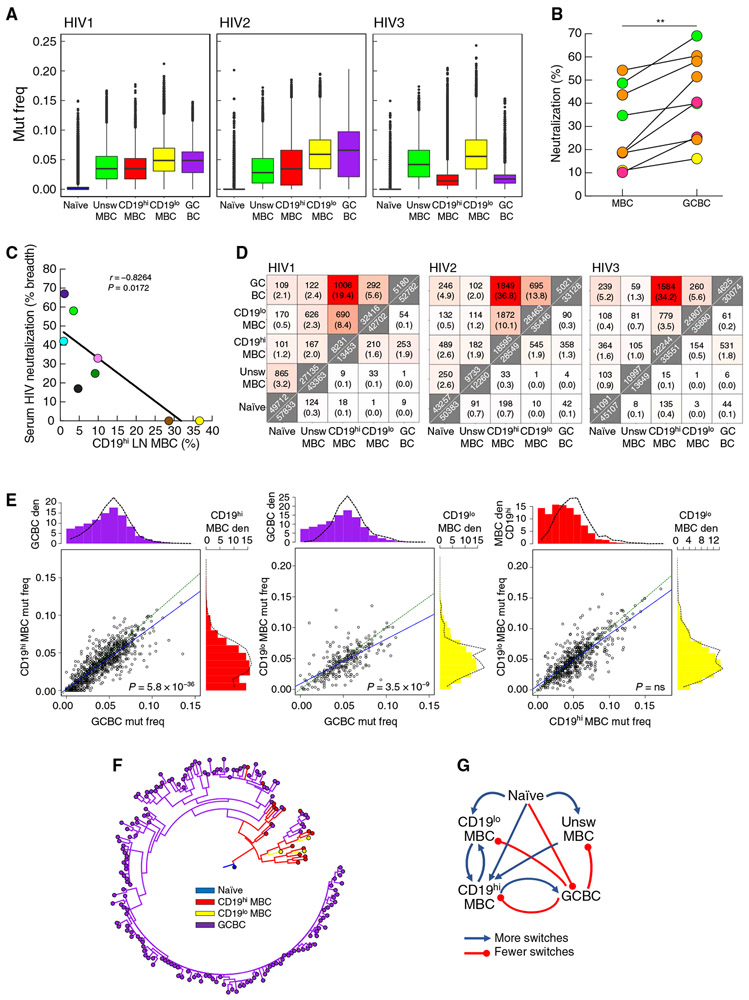
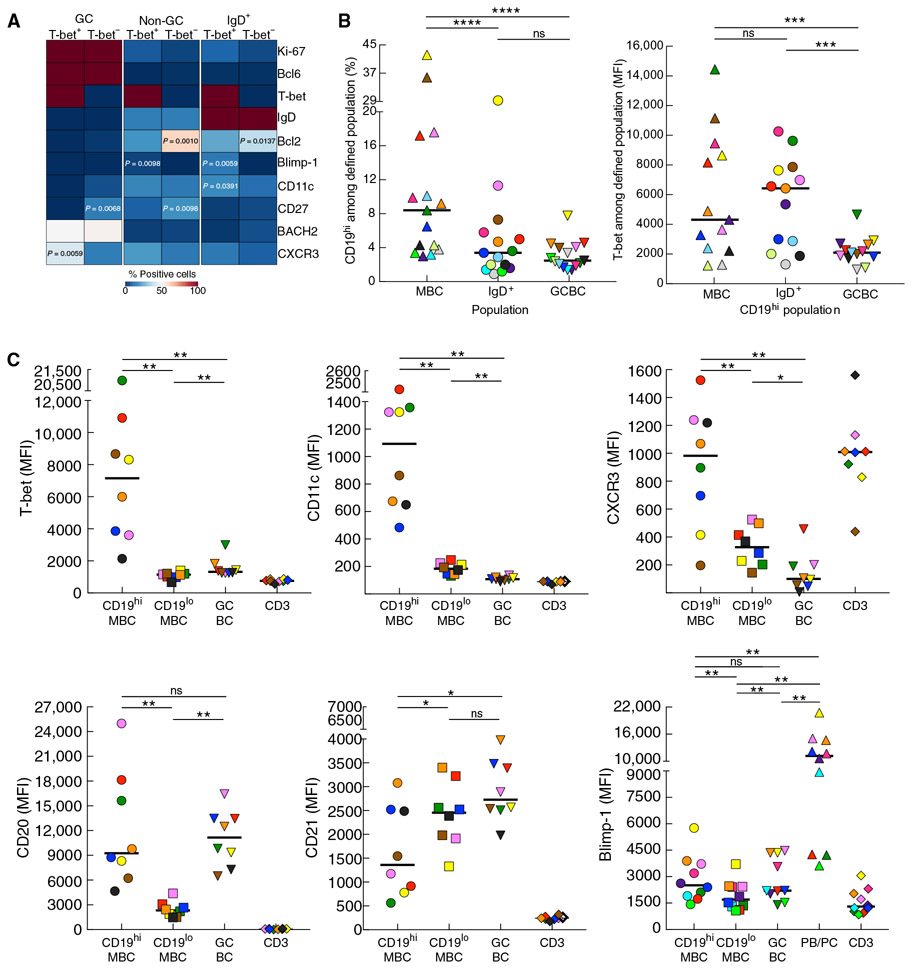
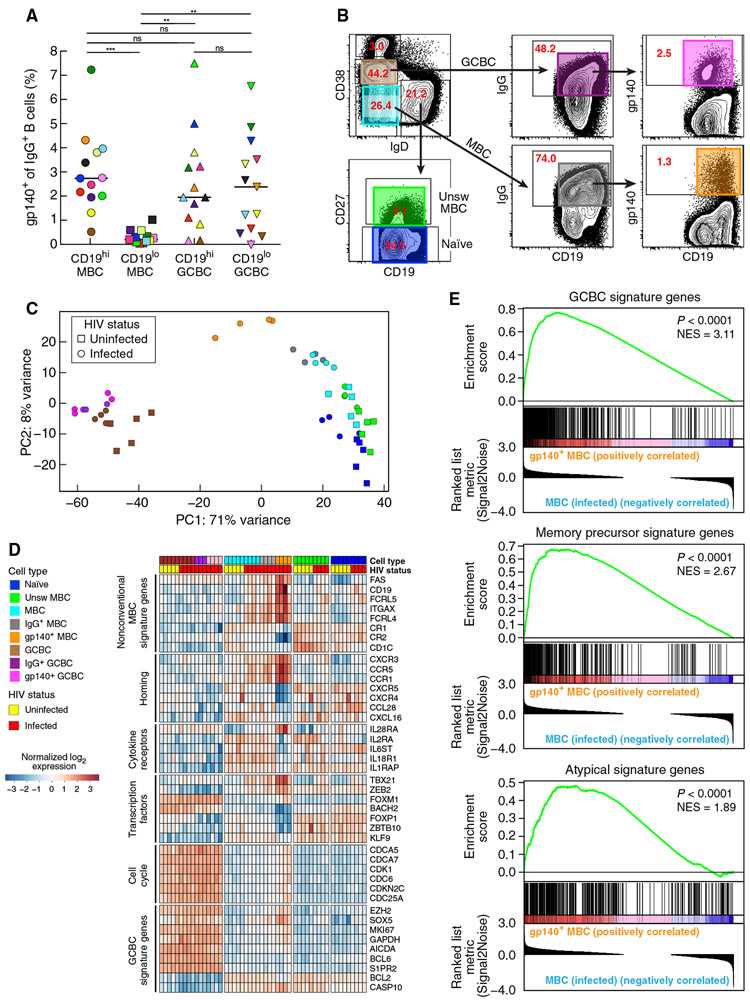
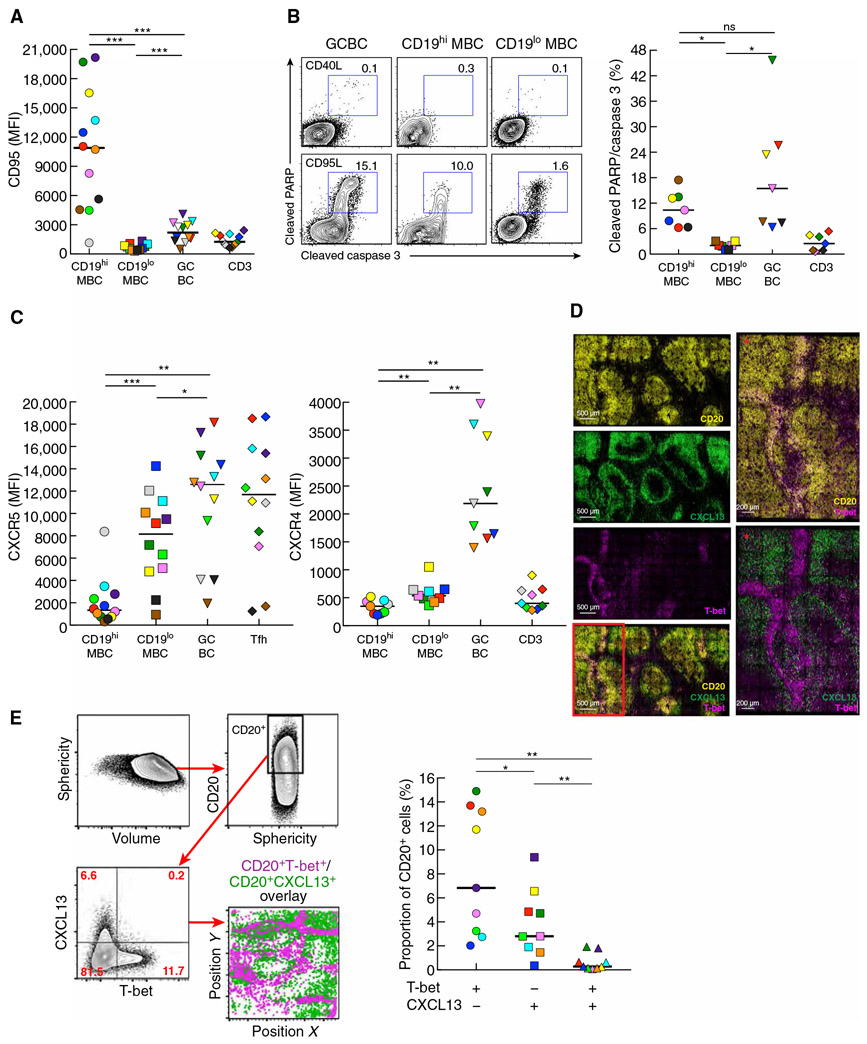
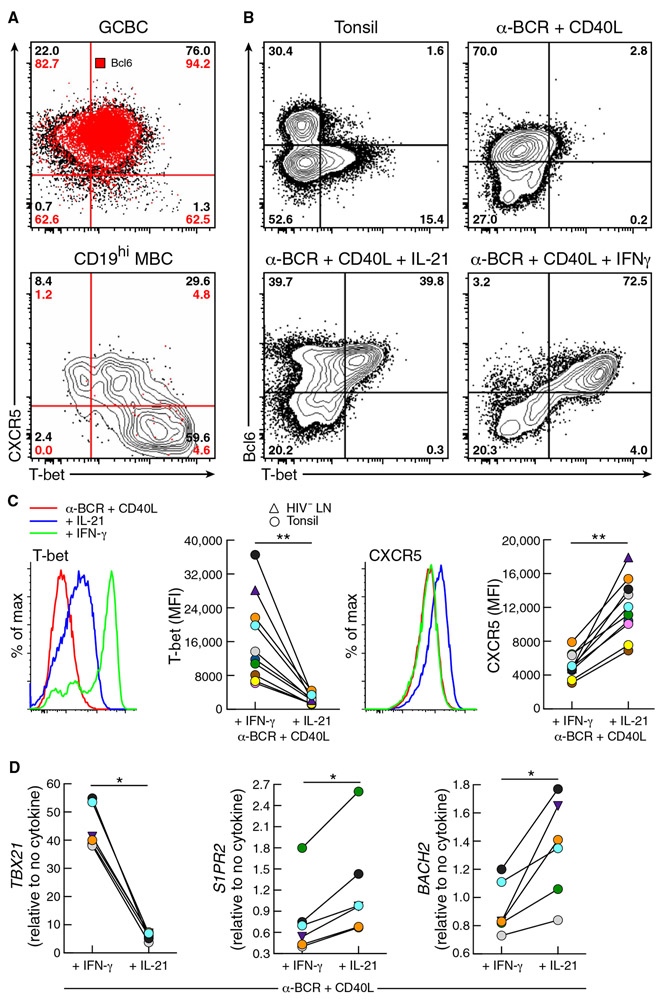
Nearly all chronic human infections are associated with alterations in the memory B cell (MBC) compartment, including a large expansion of CD19T-bet MBC in the peripheral blood of HIV-infected individuals with chronic viremia. Despite their prevalence, it is unclear how these B cells arise and whether they contribute to the inefficiency of antibody-mediated immunity in chronic infectious diseases. We addressed these questions by characterizing T-bet-expressing B cells in lymph nodes (LN) and identifying a strong T-bet signature among HIV-specific MBC associated with poor immunologic outcome. Confocal microscopy and quantitative imaging revealed that T-bet B cells in LN of HIV-infected chronically viremic individuals distinctly accumulated outside germinal centers (GC), which are critical for optimal antibody responses. In single-cell analyses, LN T-bet B cells of HIV-infected individuals were almost exclusively found among CD19 MBC and expressed reduced GC-homing receptors. Furthermore, HIV-specific B cells of infected individuals were enriched among LN CD19T-bet MBC and displayed a distinct transcriptome, with features similar to CD19T-bet MBC in blood and LN GC B cells (GCBC). LN CD19T-bet MBC were also related to GCBC by B cell receptor (BCR)-based phylogenetic linkage but had lower BCR mutation frequencies and reduced HIV-neutralizing capacity, consistent with diminished participation in GC-mediated affinity selection. Thus, in the setting of chronic immune activation associated with HIV viremia, failure of HIV-specific B cells to enter or remain in GC may help explain the rarity of high-affinity protective antibodies.
几乎所有的慢性人类感染都与记忆 B 细胞(MBC)区室的改变有关,包括 HIV 感染的慢性病毒血症个体外周血中 CD19T-betMBC 的大量扩增。尽管它们很常见,但这些 B 细胞是如何产生的,以及它们是否有助于慢性传染病中抗体介导的免疫效率低下,仍不清楚。我们通过对淋巴结(LN)中表达 T-bet 的 B 细胞进行特征描述,并确定与免疫不良结果相关的 HIV 特异性 MBC 中存在强烈的 T-bet 特征,从而解决了这些问题。共聚焦显微镜和定量成像显示,HIV 感染的慢性病毒血症个体 LN 中的 T-bet B 细胞明显积聚在生发中心(GC)之外,GC 对最佳抗体反应至关重要。在单细胞分析中,HIV 感染个体的 LN T-bet B 细胞几乎完全存在于 CD19MBC 中,并表达降低的 GC 归巢受体。此外,感染个体的 HIV 特异性 B 细胞在 LN CD19T-betMBC 中富集,并表现出独特的转录组,其特征与血液和 LN GCBC 中的 CD19T-betMBC 相似。LN CD19T-betMBC 还通过 B 细胞受体(BCR)为基础的系统发育联系与 GCBC 相关,但 BCR 突变频率较低,中和 HIV 的能力降低,与参与 GC 介导的亲和力选择的能力下降一致。因此,在与 HIV 病毒血症相关的慢性免疫激活的情况下,HIV 特异性 B 细胞未能进入或留在 GC 中可能有助于解释高亲和力保护性抗体的罕见性。