Department of Psychology, University of Michigan, Ann Arbor, United States.
Survey Research Center, Institute for Social Research, University of Michigan, Ann Arbor, United States.
Dev Cogn Neurosci. 2020 Aug;44:100798. doi: 10.1016/j.dcn.2020.100798. Epub 2020 May 21.
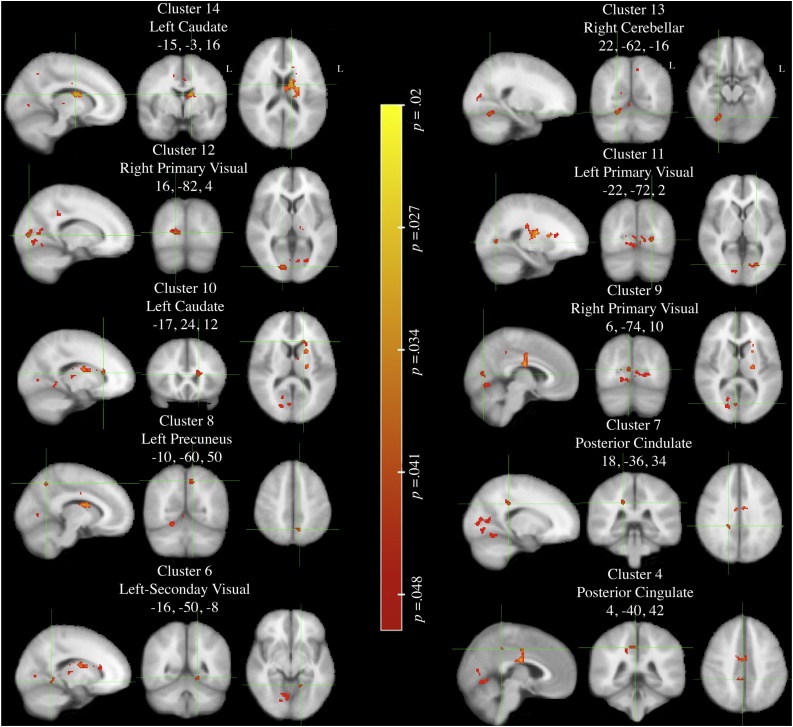
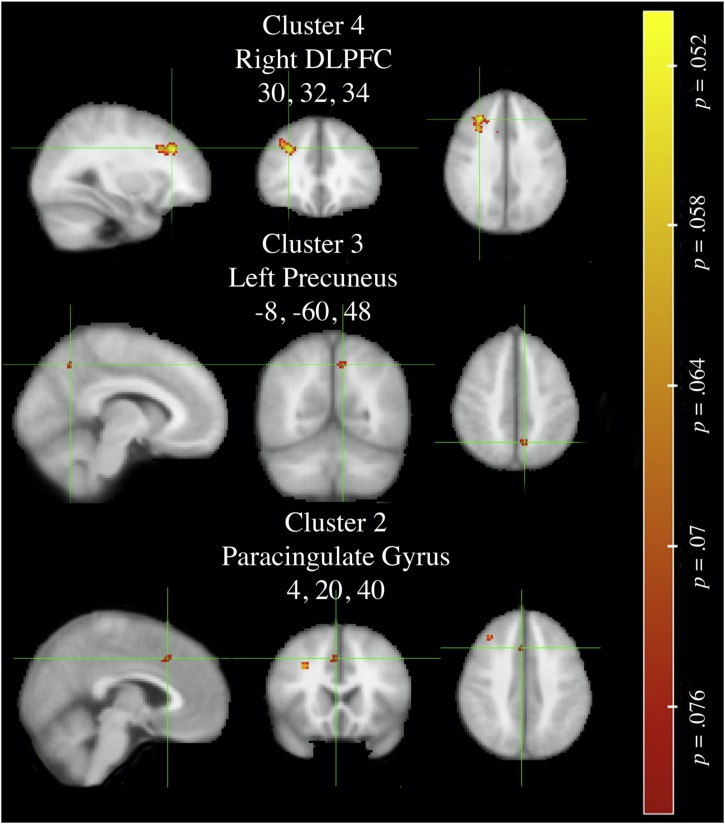
Since the first neurodevelopmental models that sought to explain the influx of risky behaviors during adolescence were proposed, there have been a number of revisions, variations and criticisms. Despite providing a strong multi-disciplinary heuristic to explain the development of risk behavior, extant models have not yet reliably isolated neural systems that underlie risk behaviors in adolescence. To address this gap, we screened 2017 adolescents from an ongoing longitudinal study that assessed 15-health risk behaviors, targeting 104 adolescents (Age Range: 17-to-21.4), characterized as high-or-average/low risk-taking. Participants completed the Monetary Incentive Delay (MID) fMRI task, examining reward anticipation to "big win" versus "neutral". We examined neural response variation associated with both baseline and longitudinal (multi-wave) risk classifications. Analyses included examination of a priori regions of interest (ROIs); and exploratory non-parametric, whole-brain analyses. Hypothesis-driven ROI analysis revealed no significant differences between high- and average/low-risk profiles using either baseline or multi-wave classification. Results of whole-brain analyses differed according to whether risk assessment was based on baseline or multi-wave data. Despite significant mean-level task activation, these results do not generalize prior neural substrates implicated in reward anticipation and adolescent risk-taking. Further, these data indicate that whole-brain differences may depend on how risk-behavior profiles are defined.
自首次提出旨在解释青少年时期危险行为涌入的神经发育模型以来,已经进行了多次修订、变化和批评。尽管这些模型为解释风险行为的发展提供了强有力的多学科启发,但现有的模型尚未可靠地分离出青少年时期风险行为所依赖的神经系统。为了解决这一差距,我们筛选了来自正在进行的纵向研究的 2017 名青少年,该研究评估了 15 种健康风险行为,目标是 104 名青少年(年龄范围:17 至 21.4 岁),分为高风险或平均/低风险。参与者完成了货币激励延迟(MID)fMRI 任务,考察了对“大赢”与“中性”的奖励预期。我们检查了与基线和纵向(多波)风险分类相关的神经反应变化。分析包括检查先验感兴趣区域(ROI);以及探索性的非参数、全脑分析。基于假设的 ROI 分析显示,无论是基于基线还是多波分类,高风险和平均/低风险特征之间没有显著差异。全脑分析的结果根据风险评估是基于基线数据还是多波数据而有所不同。尽管任务激活存在显著的平均水平,但这些结果并不能推广先前涉及奖励预期和青少年风险行为的神经底物。此外,这些数据表明,全脑差异可能取决于如何定义风险行为特征。