Department of Psychology, University of Michigan, Ann Arbor, MI, USA.
Addiction Center, Department of Psychiatry, University of Michigan, Ann Arbor, MI, USA.
Brain Behav. 2021 May;11(5):e02093. doi: 10.1002/brb3.2093. Epub 2021 Mar 22.
Phenomena related to reward responsiveness have been extensively studied in their associations with substance use and socioemotional functioning. One important task in this literature is the Monetary Incentive Delay (MID) task. By cueing and delivering performance-contingent reward, the MID task has been demonstrated to elicit robust activation of neural circuits involved in different phases of reward responsiveness. However, systematic evaluations of common MID task contrasts have been limited to between-study comparisons of group-level activation maps, limiting their ability to directly evaluate how researchers' choice of contrasts impacts conclusions about individual differences in reward responsiveness or brain-behavior associations.
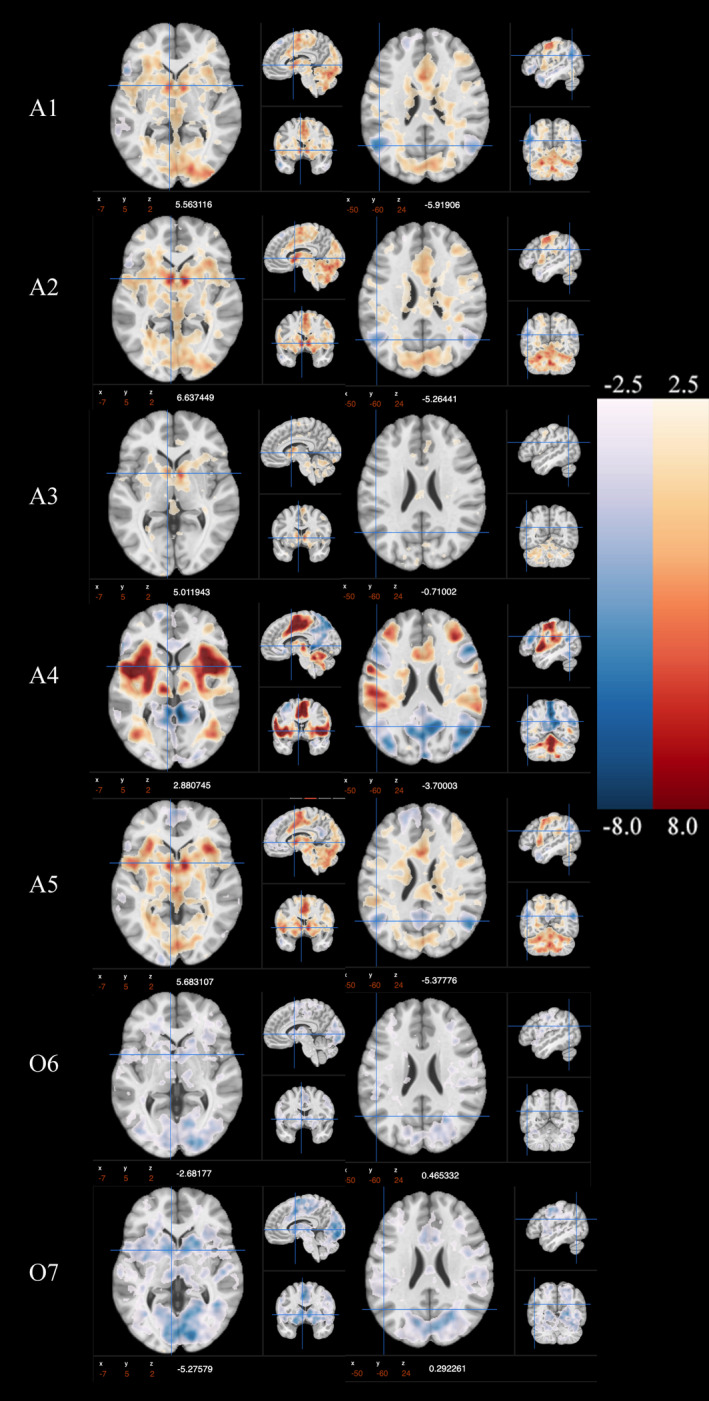
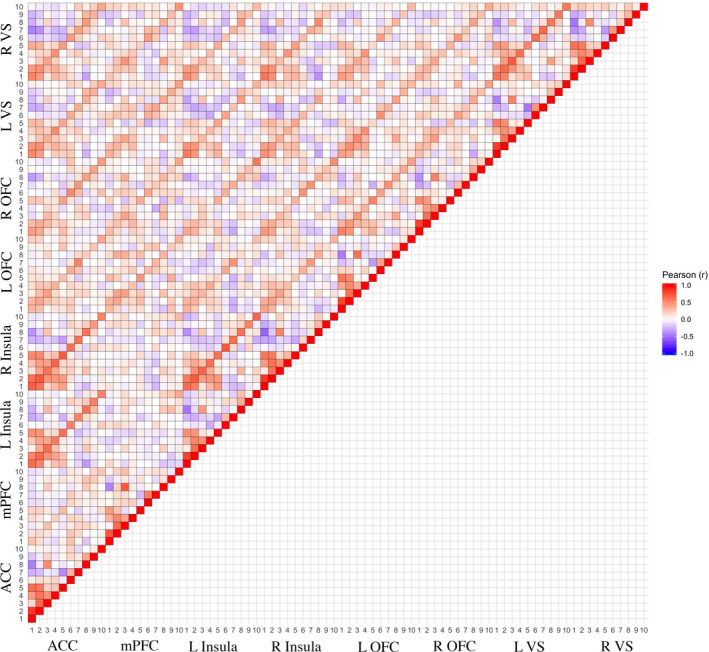
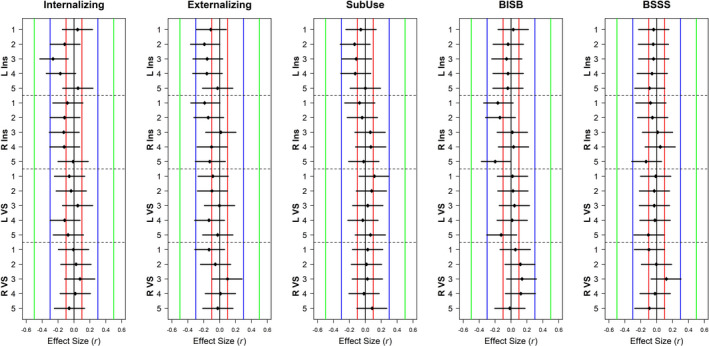
In a sample of 104 participants (Age Mean = 19.3, SD = 1.3), we evaluate similarities and differences between contrasts in: group- and individual-level activation maps using Jaccard's similarity index, region of interest (ROI) mean signal intensities using Pearson's r, and associations between ROI mean signal intensity and psychological measures using Bayesian correlation.
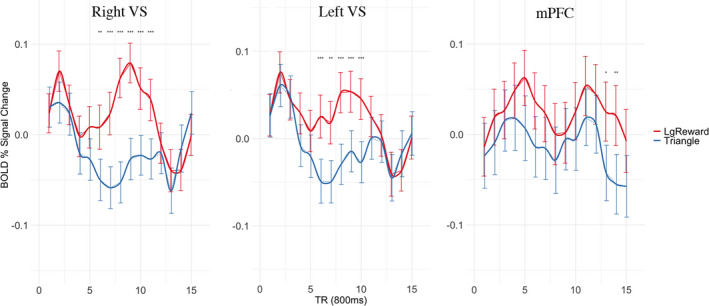
Our findings demonstrate more similarities than differences between win and loss cues during the anticipation contrast, dissimilarity between some win anticipation contrasts, an apparent deactivation effect in the outcome phase, likely stemming from the blood oxygen level-dependent undershoot, and behavioral associations that are less robust than previously reported.
Consistent with recent empirical findings, this work has practical implications for helping researchers interpret prior MID studies and make more informed a priori decisions about how their contrast choices may modify results.
与奖励反应相关的现象已在其与物质使用和社会情感功能的关联中得到广泛研究。该文献中的一个重要任务是金钱激励延迟(MID)任务。通过提示和提供与表现相关的奖励,MID 任务已被证明可以引起与奖励反应的不同阶段相关的神经回路的强烈激活。然而,对常见 MID 任务对比的系统评估仅限于组水平激活图的研究间比较,限制了它们直接评估研究人员对比选择如何影响奖励反应个体差异或大脑-行为关联结论的能力。
在 104 名参与者(年龄均值= 19.3,SD= 1.3)的样本中,我们使用杰卡德相似性指数评估:群体和个体水平激活图之间的对比,使用皮尔逊 r 评估感兴趣区域(ROI)的平均信号强度之间的对比,以及使用贝叶斯相关评估 ROI 平均信号强度与心理测量之间的关联。
我们的研究结果表明,在预期对比期间,赢和输线索之间的相似性多于差异,一些赢预期对比之间的差异,结果阶段的明显去激活效应,可能源于血氧水平依赖的欠冲,以及行为关联不如以前报道的那么稳健。
与最近的实证发现一致,这项工作对帮助研究人员解释先前的 MID 研究并就其对比选择如何可能改变结果做出更明智的先验决策具有实际意义。