School of Biological Sciences, University of Bristol, Bristol, BS8 ITQ, UK.
Department of Zoology, University of Cambridge, Cambridge, CB2 3EJ, UK.
Nat Commun. 2020 Jun 1;11(1):2737. doi: 10.1038/s41467-020-16578-x.
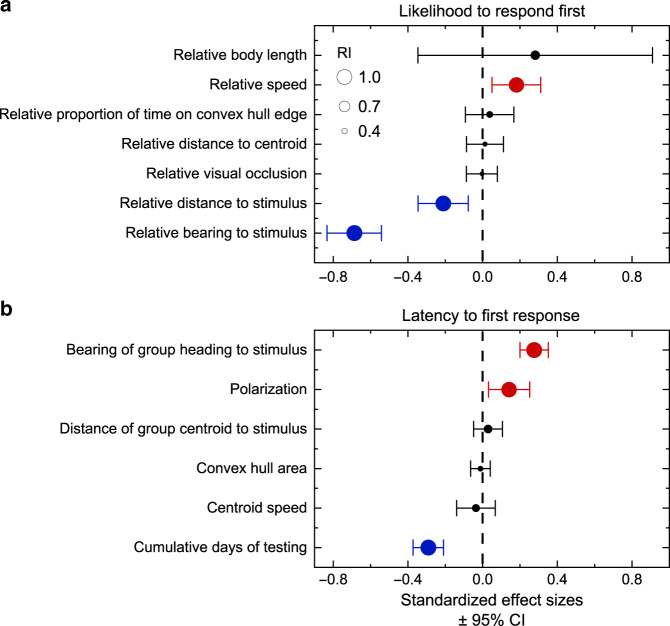
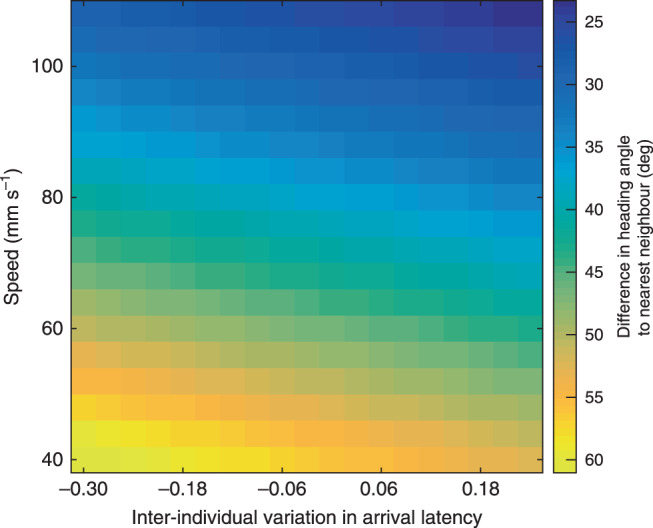
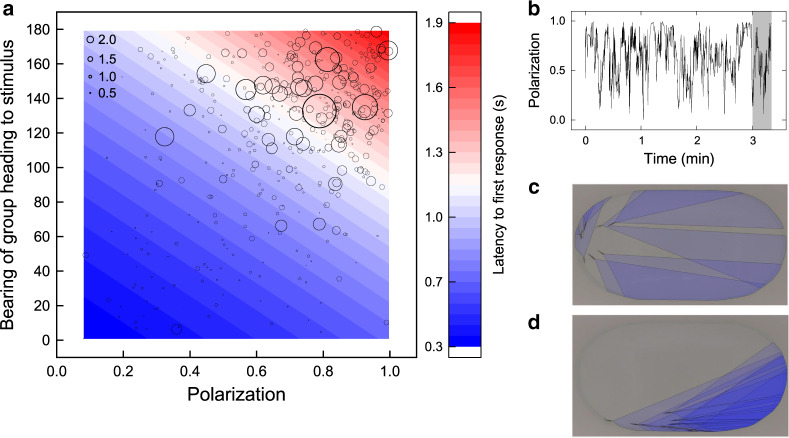
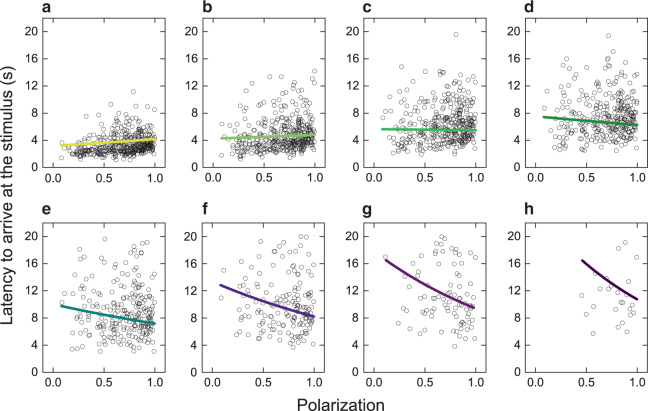
Animal groups vary in their collective order (or state), forming disordered swarms to highly polarized groups. One explanation for this variation is that individuals face differential benefits or costs depending on the group's order, but empirical evidence for this is lacking. Here we show that in three-spined sticklebacks (Gasterosteus aculeatus), fish that are first to respond to an ephemeral food source do so faster when shoals are in a disordered, swarm-like state. This is because individuals' visual fields collectively cover more of their environment, meaning private information is more readily available in disordered groups. Once social information becomes available, however, the arrival times of subsequent group members to the food are faster in more ordered, polarized groups. Our data further suggest that first responding individuals (those that benefit from group disorder) maintain larger differences in heading angle to their nearest neighbours when shoaling, thereby explaining how conflict over whether private or social information is favoured can drive dynamic changes in collective behaviour.
动物群体的集体秩序(或状态)存在差异,从无序的蜂群到高度极化的群体都有。这种变化的一个解释是,个体根据群体的秩序面临不同的收益或成本,但缺乏这方面的经验证据。在这里,我们表明,在三刺鱼(Gasterosteus aculeatus)中,当鱼群处于无序的蜂群状态时,第一个对短暂食物源做出反应的鱼会更快地做出反应。这是因为个体的视野集体覆盖了更多的环境,这意味着无序群体中更容易获得私人信息。然而,一旦社会信息可用,随后群体成员到达食物的时间在更有序、极化的群体中更快。我们的数据还表明,首先做出反应的个体(那些从群体无序中受益的个体)在群体中保持更大的头部角度差异,从而解释了如何通过冲突来驱动群体行为的动态变化,即是优先考虑私人信息还是社会信息。