Animal Reproduction Department, INIA, Madrid, Spain.
Department of Cell Biology and Histology, Medical School, University of Murcia, IMIB-Arrixaca, Murcia, Spain.
Elife. 2020 Jun 2;9:e53913. doi: 10.7554/eLife.53913.
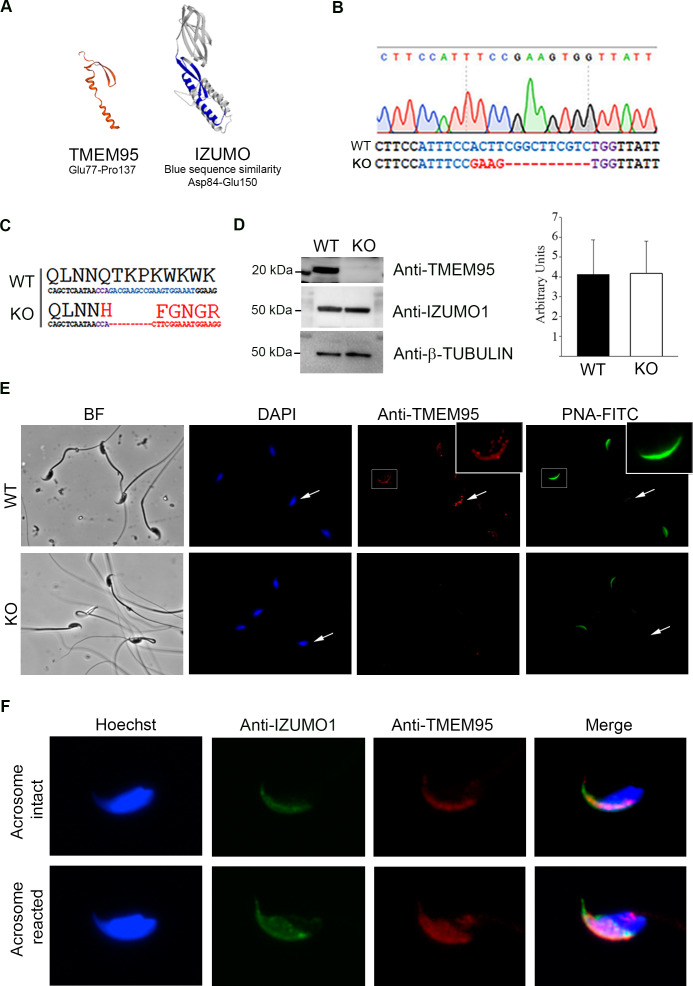
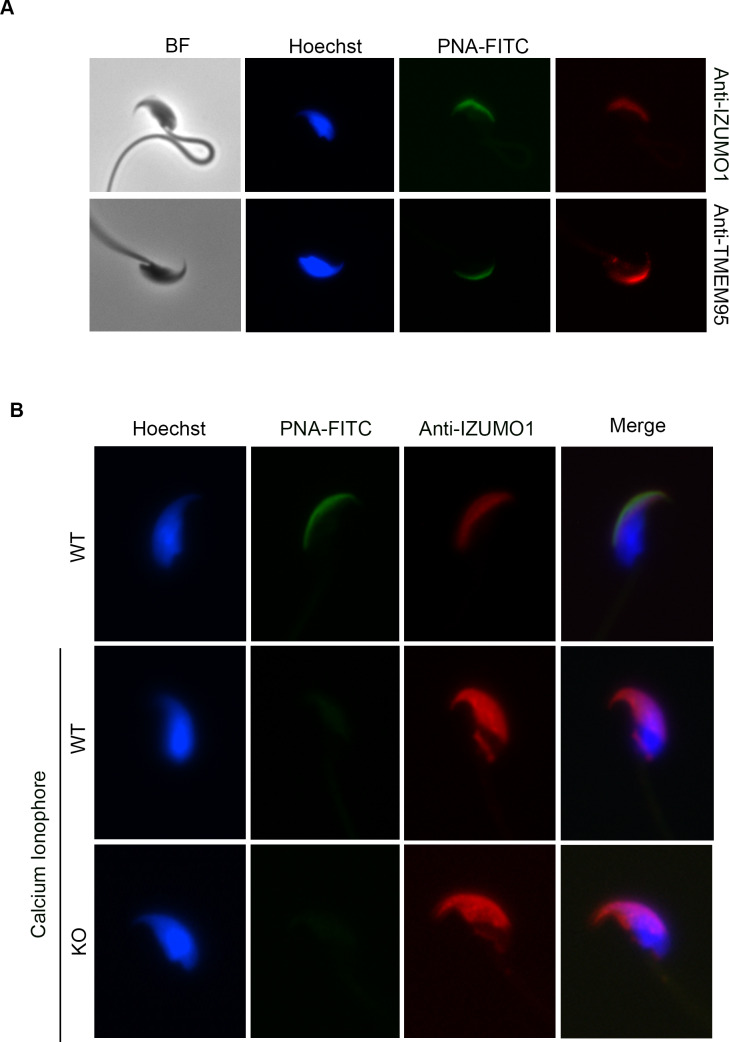
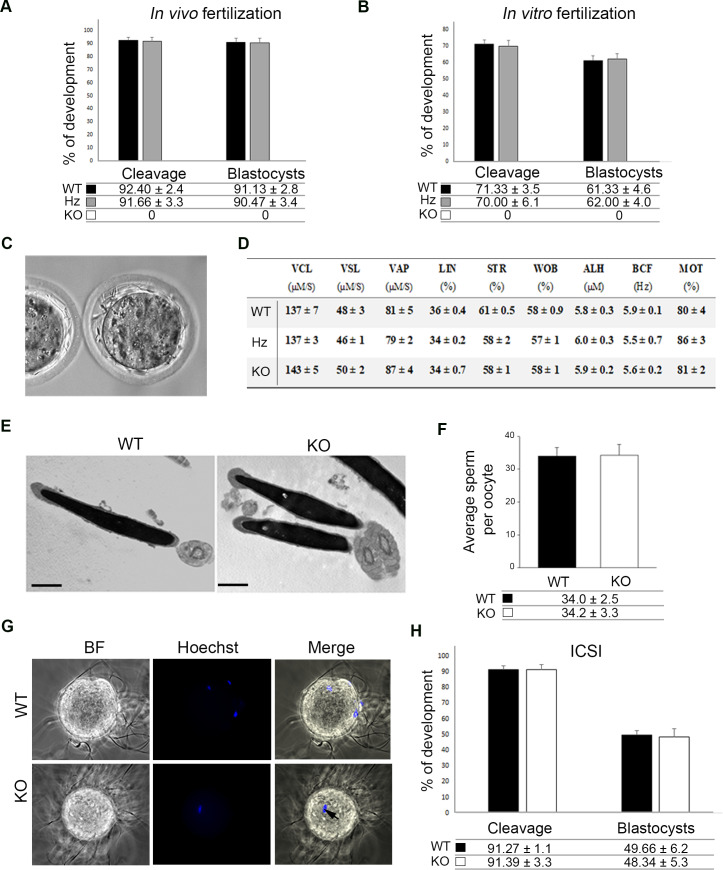
The fusion of gamete membranes during fertilization is an essential process for sexual reproduction. Despite its importance, only three proteins are known to be indispensable for sperm-egg membrane fusion: the sperm proteins IZUMO1 and SPACA6, and the egg protein JUNO. Here we demonstrate that another sperm protein, TMEM95, is necessary for sperm-egg interaction. TMEM95 ablation in mice caused complete male-specific infertility. Sperm lacking this protein were morphologically normal exhibited normal motility, and could penetrate the zona pellucida and bind to the oolemma. However, once bound to the oolemma, TMEM95-deficient sperm were unable to fuse with the egg membrane or penetrate into the ooplasm, and fertilization could only be achieved by mechanical injection of one sperm into the ooplasm, thereby bypassing membrane fusion. These data demonstrate that TMEM95 is essential for mammalian fertilization.
精卵膜融合是有性生殖的一个重要过程。尽管其重要性不言而喻,但已知只有三种蛋白质对于精卵膜融合是不可或缺的:精子蛋白 IZUMO1 和 SPACA6,以及卵子蛋白 JUNO。在这里,我们证明另一种精子蛋白 TMEM95 对于精卵相互作用是必需的。在小鼠中敲除 TMEM95 会导致完全的雄性特异性不育。缺乏这种蛋白的精子在形态上正常,表现出正常的运动能力,并且能够穿透透明带并与卵母细胞膜结合。然而,一旦与卵母细胞膜结合,缺乏 TMEM95 的精子就无法与卵子膜融合或穿透进入卵质,只有通过机械注射一个精子进入卵质才能实现受精,从而绕过膜融合。这些数据表明 TMEM95 对于哺乳动物受精是必不可少的。