Shahzadi Iram, Fürst Andrea, Akkus-Dagdeviren Zeynep Burcu, Arshad Shumaila, Kurpiers Markus, Matuszczak Barbara, Bernkop-Schnürch Andreas
Center for Chemistry and Biomedicine, Department of Pharmaceutical Technology, Institute of Pharmacy, University of Innsbruck, Innrain 80-82, A-6020 Innsbruck, Austria.
Faculty of Pharmacy, The University of Lahore, 54000 Lahore, Pakistan.
Polymers (Basel). 2020 May 30;12(6):1259. doi: 10.3390/polym12061259.
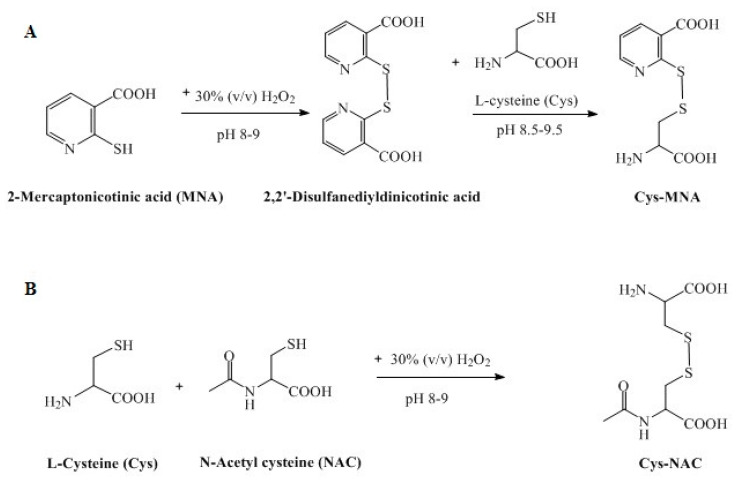
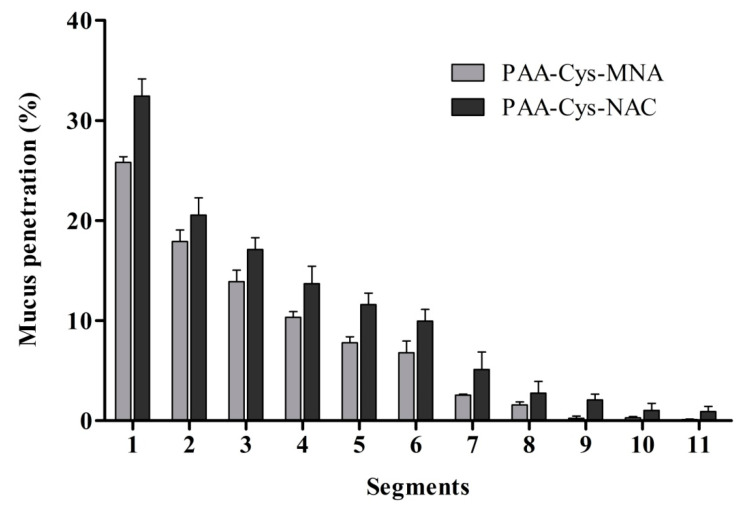
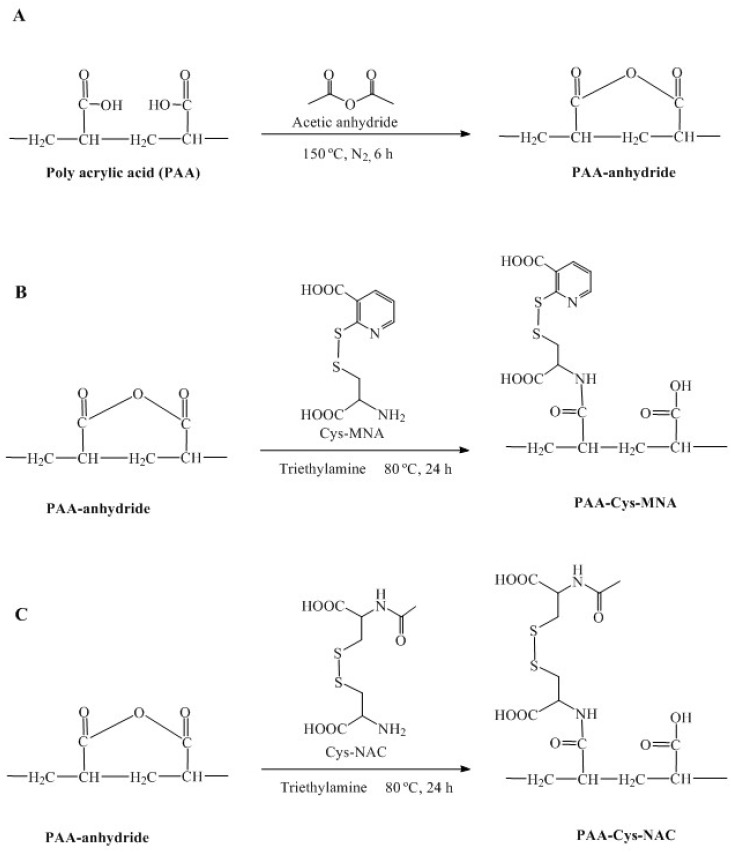
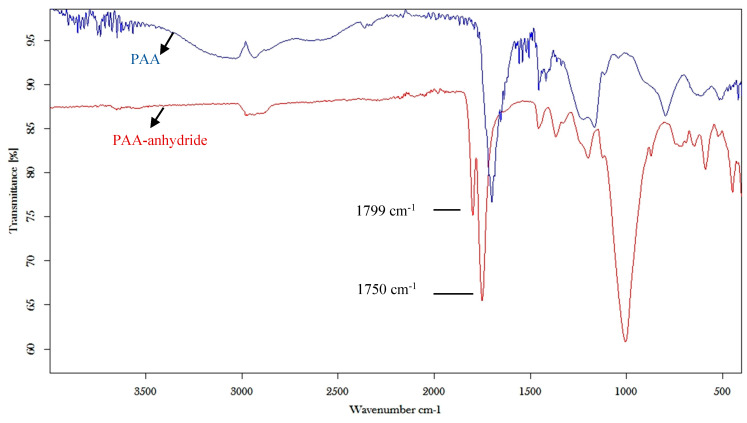
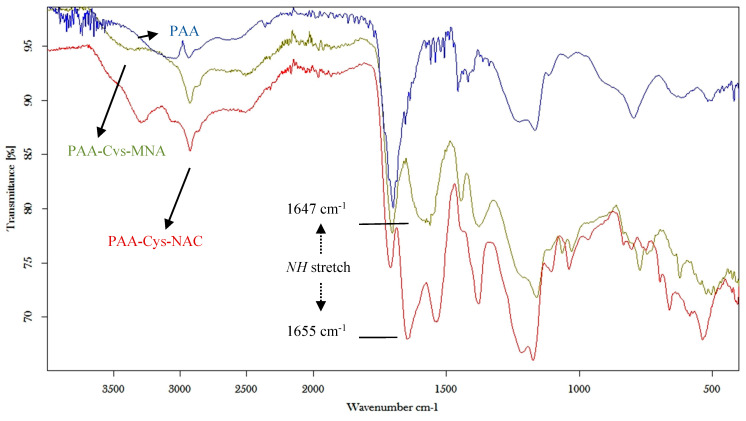
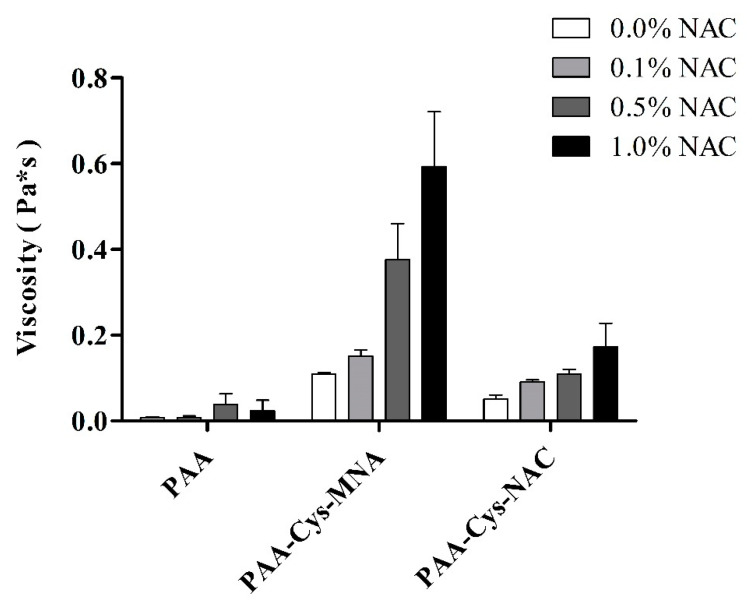
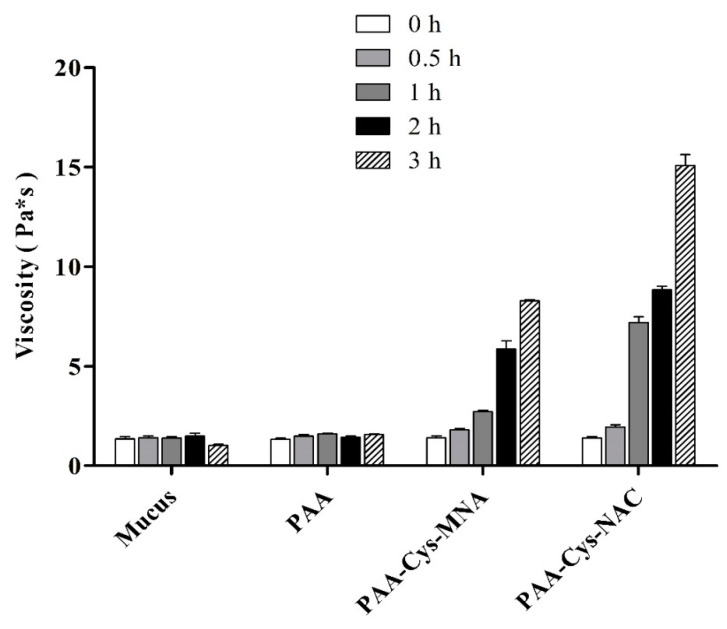
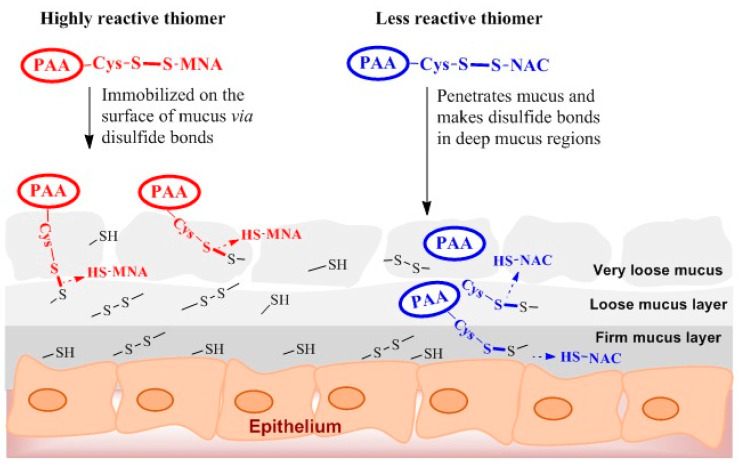
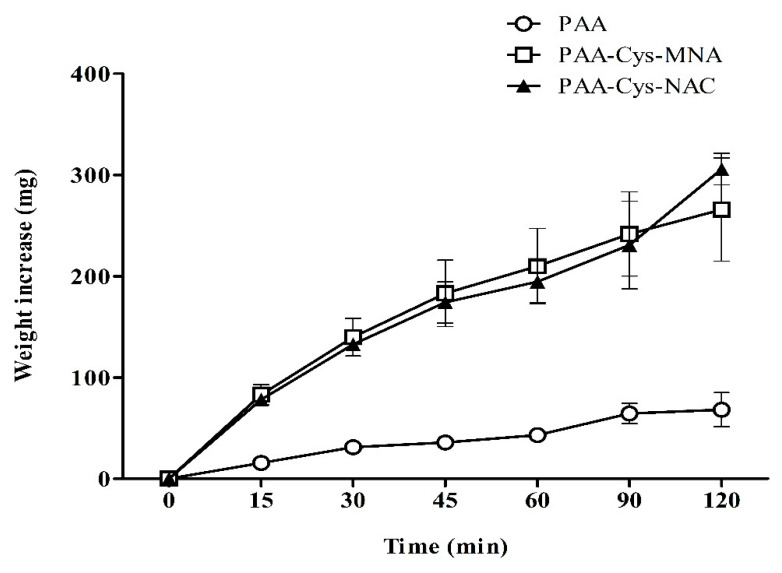
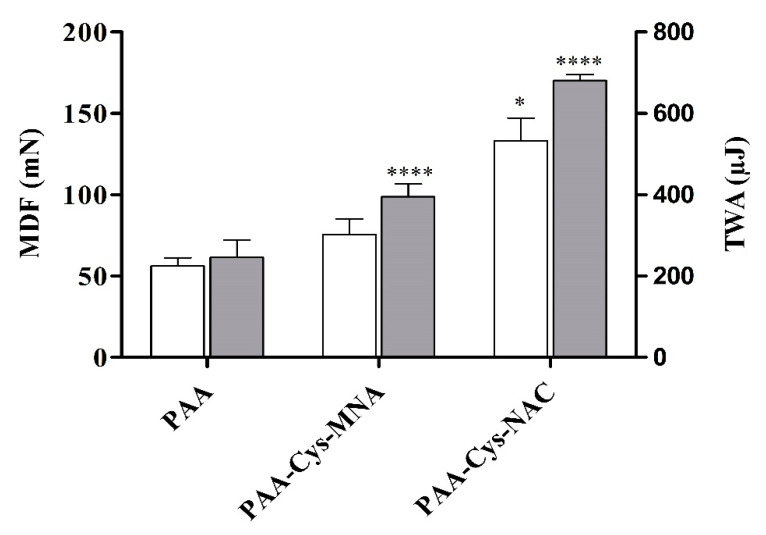
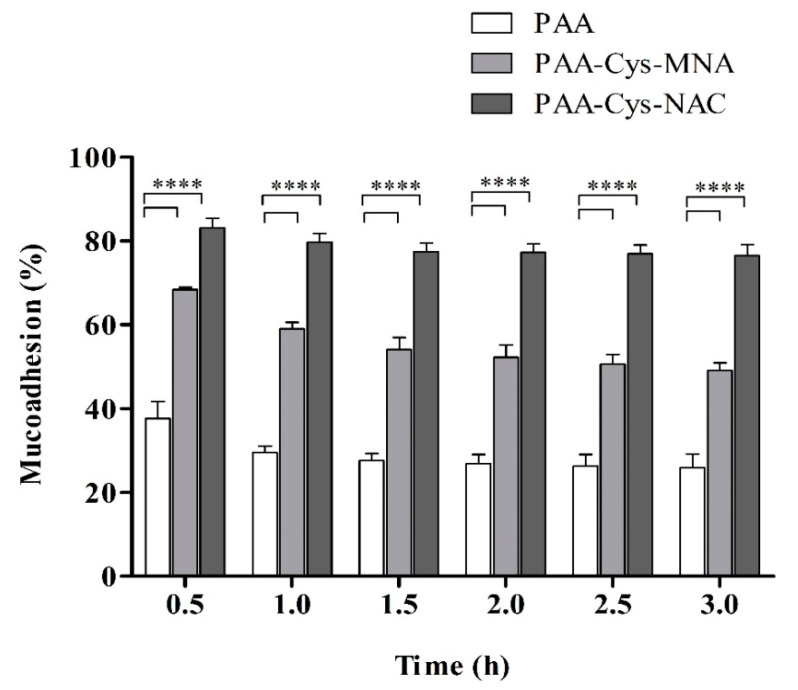
As less reactive s-protected thiomers can likely interpenetrate the mucus gel layer to a higher extent before getting immobilized via disulfide bond formation with mucins, it was the aim of this study to develop a novel type of s-protected thiomer based on the less reactive substructure cysteine--acetyl cysteine (Cys-NAC) in order to obtain improved mucoadhesive properties. For this purpose, two types of s-protected thiomers, polyacrylic acid-cysteine-mercaptonicotinic acid (PAA-Cys-MNA) and polyacrylic acid-cysteine--acetyl cysteine (PAA-Cys-NAC), were synthesized and characterized by Fourier-transform infrared spectroscopy (FT-IR) and the quantification of attached disulfide ligands. The viscosity of both products was measured in the presence of NAC and mucus. Both thiomers were also evaluated regarding swelling behavior, tensile studies and retention time on the porcine intestinal mucosa. The FT-IR spectra confirmed the successful attachment of Cys-MNA and Cys-NAC ligands to PAA. The number of attached sulfhydryl groups was in the range of 660-683 µmol/g. The viscosity of both s-protected thiomers increased due to the addition of increasing amounts of NAC. The viscosity of the mucus increased in the presence of 1% PAA-Cys-MNA and PAA-Cys-NAC 5.6- and 10.9-fold, respectively, in comparison to only 1% PAA. Both s-protected thiomers showed higher water uptake than unmodified PAA. The maximum detachment force (MDF) and the total work of adhesion (TWA) increased in the case of PAA-Cys-MNA up to 1.4- and 1.6-fold and up to 2.4- and 2.8-fold in the case of PAA-Cys-NAC. The retention of PAA, PAA-Cys-MNA, and PAA-Cys-NAC on porcine intestinal mucosa was 25%, 49%, and 76% within 3 h, respectively. The results of this study provide evidence that less reactive s-protected thiomers exhibit higher mucoadhesive properties than highly reactive s-protected thiomers.
由于反应性较低的S-保护硫醇聚合物在通过与粘蛋白形成二硫键固定之前,可能更易穿透黏液凝胶层,因此本研究旨在基于反应性较低的亚结构半胱氨酸-乙酰半胱氨酸(Cys-NAC)开发一种新型的S-保护硫醇聚合物,以获得更好的粘膜粘附性能。为此,合成了两种类型的S-保护硫醇聚合物,即聚丙烯酸-半胱氨酸-巯基烟酸(PAA-Cys-MNA)和聚丙烯酸-半胱氨酸-乙酰半胱氨酸(PAA-Cys-NAC),并通过傅里叶变换红外光谱(FT-IR)和附着二硫键配体的定量分析对其进行了表征。在NAC和黏液存在的情况下测量了两种产品的粘度。还对两种硫醇聚合物的溶胀行为、拉伸研究和在猪肠黏膜上的保留时间进行了评估。FT-IR光谱证实了Cys-MNA和Cys-NAC配体成功附着到PAA上。附着巯基的数量在660-683 μmol/g范围内。由于添加了越来越多的NAC,两种S-保护硫醇聚合物的粘度均增加。与仅含1% PAA相比,在存在1% PAA-Cys-MNA和PAA-Cys-NAC的情况下,黏液的粘度分别增加了5.6倍和10.9倍。两种S-保护硫醇聚合物均显示出比未改性PAA更高的吸水率。在PAA-Cys-MNA的情况下,最大脱离力(MDF)和总粘附功(TWA)分别增加至1.4倍和1.6倍,在PAA-Cys-NAC的情况下分别增加至2.4倍和2.8倍。PAA、PAA-Cys-MNA和PAA-Cys-NAC在猪肠黏膜上的保留率在3小时内分别为25%、49%和76%。本研究结果表明,反应性较低的S-保护硫醇聚合物比反应性较高的S-保护硫醇聚合物表现出更高的粘膜粘附性能。