Swiss Institute for Experimental Cancer Research, School of Life Sciences, Ecole Polytechnique Fédérale de Lausanne, CH-1015, Lausanne, Switzerland.
Laboratory of Radiation Oncology, Department of Radiation Oncology, Department of Oncology, CHUV, Lausanne University Hospital and University of Lausanne, CH-1011, Lausanne, Switzerland.
Nat Commun. 2020 Jun 2;11(1):2762. doi: 10.1038/s41467-020-16596-9.
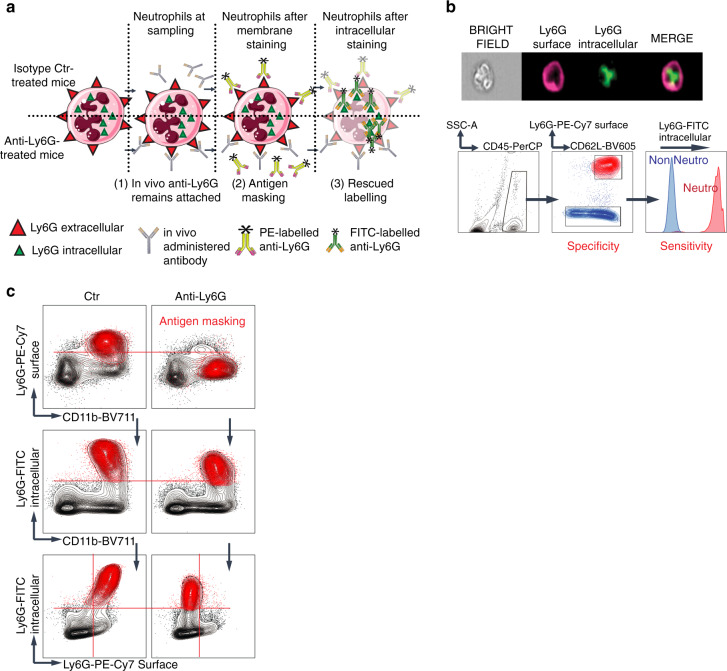
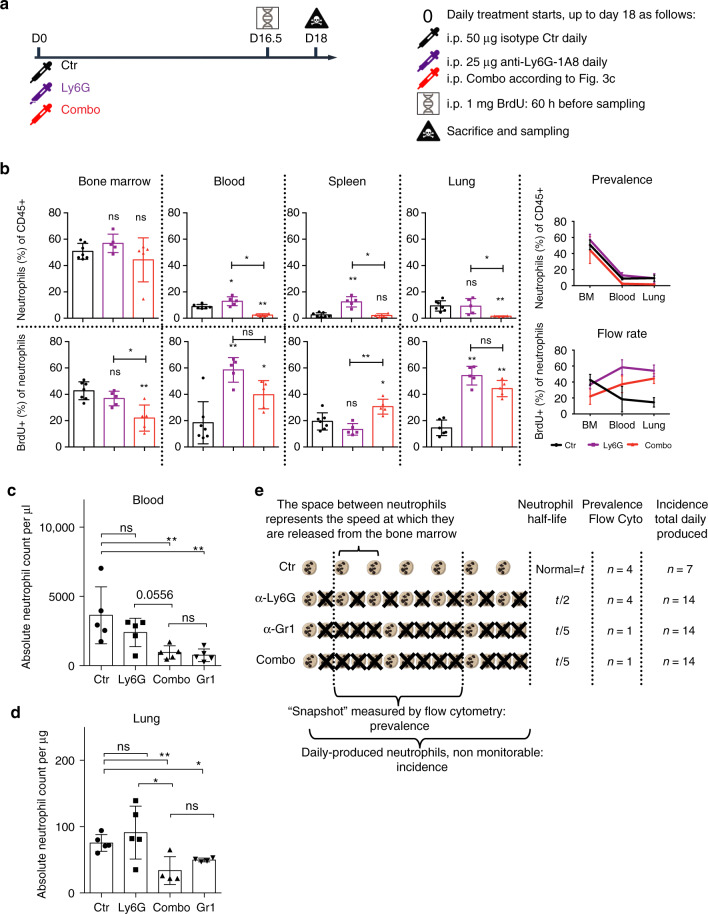
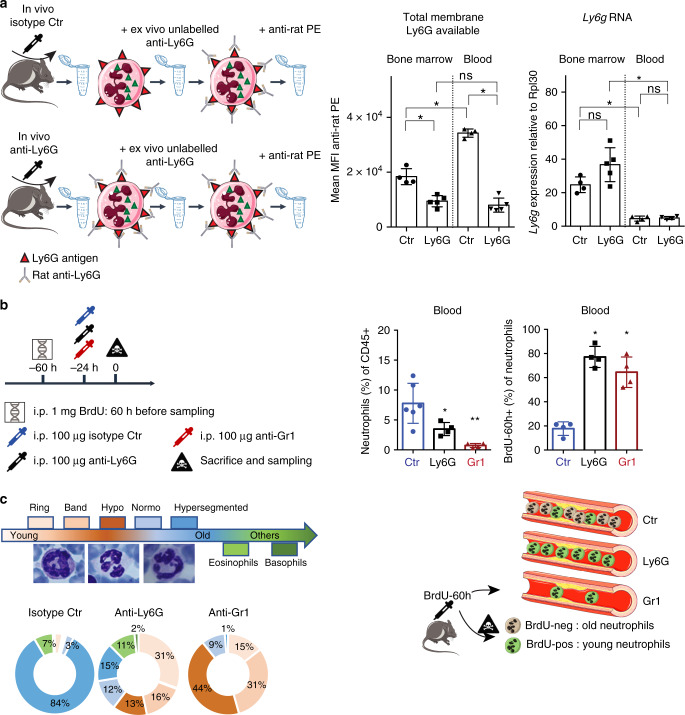
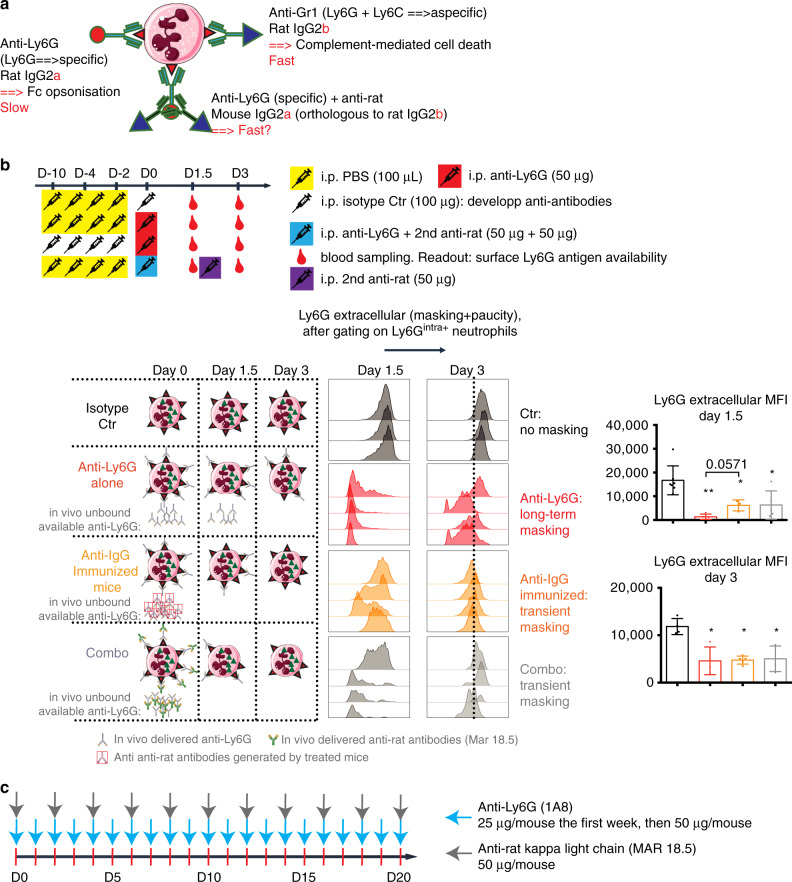
Neutrophils are an essential part of the innate immune system. To study their importance, experimental studies often aim to deplete these cells, generally by injecting anti-Ly6G or anti-Gr1 antibodies. However, these approaches are only partially effective, transient or lack specificity. Here we report that neutrophils remaining after anti-Ly6G treatment are newly derived from the bone marrow, instead of depletion escapees. Mechanistically, newly generated, circulating neutrophils have lower Ly6G membrane expression, and consequently reduced targets for anti-Ly6G-mediated depletion. To overcome this limitation, we develop a double antibody-based depletion strategy that enhances neutrophil elimination by anti-Ly6G treatment. This approach achieves specific, durable and controlled reduction of neutrophils in vivo, and may be suitable for studying neutrophil function in experimental models.
中性粒细胞是先天免疫系统的重要组成部分。为了研究其重要性,实验研究通常旨在耗尽这些细胞,通常通过注射抗 Ly6G 或抗 Gr1 抗体来实现。然而,这些方法的效果并不完全,而且是短暂的或缺乏特异性。在这里,我们报告称,在用抗 Ly6G 处理后残留的中性粒细胞是新来自骨髓的,而不是耗尽逃逸的细胞。从机制上讲,新生成的循环中性粒细胞的 Ly6G 膜表达水平较低,因此减少了抗 Ly6G 介导的耗竭的靶标。为了克服这一限制,我们开发了一种基于双抗体的耗竭策略,通过抗 Ly6G 处理增强中性粒细胞的消除。这种方法可实现体内中性粒细胞的特异性、持久性和可控性减少,可能适用于研究实验模型中的中性粒细胞功能。