State Key Laboratory of Continental Dynamics, Shaanxi Key Laboratory of Early Life & Environments and Department of Geology, Northwest University, 710069, Xi'an, China.
Department of Palaeobiology, Swedish Museum of Natural History, SE-10405, Stockholm, Sweden.
Nat Commun. 2020 Jun 2;11(1):2625. doi: 10.1038/s41467-020-16332-3.
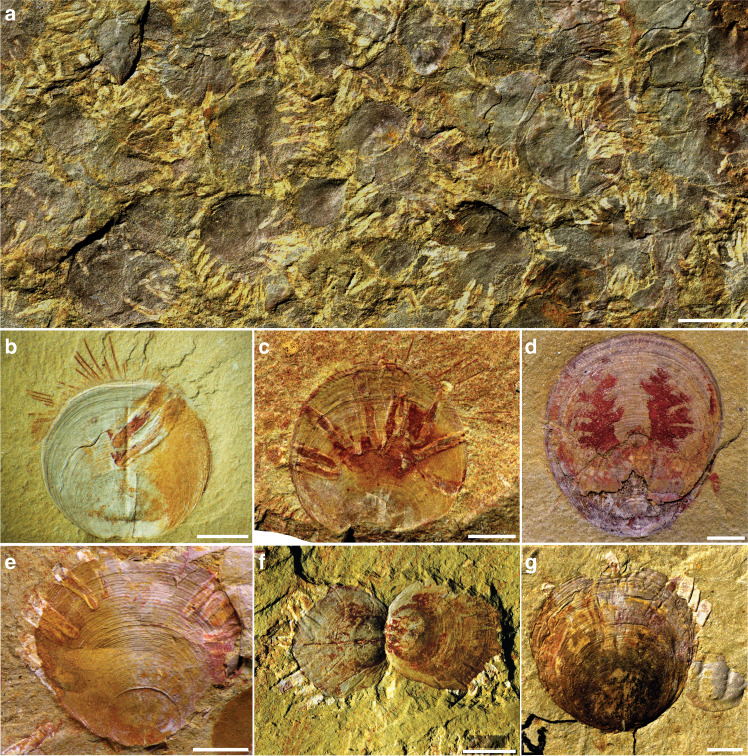
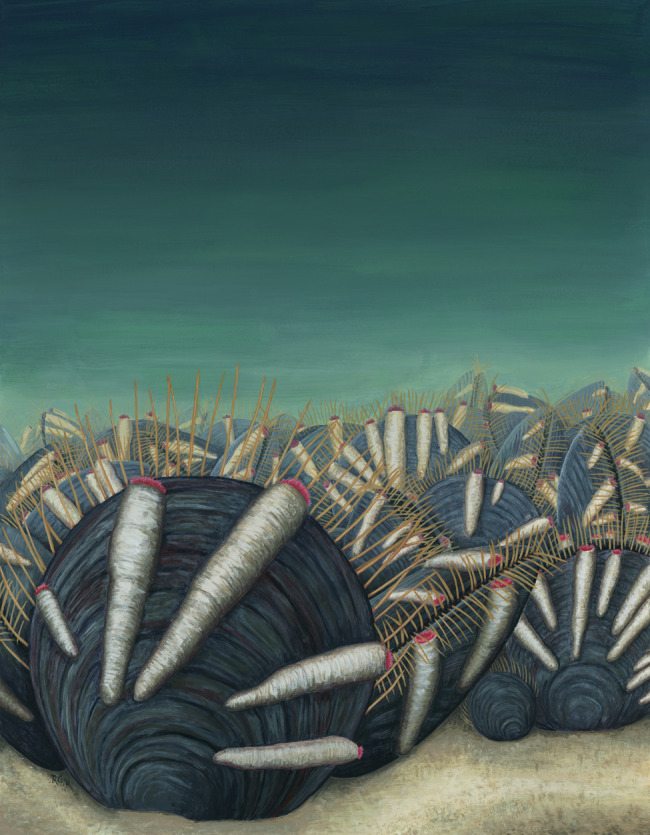
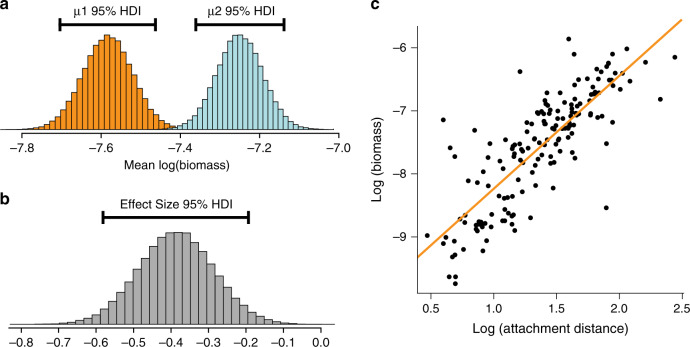
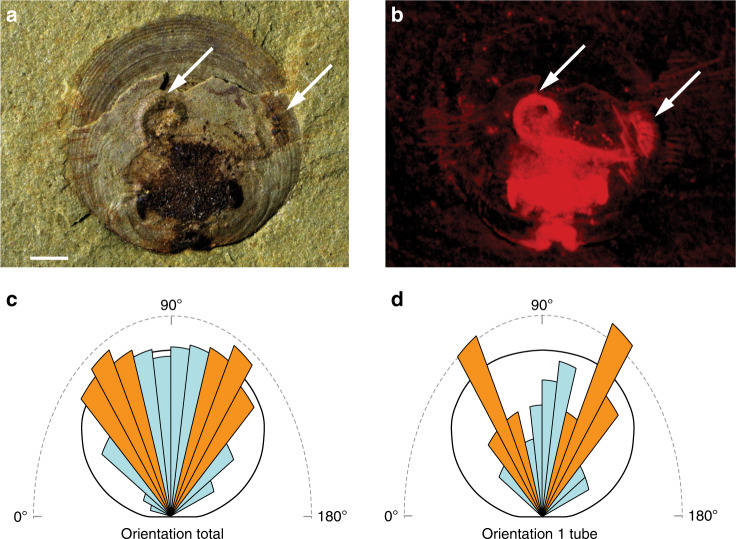
Parasite-host systems are pervasive in nature but are extremely difficult to convincingly identify in the fossil record. Here we report quantitative evidence of parasitism in the form of a unique, enduring life association between tube-dwelling organisms encrusted to densely clustered shells of a monospecific organophosphatic brachiopod assemblage from the lower Cambrian (Stage 4) of South China. Brachiopods with encrusting tubes have decreased biomass (indicating reduced fitness) compared to individuals without tubes. The encrusting tubes orient tightly in vectors matching the laminar feeding currents of the host, suggesting kleptoparasitism. With no convincing parasite-host interactions known from the Ediacaran, this widespread sessile association reveals intimate parasite-host animal systems arose in early Cambrian benthic communities and their emergence may have played a key role in driving the evolutionary and ecological innovations associated with the Cambrian radiation.
寄生虫-宿主系统在自然界中普遍存在,但在化石记录中极难令人信服地识别。在这里,我们报告了寄生虫存在的定量证据,形式为一种独特的、持久的生命关联,这种关联存在于管栖生物与华南下寒武纪(第 4 阶段)的单一有机磷腕足动物组合体紧密聚集的壳之间。与没有管栖生物的个体相比,有管栖生物的壳上有附着物的腕足动物生物量减少(表明适应性降低)。管栖生物的附着物呈定向排列,与宿主的层流觅食流方向一致,表明这是一种盗食寄生。由于埃迪卡拉纪没有令人信服的寄生虫-宿主相互作用的记录,这种广泛存在的固着生物联系揭示了早期寒武纪底栖生物群落中出现了密切的寄生虫-宿主动物系统,它们的出现可能在推动与寒武纪辐射相关的进化和生态创新方面发挥了关键作用。