Basta Fabio, Fasola Federica, Triantafyllias Konstantinos, Schwarting Andreas
Acura Rheumatology Center Rhineland Palatinate, Bad Kreuznach, Germany.
University Center of Autoimmunity, Johannes Gutenberg University, Mainz, Germany.
Rheumatol Ther. 2020 Sep;7(3):433-446. doi: 10.1007/s40744-020-00212-9. Epub 2020 Jun 2.
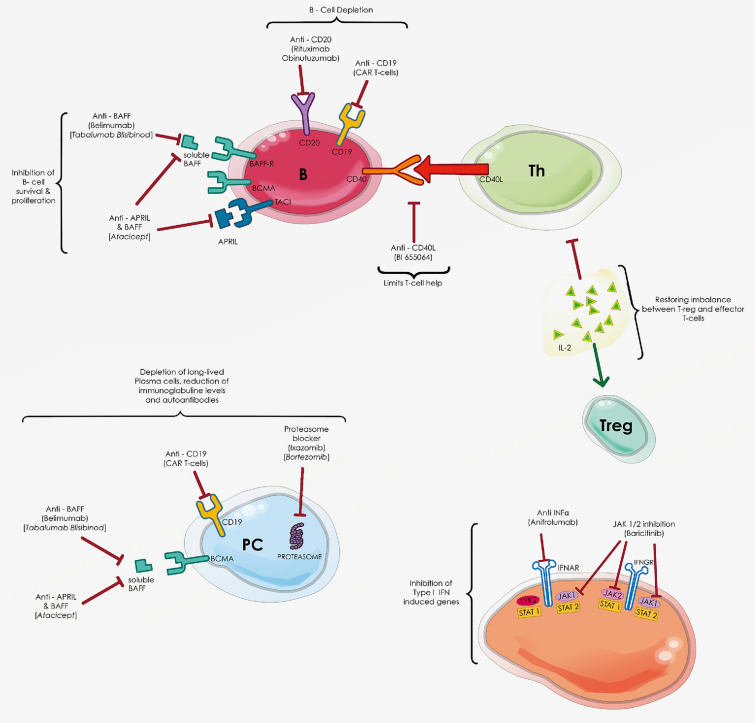
Despite recent improvements in the treatment of systemic lupus erythematosus (SLE), disease activity, comorbidities and drug toxicity significantly contribute to the risk of progressive irreversible damage accrual and increased mortality in patients with this chronic disease. Moreover, even lupus patients in remission often report residual symptoms, such as fatigue, which have a considerable impact on their health-related quality of life. In recent decades, SLE treatment has moved from the use of hydroxychloroquine, systemic glucocorticosteroids and conventional immunosuppressive drugs to biologic agents, of which belimumab is the first and only biologic agent approved for the treatment for SLE to date. Novel therapies targeting interferons, cytokines and their receptors, intracellular signals, plasma cells, T lymphocytes and co-stimulatory molecules are being evaluated. In the context of a holistic approach, growing evidence is emerging of the importance of correct lifestyle habits in the management of lupus manifestations and comorbidities. The aim of this paper is to provide an overview of current pharmacological and non-pharmacological treatment options and emerging therapies in SLE.
尽管近年来系统性红斑狼疮(SLE)的治疗有所改善,但疾病活动、合并症和药物毒性显著增加了这种慢性病患者发生进行性不可逆损害和死亡率上升的风险。此外,即使是处于缓解期的狼疮患者也经常报告有残留症状,如疲劳,这对他们的健康相关生活质量有相当大的影响。近几十年来,SLE的治疗已从使用羟氯喹、全身性糖皮质激素和传统免疫抑制药物转向生物制剂,其中贝利尤单抗是迄今为止首个也是唯一获批用于治疗SLE的生物制剂。针对干扰素、细胞因子及其受体、细胞内信号、浆细胞、T淋巴细胞和共刺激分子的新型疗法正在评估中。在整体治疗的背景下,越来越多的证据表明正确的生活习惯在狼疮表现和合并症管理中的重要性。本文旨在概述SLE当前的药物和非药物治疗选择以及新兴疗法。