Mohamed Asma'a H, Shafie Alaa, Al-Samawi Rithab Ibrahim, Jamali Mohammad Chand, Ashour Amal Adnan, Felemban Mohammed Fareed, Alqarni Ali, Ahmad Irshad, Mansuri Nasrin, Ahmad Fuzail, Yousif Adil Abdelrahim Mohammed
Department of Optometry Techniques, Technical College Al-Mussaib, Al-Furat Al-Awsat Technical University, Najaf, Iraq.
Department of Clinical Laboratory Sciences, College of Applied Medical Sciences, Taif University, P.O.Box 11099, Taif, 21944, Saudi Arabia.
Gut Pathog. 2025 Jun 17;17(1):45. doi: 10.1186/s13099-025-00702-7.
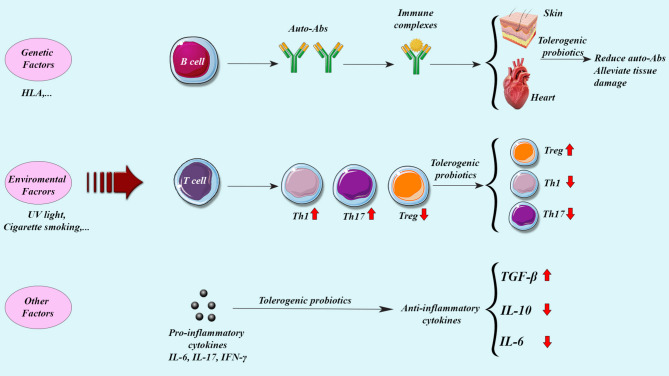
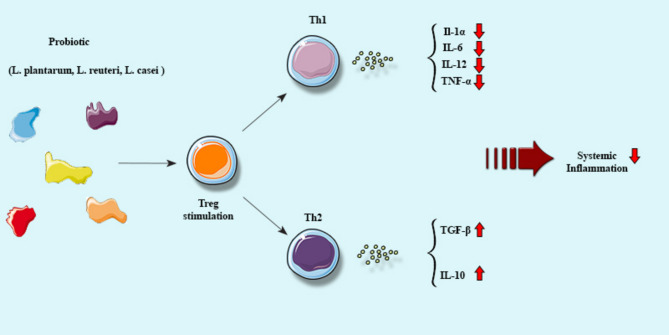
Systemic lupus erythematosus (SLE) is an autoimmune disorder branded via over-activation of the immune system, resulting in atypical roles of natural and adaptive immune cells and the making of numerous autoantibodies against nuclear components. The causes and pathogenesis of this disease are not completely realized. The gut microbiota plays a significant character in human health and disorder, particularly in autoimmune diseases.Gut microbiome dysbiosis can affect the host immune system as suggested by several recent studies, balance and activity of the gut microbiome, which are influenced by daily diet, might be associated with disease activity in SLE. There are rising signs to support the immunomodulatory abilities of certain probiotics. Numerous investigational and clinical surveys have demonstrated the useful effects of certain probiotic bacteria, mainly strains of Lactobacillus and Bifidobacterium, in patients with SLE. Various species of bacteria were found to be positively or negatively associated with SLE gut microbiomes. A better comprehension of the Studying the gut microbiota will provide a good opportunity to identify microbes involved in tolerance in systemic lupus patients. The purpose of this study is to review the existing literature on probiotics that have the ability to restore tolerance and modulate the levels of inflammatory or anti-inflammatory cytokines that play a role in SLE.
系统性红斑狼疮(SLE)是一种因免疫系统过度激活而引发的自身免疫性疾病,导致天然免疫细胞和适应性免疫细胞功能异常,并产生多种针对核成分的自身抗体。这种疾病的病因和发病机制尚未完全明确。肠道微生物群在人类健康和疾病中起着重要作用,尤其是在自身免疫性疾病方面。最近的几项研究表明,肠道微生物群失调会影响宿主免疫系统,日常饮食会影响肠道微生物群的平衡和活性,这可能与SLE的疾病活动有关。越来越多的迹象支持某些益生菌具有免疫调节能力。许多研究性和临床调查已经证明某些益生菌,主要是乳酸杆菌和双歧杆菌菌株,对SLE患者有有益作用。发现多种细菌与SLE肠道微生物群呈正相关或负相关。更好地了解肠道微生物群将为识别参与系统性狼疮患者耐受性的微生物提供一个好机会。本研究的目的是综述现有关于益生菌的文献,这些益生菌能够恢复耐受性并调节在SLE中起作用的炎性或抗炎细胞因子水平。