Collaborative Innovation Center for Diagnosis and Treatment of Infectious Diseases, State Key Laboratory for Diagnosis and Treatment of Infectious Diseases, School of Medicine, First Affiliated Hospital, Zhejiang University, Hangzhou, Zhejiang, China.
Kidney Disease Center, The First Affiliated Hospital, College of Medicine, Zhejiang University, Hangzhou, Zhejiang, China.
J Cell Mol Med. 2018 Nov;22(11):5196-5207. doi: 10.1111/jcmm.13835. Epub 2018 Aug 30.
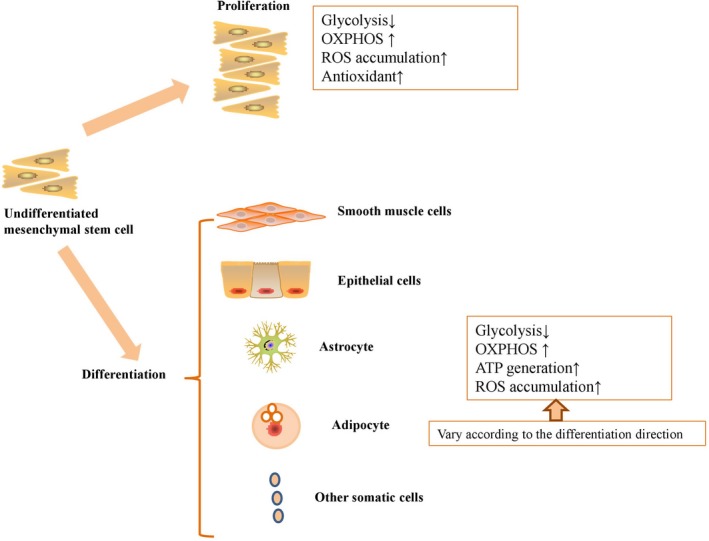
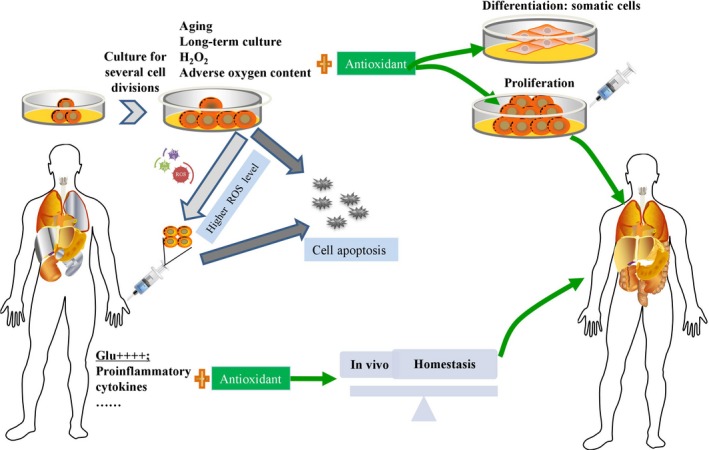
Mesenchymal stem cells (MSCs) are broadly used in cell-based regenerative medicine because of their self-renewal and multilineage potencies in vitro and in vivo. To ensure sufficient amounts of MSCs for therapeutic purposes, cells are generally cultured in vitro for long-term expansion or specific terminal differentiation until cell transplantation. Although physiologically up-regulated reactive oxygen species (ROS) production is essential for maintenance of stem cell activities, abnormally high levels of ROS can harm MSCs both in vitro and in vivo. Overall, additional elucidation of the mechanisms by which physiological and pathological ROS are generated is necessary to better direct MSC fates and improve their therapeutic effects by controlling external ROS levels. In this review, we focus on the currently revealed ROS generation mechanisms and the regulatory routes for controlling their rates of proliferation, survival, senescence, apoptosis, and differentiation. A promising strategy in future regenerative medicine involves regulating ROS generation via various means to augment the therapeutic efficacy of MSCs, thus improving the prognosis of patients with terminal diseases.
间充质干细胞(MSCs)因其在体外和体内的自我更新和多能性而被广泛用于基于细胞的再生医学。为了确保治疗所需的足够数量的 MSCs,细胞通常在体外进行长期培养以进行长期扩增或特定的终末分化,直到细胞移植。尽管生理上上调的活性氧(ROS)产生对于维持干细胞活性是必需的,但是异常高水平的 ROS 可以在体外和体内损害 MSCs。总的来说,需要进一步阐明生理和病理 ROS 产生的机制,以便通过控制外部 ROS 水平更好地指导 MSC 命运并提高其治疗效果。在这篇综述中,我们重点介绍了目前揭示的 ROS 产生机制以及控制其增殖、存活、衰老、凋亡和分化速度的调节途径。在未来的再生医学中,一种有前途的策略是通过各种手段调节 ROS 的产生,从而增强 MSCs 的治疗效果,从而改善终末期疾病患者的预后。