Department of Psychiatry, Icahn School of Medicine at Mount Sinai, New York, NY 10029, USA; Department of Genetics and Genomics, Icahn School of Medicine at Mount Sinai, New York, NY 10029, USA; Pamela Sklar Division of Psychiatric Genomics, Icahn School of Medicine at Mount Sinai, New York, NY 10029, USA; Icahn Institute for Genomics and Multiscale Biology, Icahn School of Medicine at Mount Sinai, New York, NY 10029, USA; Seaver Autism Center for Research and Treatment, Icahn School of Medicine at Mount Sinai, New York, NY 10029, USA; Mental Illness Research, Education and Clinical Centers, James J. Peters Department of Veterans Affairs Medical Center, Bronx, NY 10468, USA.
Department of Psychiatry, McLean Hospital, Harvard Medical School, Belmont, MA 02478, USA; Stanley Center for Psychiatric Research, Broad Institute of MIT and Harvard, Cambridge, MA 02142, USA.
Cell Rep. 2020 Jun 2;31(9):107716. doi: 10.1016/j.celrep.2020.107716.
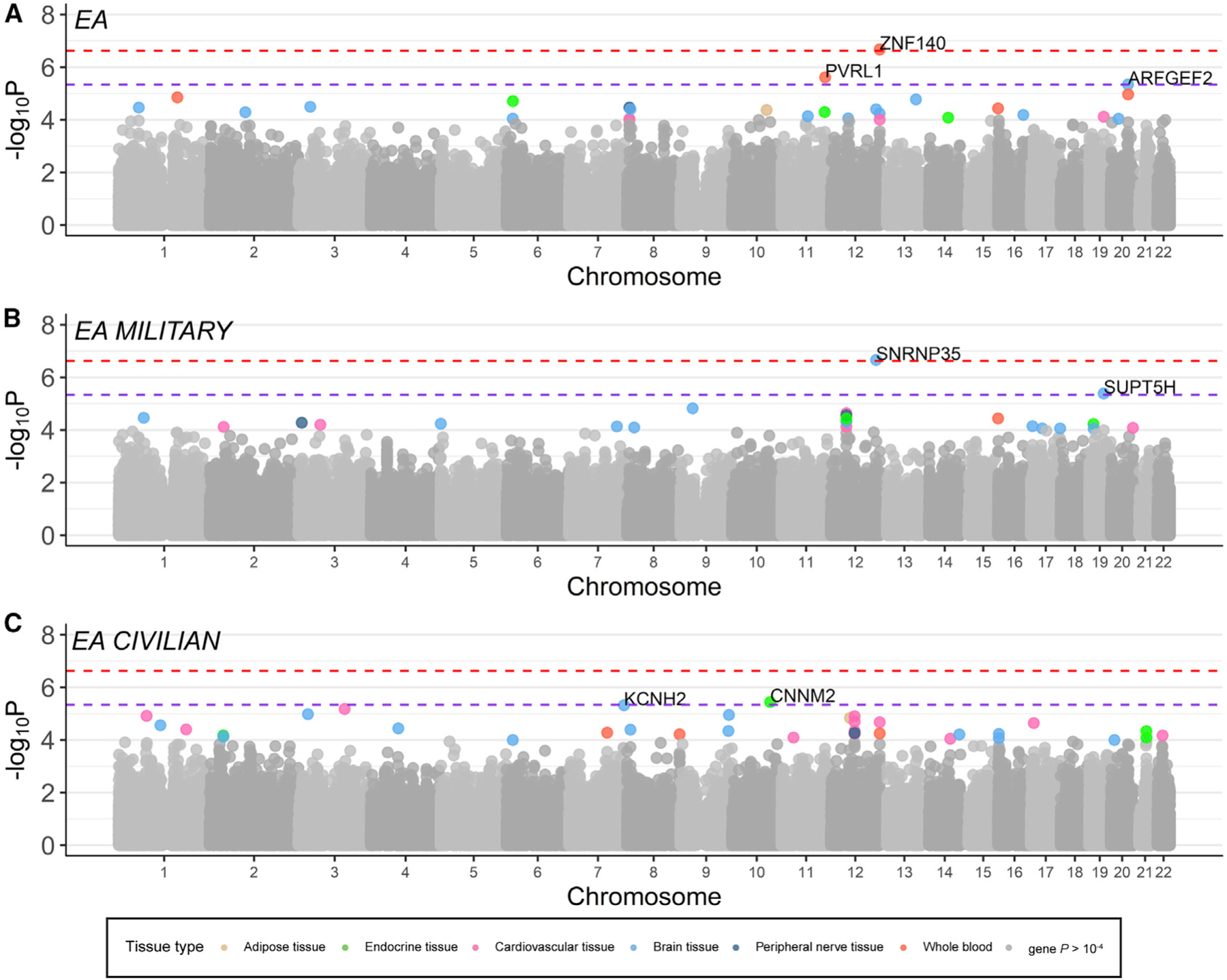
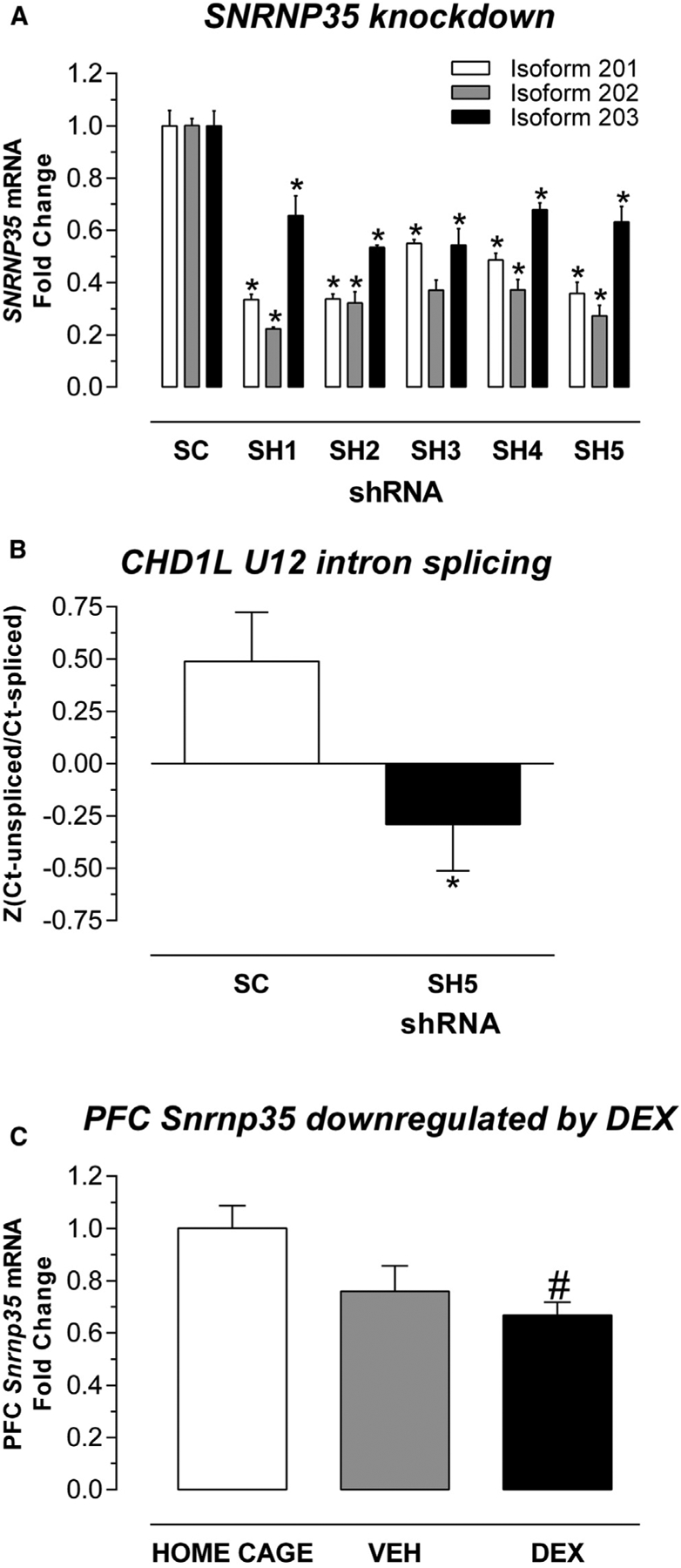
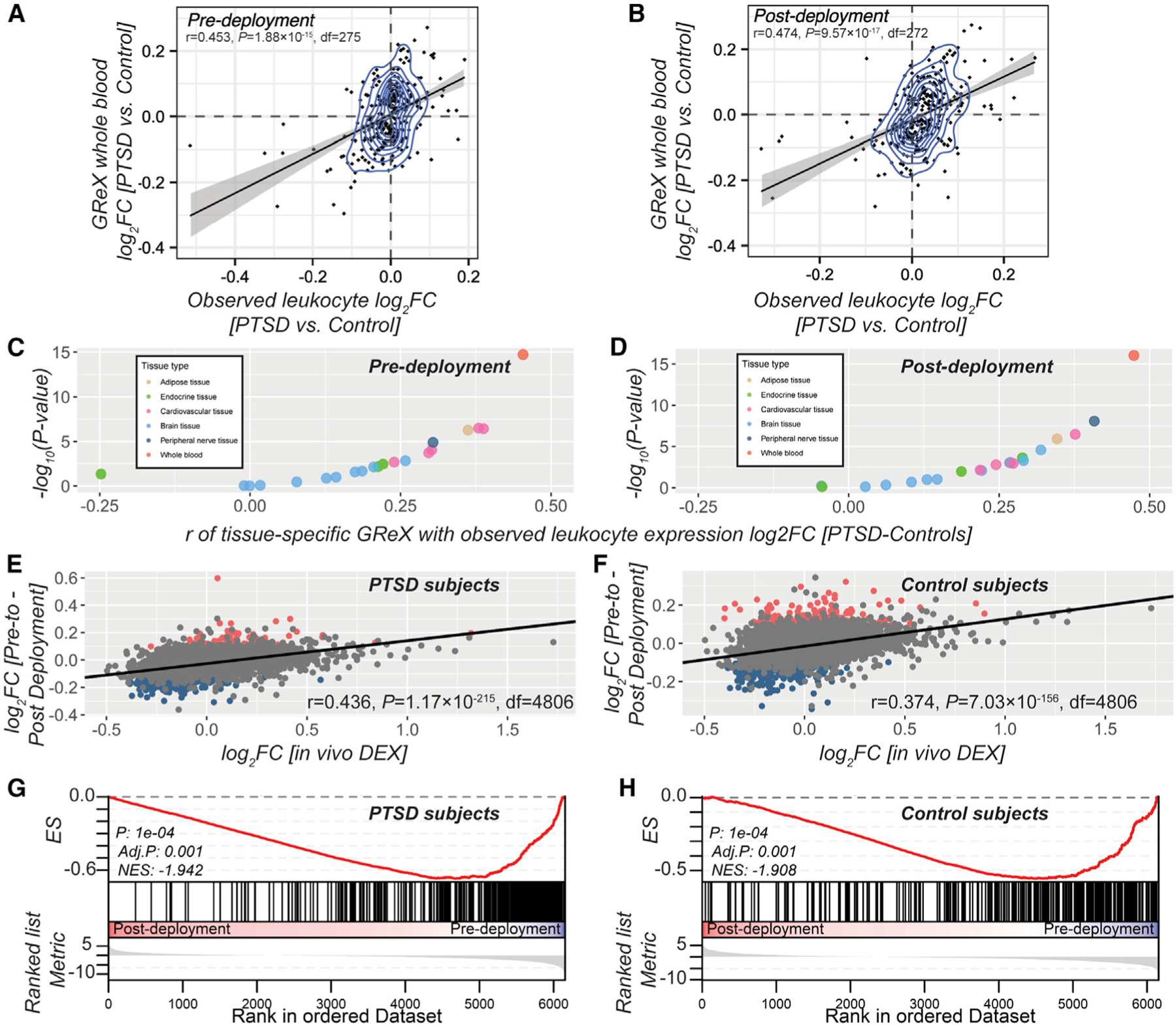
To reveal post-traumatic stress disorder (PTSD) genetic risk influences on tissue-specific gene expression, we use brain and non-brain transcriptomic imputation. We impute genetically regulated gene expression (GReX) in 29,539 PTSD cases and 166,145 controls from 70 ancestry-specific cohorts and identify 18 significant GReX-PTSD associations corresponding to specific tissue-gene pairs. The results suggest substantial genetic heterogeneity based on ancestry, cohort type (military versus civilian), and sex. Two study-wide significant PTSD associations are identified in European and military European cohorts; ZNF140 is predicted to be upregulated in whole blood, and SNRNP35 is predicted to be downregulated in dorsolateral prefrontal cortex, respectively. In peripheral leukocytes from 175 marines, the observed PTSD differential gene expression correlates with the predicted differences for these individuals, and deployment stress produces glucocorticoid-regulated expression changes that include downregulation of both ZNF140 and SNRNP35. SNRNP35 knockdown in cells validates its functional role in U12-intron splicing. Finally, exogenous glucocorticoids in mice downregulate prefrontal Snrnp35 expression.
为了揭示创伤后应激障碍(PTSD)遗传风险对组织特异性基因表达的影响,我们使用大脑和非大脑转录组学推断。我们在来自 70 个特定祖系的 29539 名 PTSD 病例和 166145 名对照中推断了受基因调控的基因表达(GReX),并确定了 18 个与特定组织-基因对对应的显著 GReX-PTSD 关联。结果表明,基于祖系、队列类型(军事与平民)和性别,存在大量的遗传异质性。在欧洲和军事欧洲队列中确定了两个全队列显著性 PTSD 关联;ZNF140 预计在全血中上调,SNRNP35 预计在背外侧前额叶皮层中下调。在 175 名海军陆战队员的外周白细胞中,观察到的 PTSD 差异基因表达与这些个体的预测差异相关,而部署应激产生了包括 ZNF140 和 SNRNP35 下调在内的糖皮质激素调节的表达变化。细胞中的 SNRNP35 敲低验证了其在 U12-内含子剪接中的功能作用。最后,小鼠中的外源性糖皮质激素下调前额 Snrnp35 的表达。