Department of Surgical Pathology, the Affiliated Women's Hospital, School of Medicine, Zhejiang University, Hangzhou, 310006, Zhejiang Province, China.
Department of Gynaecology and Obstetrics, the Affiliated Women's Hospital, School of Medicine, Zhejiang University, Hangzhou, 310006, Zhejiang Province, China.
Diagn Pathol. 2020 Jun 3;15(1):67. doi: 10.1186/s13000-020-00977-1.
High Programmed death ligand 1 (PD-L1) expression are thought to be necessary to PD-1/PD-L1 axis blockades in many tumors. The aim of the study was to explore the variation of PD-L1 expression after neoadjuvant chemotherapy (NAC) in cervical squamous cell carcinoma (SCC) and its clinical implications.
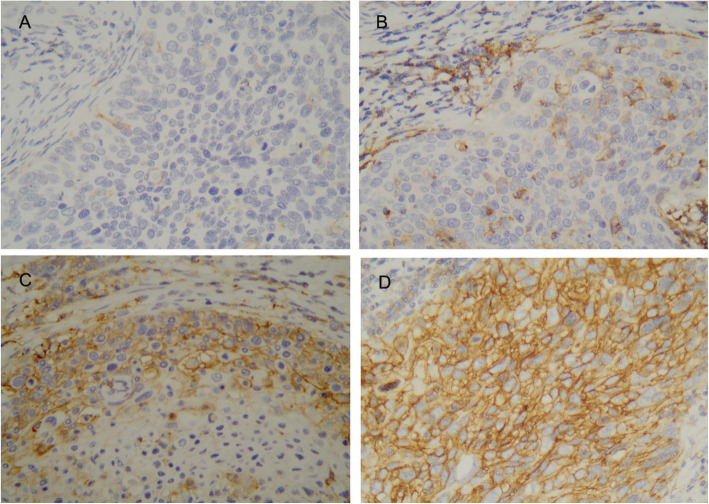
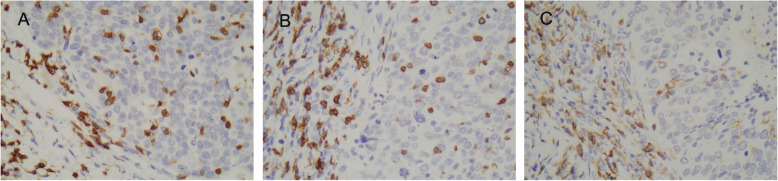
A total of 142 paired SCC specimens before and after platinum-based NAC were obtained from cervical cancer patients. The expression of PD-L1 and CD3+, CD4+, CD8+ tumor infiltrating lymphocytes (TILs) was detected by immunohistochemistry and the association between TILs, chemotherapy response, clinical outcome and PD-L1 expression was evaluated.
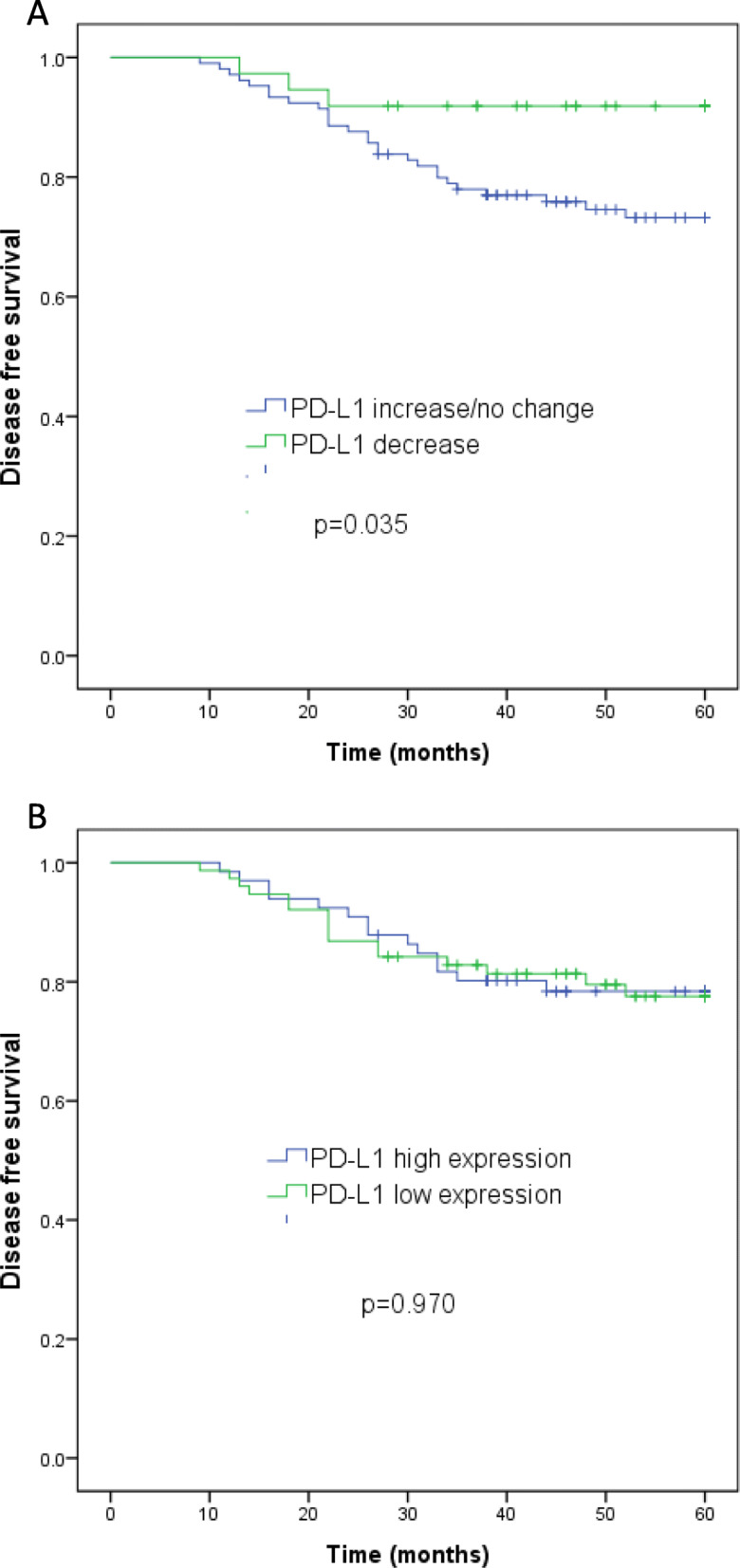
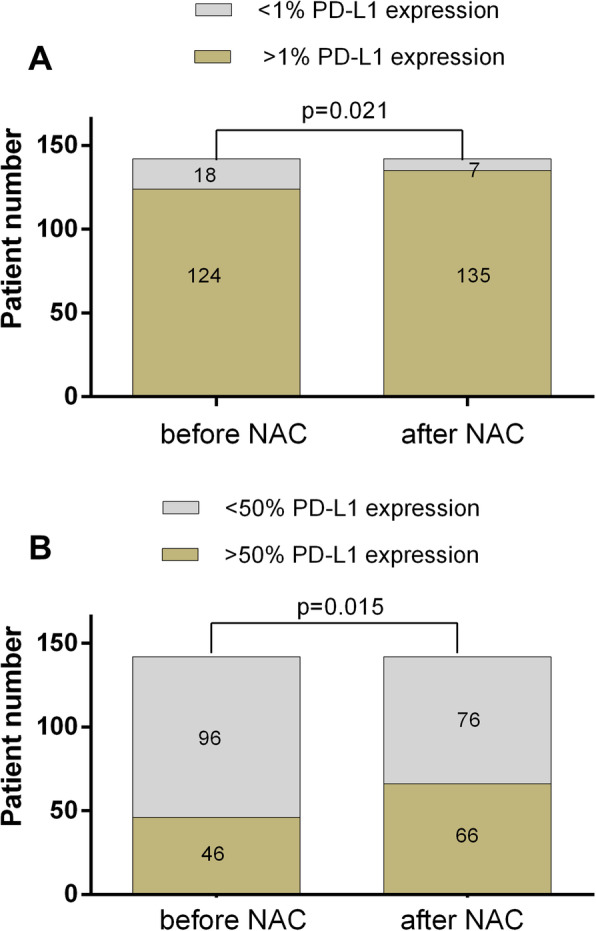
The fraction of patients with high PD-L1 expression was significantly increased from 32.4 to 46.5% after NAC (χ2 = 5.897, p = 0.015), while the increase of CD3+, CD4+, CD8+ TILs was not significant. High PD-L1 expression was not associated with CD3+, CD4+, CD8+ TILs before NAC, however CD8+ TILs infiltration was positively associated with high PD-L1 expression after NAC (r = 0.205, p = 0.014). The decreased PD-L1 expression was more observed in patients with clinical response to NAC (χ2 = 6.890, p = 0.009). A longer DFS was seen in patients with decreased PD-L1 expression than those with elevated or stable PD-L1 expression (p = 0.048, 95% CI: 0.091-0.987), while the difference was not significant in multivariate analysis (p = 0.113, 95% CI: 0.108-1.266).
Cisplatin based chemotherapy can increase PD-L1 expression in cervical cancer. The increased PD-L1 expression and a lymphocyte predominant microenvironment after chemotherapy provide a rational for use of PD-1/PD-L1 axis-inhibitor in the neoadjuvant setting.
高程序性死亡配体 1(PD-L1)表达被认为是许多肿瘤中 PD-1/PD-L1 轴阻断的必要条件。本研究旨在探讨新辅助化疗(NAC)后宫颈鳞状细胞癌(SCC)中 PD-L1 表达的变化及其临床意义。
从宫颈癌患者中获得了 142 对铂类 NAC 前后的 SCC 标本。通过免疫组织化学检测 PD-L1 和 CD3+、CD4+、CD8+肿瘤浸润淋巴细胞(TIL)的表达,并评估 TILs、化疗反应、临床结局与 PD-L1 表达之间的关系。
NAC 后,高 PD-L1 表达的患者比例从 32.4%显著增加到 46.5%(χ2=5.897,p=0.015),而 CD3+、CD4+、CD8+TIL 的增加并不显著。高 PD-L1 表达与 NAC 前的 CD3+、CD4+、CD8+TIL 无关,但 NAC 后 CD8+TIL 浸润与高 PD-L1 表达呈正相关(r=0.205,p=0.014)。在对 NAC 有临床反应的患者中,PD-L1 表达的降低更为明显(χ2=6.890,p=0.009)。与 PD-L1 表达升高或稳定的患者相比,PD-L1 表达降低的患者 DFS 更长(p=0.048,95%CI:0.091-0.987),但在多变量分析中差异无统计学意义(p=0.113,95%CI:0.108-1.266)。
顺铂为基础的化疗可以增加宫颈癌中的 PD-L1 表达。化疗后 PD-L1 表达增加和淋巴细胞为主的微环境为 PD-1/PD-L1 轴抑制剂在新辅助治疗中的应用提供了依据。