Vanderbilt Institute for Integrated Biosystems Research and Education, Vanderbilt University, Nashville, TN, USA.
Department of Biomedical Engineering, Vanderbilt University, Nashville, TN, USA.
Fluids Barriers CNS. 2020 Jun 3;17(1):38. doi: 10.1186/s12987-020-00200-9.
The United States faces a national crisis involving opioid medications, where currently more than 130 people die every day. To combat this epidemic, a better understanding is needed of how opioids penetrate into the central nervous system (CNS) to facilitate pain relief and, potentially, result in addiction and/or misuse. Animal models, however, are a poor predictor of blood-brain barrier (BBB) transport and CNS drug penetration in humans, and many traditional 2D cell culture models of the BBB and neurovascular unit have inadequate barrier function and weak or inappropriate efflux transporter expression. Here, we sought to better understand opioid transport mechanisms using a simplified microfluidic neurovascular unit (NVU) model consisting of human brain microvascular endothelial cells (BMECs) co-cultured with astrocytes.
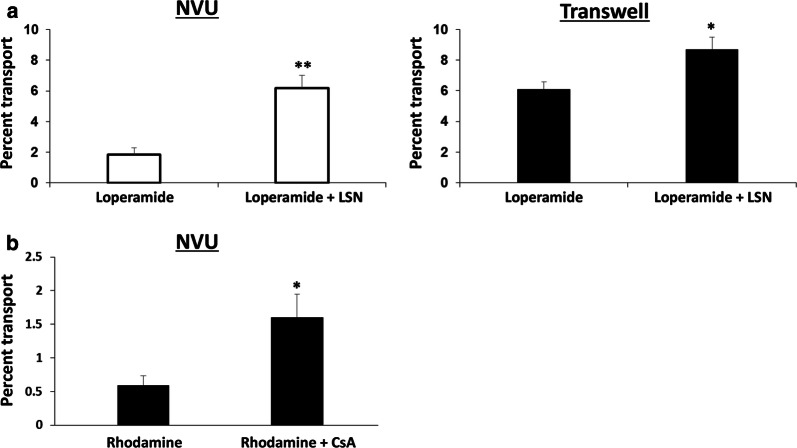
Human primary and induced pluripotent stem cell (iPSC)-derived BMECs were incorporated into a microfluidic NVU model with several technical improvements over our previous design. Passive barrier function was assessed by permeability of fluorescent dextrans with varying sizes, and P-glycoprotein function was assessed by rhodamine permeability in the presence or absence of inhibitors; quantification was performed with a fluorescent plate reader. Loperamide, morphine, and oxycodone permeability was assessed in the presence or absence of P-glycoprotein inhibitors and cortisol; quantification was performed with mass spectrometry.
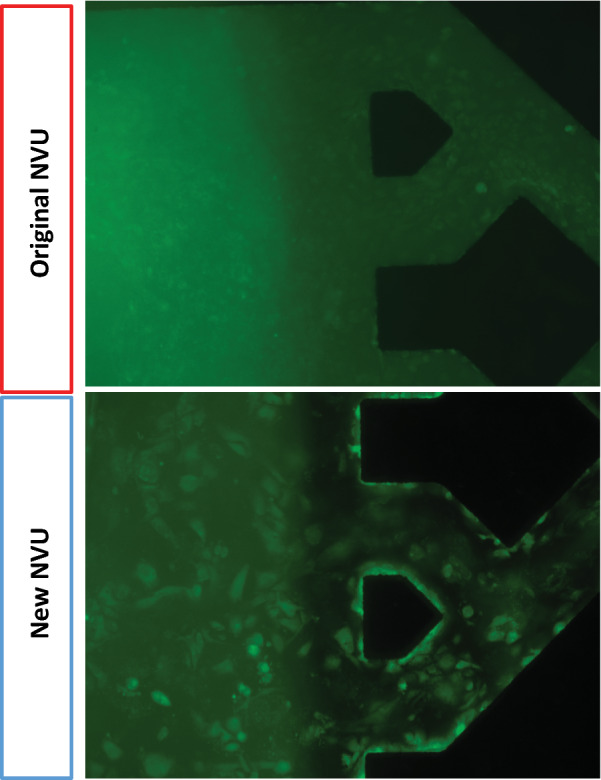
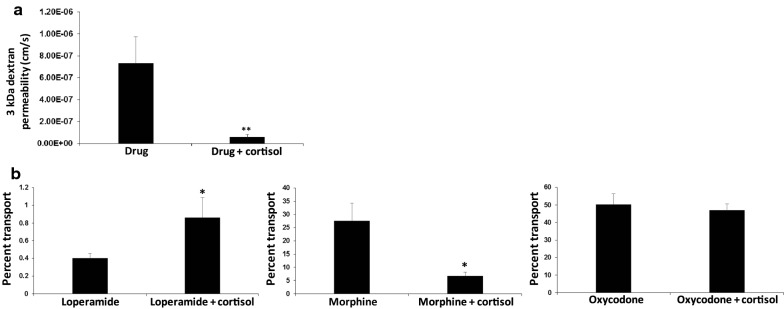
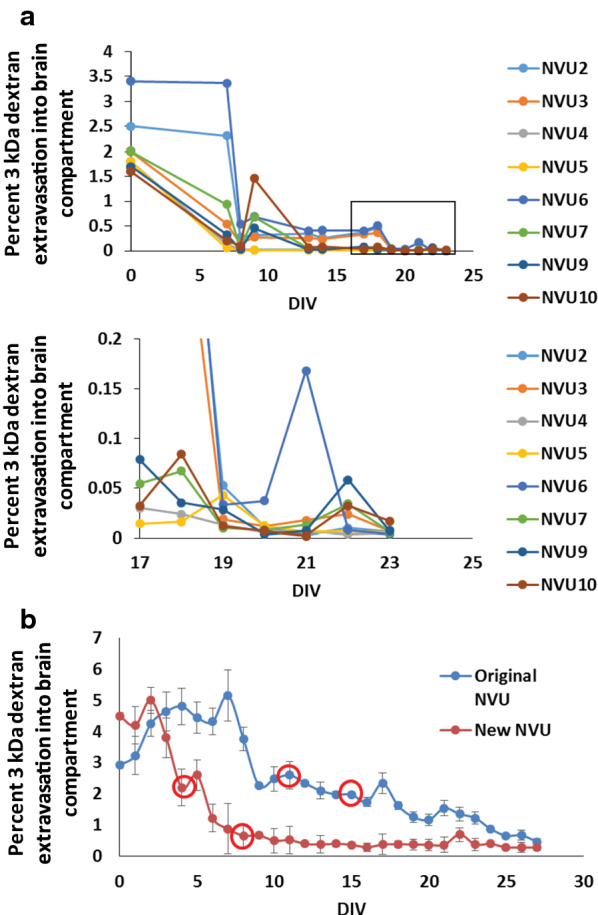
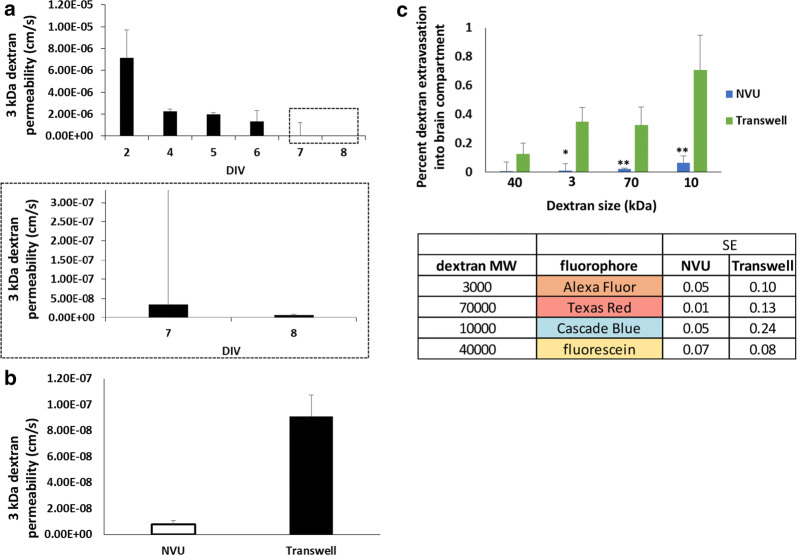
We first report technical and methodological optimizations to our previously described microfluidic model using primary human BMECs, which results in accelerated barrier formation, decreased variability, and reduced passive permeability relative to Transwell models. We then demonstrate proper transport and efflux of loperamide, morphine, and oxycodone in the microfluidic NVU containing BMECs derived from human iPSCs. We further demonstrate that cortisol can alter permeability of loperamide and morphine in a divergent manner.
We reveal a novel role for the stress hormone cortisol in modulating the transport of opioids across the BBB, which could contribute to their abuse or overdose. Our updated BBB model represents a powerful tool available to researchers, clinicians, and drug manufacturers for understanding the mechanisms by which opioids access the CNS.
美国正面临一场涉及阿片类药物的全国性危机,目前每天有超过 130 人死亡。为了应对这一流行病,我们需要更好地了解阿片类药物如何穿透中枢神经系统 (CNS) 以缓解疼痛,以及潜在地导致成瘾和/或滥用。然而,动物模型并不能很好地预测血脑屏障 (BBB) 转运和人类中枢神经系统药物渗透,许多传统的 BBB 和神经血管单元的 2D 细胞培养模型的屏障功能不足,外排转运蛋白表达较弱或不适当。在这里,我们试图使用由人脑微血管内皮细胞 (BMEC) 与星形胶质细胞共培养组成的简化微流控神经血管单元 (NVU) 模型更好地了解阿片类药物的转运机制。
将人原代和诱导多能干细胞 (iPSC) 衍生的 BMEC 整合到微流控 NVU 模型中,与我们之前的设计相比,该模型具有多项技术改进。通过不同大小的荧光葡聚糖的通透性评估被动屏障功能,并通过存在或不存在抑制剂时罗丹明的通透性评估 P-糖蛋白功能;用荧光板读数器进行定量。在存在或不存在 P-糖蛋白抑制剂和皮质醇的情况下评估洛哌丁胺、吗啡和羟考酮的通透性;用质谱法进行定量。
我们首先报告了使用原代人 BMEC 对我们之前描述的微流控模型的技术和方法学优化,这导致与 Transwell 模型相比,屏障形成加速、变异性降低和通透性降低。然后,我们在包含源自人 iPSC 的 BMEC 的微流控 NVU 中证明了洛哌丁胺、吗啡和羟考酮的适当转运和外排。我们进一步证明皮质醇可以以不同的方式改变洛哌丁胺和吗啡的通透性。
我们揭示了应激激素皮质醇在调节阿片类药物穿过 BBB 转运方面的新作用,这可能导致它们的滥用或过量。我们更新的 BBB 模型代表了研究人员、临床医生和药物制造商可用的强大工具,用于了解阿片类药物进入 CNS 的机制。