
脂双层在革兰氏阴性菌外膜蛋白折叠中的作用。
Role of the lipid bilayer in outer membrane protein folding in Gram-negative bacteria.
机构信息
Astbury Centre for Structural Molecular Biology, School of Molecular and Cellular Biology, Faculty of Biological Sciences, University of Leeds, Leeds, United Kingdom.
Department of Biochemistry, University of Oxford, Oxford, United Kingdom.
出版信息
J Biol Chem. 2020 Jul 24;295(30):10340-10367. doi: 10.1074/jbc.REV120.011473. Epub 2020 Jun 4.
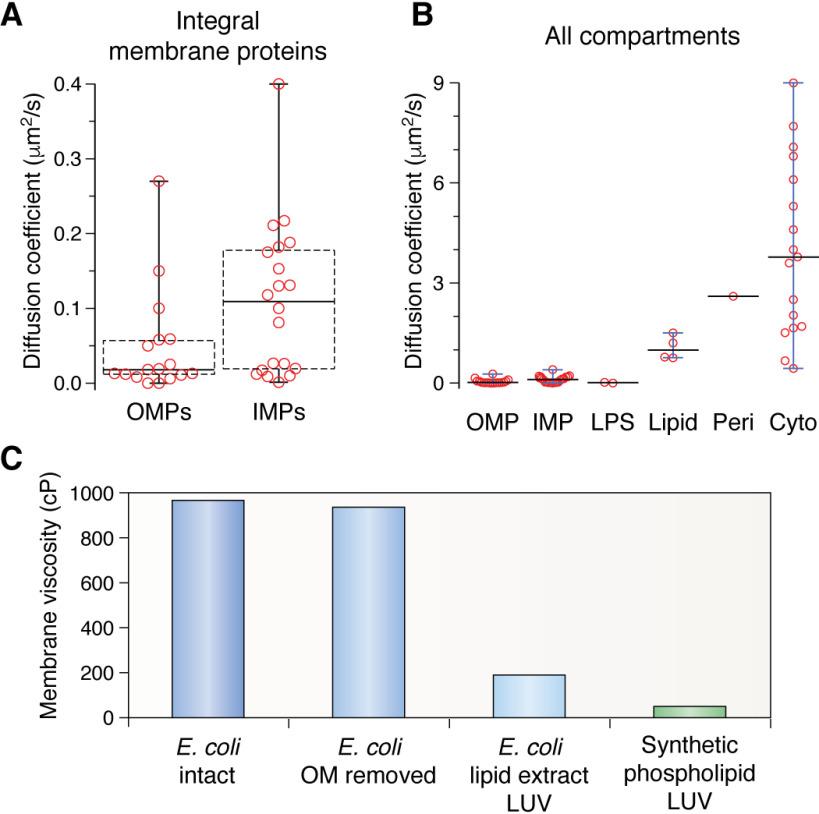
β-Barrel outer membrane proteins (OMPs) represent the major proteinaceous component of the outer membrane (OM) of Gram-negative bacteria. These proteins perform key roles in cell structure and morphology, nutrient acquisition, colonization and invasion, and protection against external toxic threats such as antibiotics. To become functional, OMPs must fold and insert into a crowded and asymmetric OM that lacks much freely accessible lipid. This feat is accomplished in the absence of an external energy source and is thought to be driven by the high thermodynamic stability of folded OMPs in the OM. With such a stable fold, the challenge that bacteria face in assembling OMPs into the OM is how to overcome the initial energy barrier of membrane insertion. In this review, we highlight the roles of the lipid environment and the OM in modulating the OMP-folding landscape and discuss the factors that guide folding and We particularly focus on the composition, architecture, and physical properties of the OM and how an understanding of the folding properties of OMPs can help explain the challenges they encounter during folding Current models of OMP biogenesis in the cellular environment are still in flux, but the stakes for improving the accuracy of these models are high. OMP folding is an essential process in all Gram-negative bacteria, and considering the looming crisis of widespread microbial drug resistance it is an attractive target. To bring down this vital OMP-supported barrier to antibiotics, we must first understand how bacterial cells build it.
β-桶状外膜蛋白(OMP)是革兰氏阴性菌外膜(OM)的主要蛋白质成分。这些蛋白质在细胞结构和形态、营养物质获取、定植和入侵以及抵御抗生素等外部有毒威胁方面发挥着关键作用。为了发挥功能,OMP 必须折叠并插入拥挤且不对称的 OM 中,而 OM 中几乎没有可自由利用的脂质。在没有外部能源的情况下完成这一壮举,据认为这是由 OM 中折叠 OMP 的高热力学稳定性驱动的。由于具有如此稳定的折叠结构,细菌在将 OMP 组装到 OM 中时面临的挑战是如何克服膜插入的初始能量障碍。在这篇综述中,我们强调了脂质环境和 OM 在调节 OMP 折叠景观中的作用,并讨论了指导折叠的因素。我们特别关注 OM 的组成、结构和物理特性,以及对 OMP 折叠特性的理解如何帮助解释它们在折叠过程中遇到的挑战。目前在细胞环境中 OMP 生物发生的模型仍在不断发展,但提高这些模型准确性的重要性很高。OMP 折叠是所有革兰氏阴性菌的一个基本过程,考虑到广泛的微生物耐药性危机迫在眉睫,它是一个有吸引力的目标。要降低这种至关重要的 OMP 支持的抗生素屏障,我们必须首先了解细菌细胞如何构建它。




 Zotero 插件