Neurology Unit, Maurizio Bufalini Hospital, Cesena, Italy.
Neurology Clinic, University of Perugia - S. Maria della Misericordia Hospital, Perugia, Italy.
Eur J Neurol. 2020 Sep;27(9):1712-1726. doi: 10.1111/ene.14382. Epub 2020 Jun 30.
We systematically reviewed available evidence for reports of neurological signs and symptoms in patients with COVID-19 to identify cases with severe acute respiratory syndrome coronavirus (SARS-CoV)-2 infection or immune-mediated reaction in the nervous system.
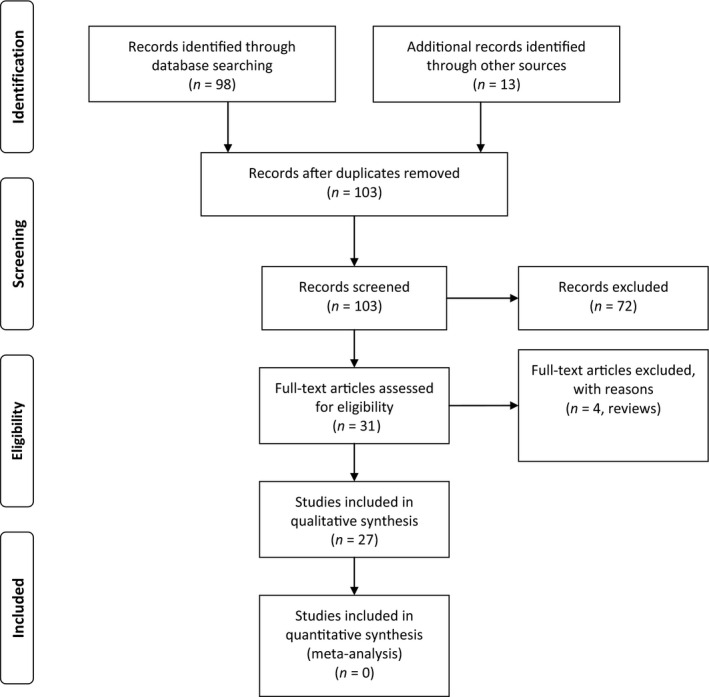
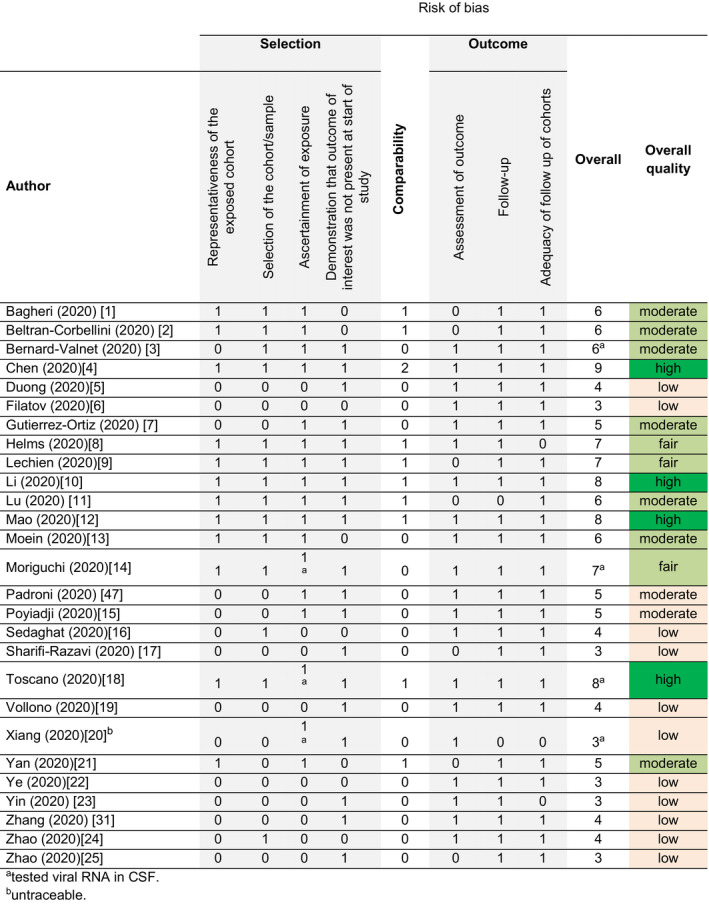
We followed PRISMA guidelines and used the MEDLINE, EMBASE, Google Scholar, MedRxiv and ChinaXiv databases to search for articles on COVID-19 and nervous system involvement that were published from 1 January to 24 April 2020. Data on design, sample size, neurological assessment and related work-up were extracted. Biases were assessed with the Newcastle-Ottawa scale.
We analysed 27 publications on potential neuroinvasive or parainfectious neurological complications of COVID-19. The reports focused on smell and taste (n = 5) and evaluation of neurological symptoms and signs in cohorts (n = 5). There were cases of Guillain-Barré syndrome/Miller-Fisher syndrome/cranial neuropathy (seven cases), meningitis/encephalitis (nine cases) and various other conditions (five cases). The number of patients with examination of cerebrospinal fluid and, in particular, SARS-CoV-2 polymerase chain reaction was negligible. Two had a positive SARS-CoV-2 polymerase chain reaction examination of cerebrospinal fluid specimen. Study of potential parenchymal involvement with magnetic resonance imaging was rare. Only four reports received a rating of the highest quality standards.
This systematic review failed to establish comprehensive insights into nervous system manifestations of COVID-19 beyond immune-mediated complications in the aftermath of respiratory symptoms. The authors therefore provide guidance for more careful clinical, diagnostic and epidemiological studies to characterize the manifestations and burden of neurological disease caused by SARS-CoV-2 on behalf of the Infectious Disease Panel of the European Academy of Neurology.
我们系统地回顾了 COVID-19 患者神经系统体征和症状的现有报告证据,以确定伴有严重急性呼吸综合征冠状病毒(SARS-CoV-2)感染或免疫介导性神经系统反应的病例。
我们遵循 PRISMA 指南,使用 MEDLINE、EMBASE、Google Scholar、MedRxiv 和 ChinaXiv 数据库,检索了 2020 年 1 月 1 日至 4 月 24 日发表的有关 COVID-19 与神经系统受累的文章。提取了设计、样本量、神经评估和相关检查的数据。使用 Newcastle-Ottawa 量表评估偏倚。
我们分析了 27 篇关于 COVID-19 潜在神经侵袭性或副感染性神经系统并发症的报告。这些报告的重点是嗅觉和味觉(n=5)和队列中神经症状和体征的评估(n=5)。有 7 例为吉兰-巴雷综合征/米勒-费舍尔综合征/颅神经病,9 例为脑膜炎/脑炎,5 例为各种其他疾病。进行脑脊液检查,特别是 SARS-CoV-2 聚合酶链反应检查的患者数量较少。有 2 例脑脊液中 SARS-CoV-2 聚合酶链反应检查呈阳性。用磁共振成像研究潜在实质受累的情况很少见。仅有 4 篇报告达到了最高质量标准。
本系统评价未能全面了解 COVID-19 除呼吸道症状后免疫介导性并发症以外的神经系统表现。因此,作者代表欧洲神经病学学会传染病小组为更仔细的临床、诊断和流行病学研究提供了指导,以描述 SARS-CoV-2 引起的神经疾病的表现和负担。