Stanciu Gabriela Dumitrita, Bild Veronica, Ababei Daniela Carmen, Rusu Razvan Nicolae, Cobzaru Alina, Paduraru Luminita, Bulea Delia
Center for Advanced Research and Development in Experimental Medicine (CEMEX), Grigore T. Popa University of Medicine and Pharmacy, 16 Universitatii street, 700115 Iasi, Romania.
Pharmacodynamics and Clinical Pharmacy Department, Grigore T. Popa University of Medicine and Pharmacy, 16 Universitatii street, 700115 Iasi, Romania.
J Clin Med. 2020 Jun 3;9(6):1713. doi: 10.3390/jcm9061713.
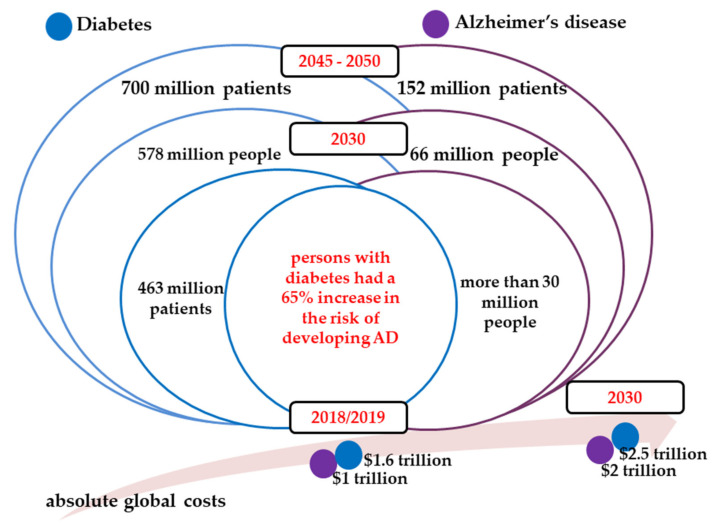
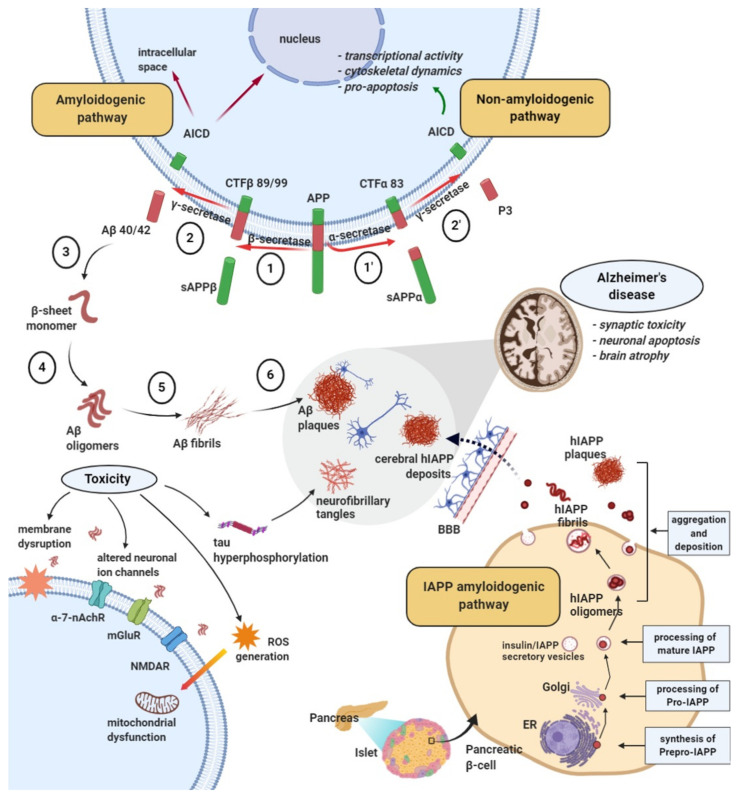
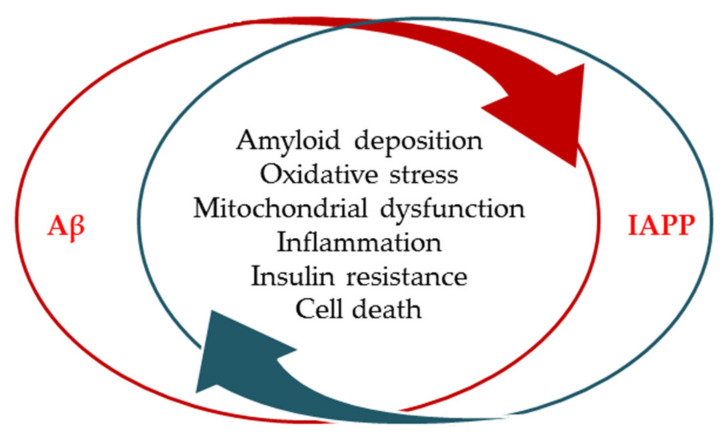
Diabetes and Alzheimer's disease are two highly prevalent diseases among the aging population and have become major public health concerns in the 21st century, with a significant risk to each other. Both of these diseases are increasingly recognized to be multifactorial conditions. The terms "diabetes type 3" or "brain diabetes" have been proposed in recent years to provide a complete view of the potential common pathogenic mechanisms between these diseases. While insulin resistance or deficiency remains the salient hallmarks of diabetes, cognitive decline and non-cognitive abnormalities such as impairments in visuospatial function, attention, cognitive flexibility, and psychomotor speed are also present. Furthermore, amyloid aggregation and deposition may also be drivers for diabetes pathology. Here, we offer a brief appraisal of social impact and economic burden of these chronic diseases and provide insight into amyloidogenesis through considering recent advances of amyloid-β aggregates on diabetes pathology and islet amyloid polypeptide on Alzheimer's disease. Exploring the detailed knowledge of molecular interaction between these two amyloidogenic proteins opens new opportunities for therapies and biomarker development
糖尿病和阿尔茨海默病是老年人群中两种高度流行的疾病,已成为21世纪主要的公共卫生问题,且二者相互之间存在重大风险。越来越多的人认识到这两种疾病都是多因素导致的病症。近年来有人提出了“3型糖尿病”或“脑性糖尿病”的说法,以便全面了解这些疾病之间潜在的共同致病机制。虽然胰岛素抵抗或缺乏仍是糖尿病的显著特征,但认知能力下降以及非认知异常,如视觉空间功能、注意力、认知灵活性和精神运动速度受损等情况也会出现。此外,淀粉样蛋白聚集和沉积也可能是糖尿病病理的驱动因素。在此,我们简要评估这些慢性病的社会影响和经济负担,并通过考虑β-淀粉样蛋白聚集体在糖尿病病理方面以及胰岛淀粉样多肽在阿尔茨海默病方面的最新进展,深入了解淀粉样蛋白生成过程。探索这两种淀粉样蛋白生成蛋白之间分子相互作用的详细知识,为治疗方法和生物标志物的开发带来了新机遇。