Moreno-Gonzalez I, Edwards Iii G, Salvadores N, Shahnawaz M, Diaz-Espinoza R, Soto C
Department of Neurology, The Mitchell Center for Alzheimer's Disease and Related Brain Disorders, University of Texas Houston Medical School, Houston, TX, USA.
Mol Psychiatry. 2017 Sep;22(9):1327-1334. doi: 10.1038/mp.2016.230. Epub 2017 Jan 3.
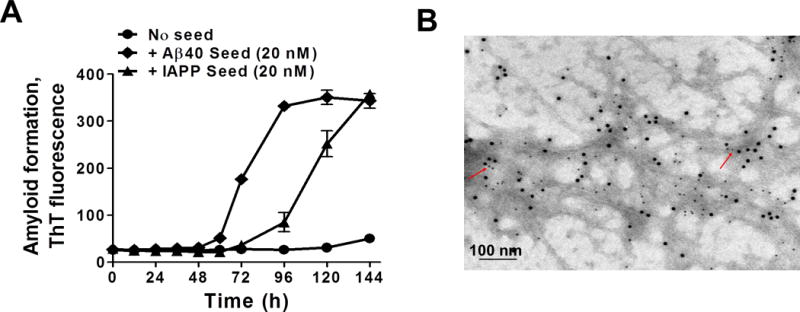
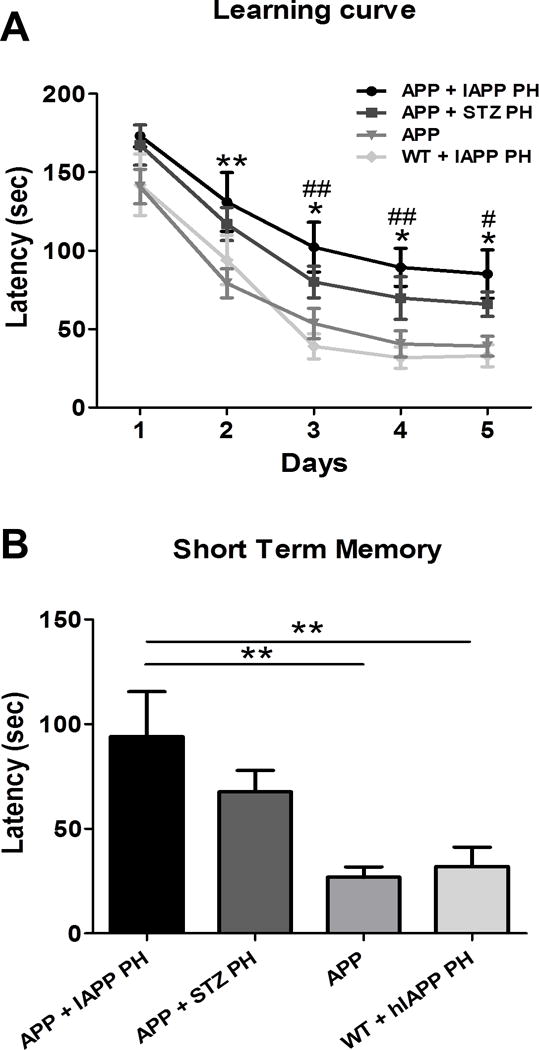
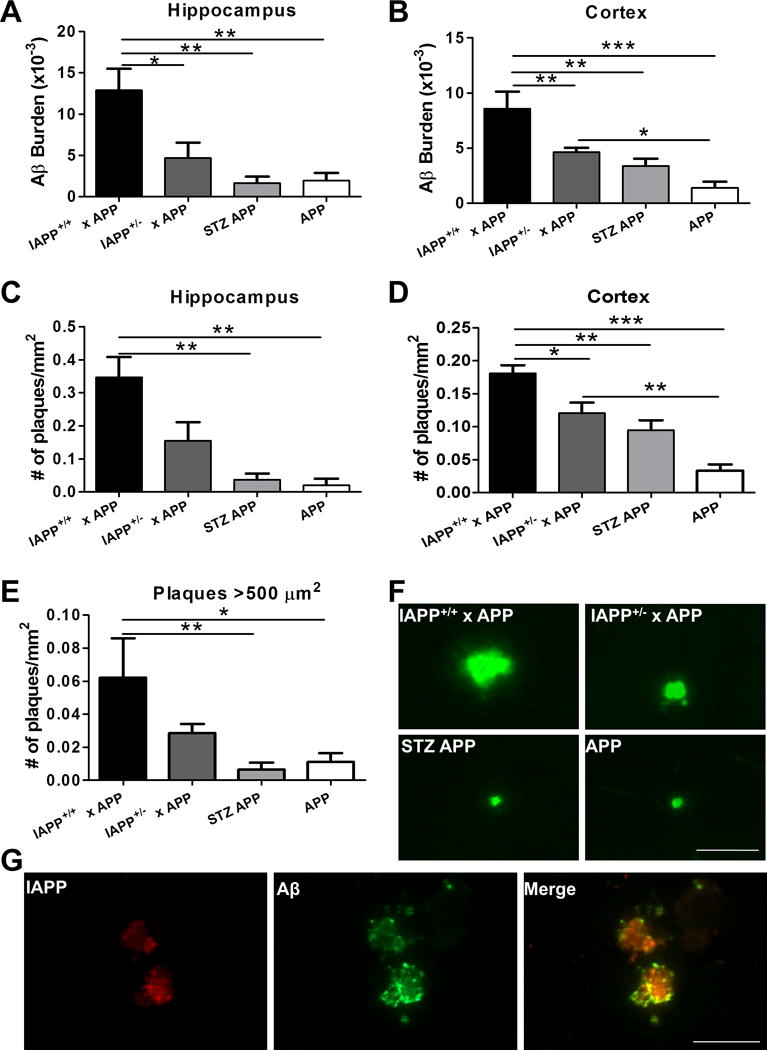
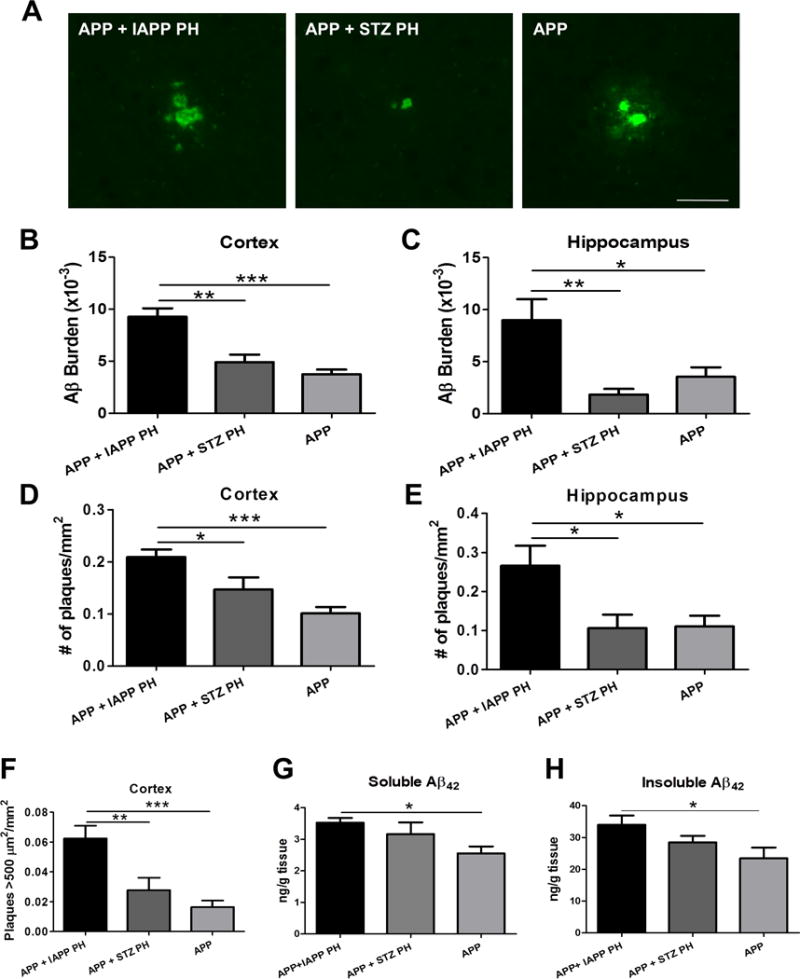
Numerous epidemiological studies have shown a significantly higher risk for development of Alzheimer's disease (AD) in patients affected by type 2 diabetes (T2D), but the molecular mechanism responsible for this association is presently unknown. Both diseases are considered protein misfolding disorders associated with the accumulation of protein aggregates; amyloid-beta (Aβ) and tau in the brain during AD, and islet amyloid polypeptide (IAPP) in pancreatic islets in T2D. Formation and accumulation of these proteins follows a seeding-nucleation model, where a misfolded aggregate or 'seed' promotes the rapid misfolding and aggregation of the native protein. Our underlying hypothesis is that misfolded IAPP produced in T2D potentiates AD pathology by cross-seeding Aβ, providing a molecular explanation for the link between these diseases. Here, we examined how misfolded IAPP affects Aβ aggregation and AD pathology in vitro and in vivo. We observed that addition of IAPP seeds accelerates Aβ aggregation in vitro in a seeding-like manner and the resulting fibrils are composed of both peptides. Transgenic animals expressing both human proteins exhibited exacerbated AD-like pathology compared with AD transgenic mice or AD transgenic animals with type 1 diabetes (T1D). Remarkably, IAPP colocalized with amyloid plaques in brain parenchymal deposits, suggesting that these peptides may directly interact and aggravate the disease. Furthermore, inoculation of pancreatic IAPP aggregates into the brains of AD transgenic mice resulted in more severe AD pathology and significantly greater memory impairments than untreated animals. These data provide a proof-of-concept for a new disease mechanism involving the interaction of misfolded proteins through cross-seeding events which may contribute to accelerate or exacerbate disease pathogenesis. Our findings could shed light on understanding the linkage between T2D and AD, two of the most prevalent protein misfolding disorders.
大量流行病学研究表明,2型糖尿病(T2D)患者患阿尔茨海默病(AD)的风险显著更高,但目前尚不清楚导致这种关联的分子机制。这两种疾病都被认为是与蛋白质聚集体积累相关的蛋白质错误折叠疾病;AD期间大脑中的β淀粉样蛋白(Aβ)和tau蛋白,以及T2D患者胰岛中的胰岛淀粉样多肽(IAPP)。这些蛋白质的形成和积累遵循种子成核模型,其中错误折叠的聚集体或“种子”促进天然蛋白质的快速错误折叠和聚集。我们的基本假设是,T2D中产生的错误折叠的IAPP通过交叉播种Aβ增强AD病理,为这些疾病之间的联系提供了分子解释。在这里,我们研究了错误折叠的IAPP如何在体外和体内影响Aβ聚集和AD病理。我们观察到,添加IAPP种子以类似种子的方式加速体外Aβ聚集,并且产生的纤维由两种肽组成。与AD转基因小鼠或患有1型糖尿病(T1D)的AD转基因动物相比,表达两种人类蛋白质的转基因动物表现出更严重的AD样病理。值得注意的是,IAPP与脑实质沉积物中的淀粉样斑块共定位,表明这些肽可能直接相互作用并加重疾病。此外,将胰腺IAPP聚集体接种到AD转基因小鼠的大脑中,导致比未治疗的动物更严重的AD病理和明显更大的记忆障碍。这些数据为一种新的疾病机制提供了概念验证,该机制涉及通过交叉播种事件的错误折叠蛋白质相互作用,这可能有助于加速或加剧疾病发病机制。我们的发现可能有助于理解T2D和AD之间的联系,这是两种最常见的蛋白质错误折叠疾病。