Ghica Mariana E, Almeida Cláudio M R, Fonseca Mariana, Portugal António, Durães Luísa
University of Coimbra, CIEPQPF, Department of Chemical Engineering, 3030-790 Coimbra, Portugal.
Polymers (Basel). 2020 Jun 3;12(6):1278. doi: 10.3390/polym12061278.
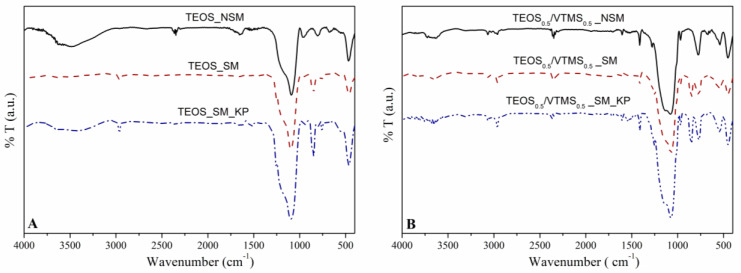
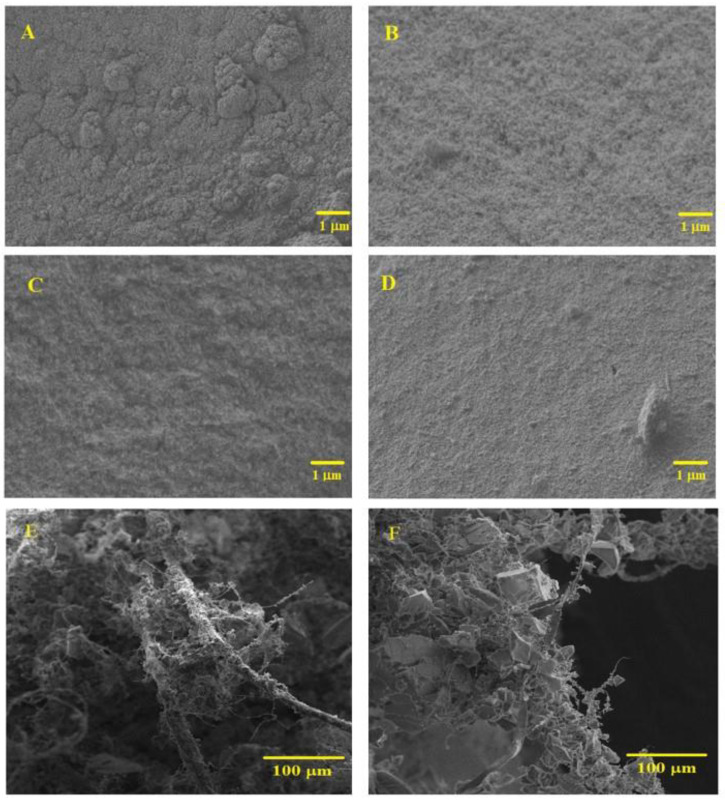
The present work describes for the first time the preparation of silica-based aerogel composites containing tetraethoxysilane (TEOS) and vinyltrimethoxysilane (VTMS) reinforced with Kevlar pulp. The developed system was extensively investigated, regarding its physical, morphological, thermal and mechanical features. The obtained bulk density values were satisfactory, down to 208 kg·m, and very good thermal properties were achieved-namely a thermal conductivity as low as 26 mW·m·K (Hot Disk) and thermal stability up to 550 °C. The introduction of VTMS offers a better dispersion of the polyamide fibers, as well as a higher hydrophobicity and thermal stability of the composites. The aerogels were also able to withstand five compression-decompression cycles without significant change of their size or microstructure. A design of experiment (DOE) was performed to assess the influence of different synthesis parameters, including silica co-precursors ratio, pulp amount and the solvent/Si molar ratio on the nanocomposite properties. The data obtained from the DOE allowed us to understand the significance of each parameter, offering reliable guidelines for the adjustment of the experimental procedure in order to achieve the optimum properties of the studied aerogel composites.
本工作首次描述了含有四乙氧基硅烷(TEOS)和乙烯基三甲氧基硅烷(VTMS)并用凯夫拉纸浆增强的二氧化硅基气凝胶复合材料的制备。对所开发的体系进行了广泛研究,涉及其物理、形态、热和机械特性。所获得的堆积密度值令人满意,低至208 kg·m,并且实现了非常好的热性能,即热导率低至26 mW·m·K(热盘法)以及热稳定性高达550°C。VTMS的引入使聚酰胺纤维分散得更好,同时复合材料具有更高的疏水性和热稳定性。气凝胶还能够承受五个压缩-减压循环,而其尺寸或微观结构没有明显变化。进行了实验设计(DOE)以评估不同合成参数的影响,包括二氧化硅共前驱体比例、纸浆量和溶剂/硅摩尔比对纳米复合材料性能的影响。从DOE获得的数据使我们能够了解每个参数的重要性,为调整实验程序提供可靠的指导,以实现所研究的气凝胶复合材料的最佳性能。