Kwiatkowska Joanna, Zuk Malgorzata, Migdal Anna, Kusa Jacek, Skiba Elzbieta, Zygielo Karolina, Przetocka Kinga, Werynski Piotr, Banaszak Pawel, Rzeznik-Bieniaszewska Alina, Surmacz Rafal, Bobkowski Waldemar, Wojcicka-Urbanska Barbara, Werner Bozena, Pluzanska Joanna, Ostrowska Katarzyna, Waldoch Anna, Kopec Grzegorz
Department of Pediatric Cardiology and Congenital Heart Defect, Medical University of Gdansk, 80-210 Gdansk, Poland.
The Children's Memorial Health Institute, 04-730 Warsaw, Poland.
J Clin Med. 2020 Jun 3;9(6):1717. doi: 10.3390/jcm9061717.
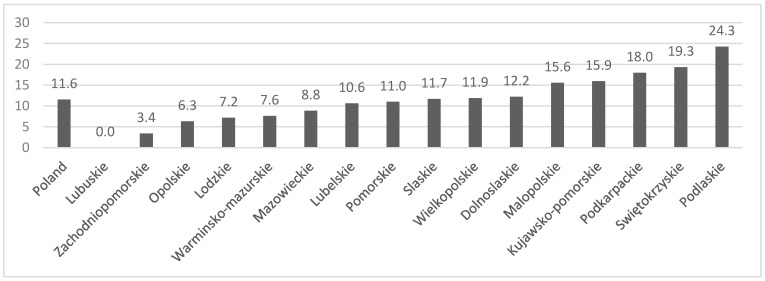
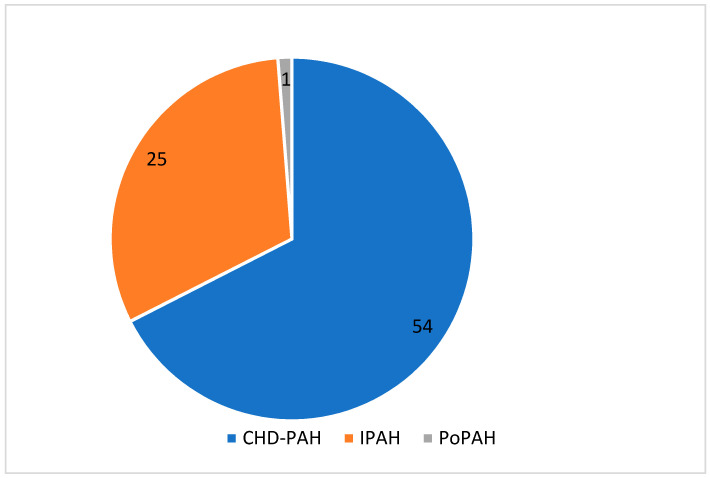
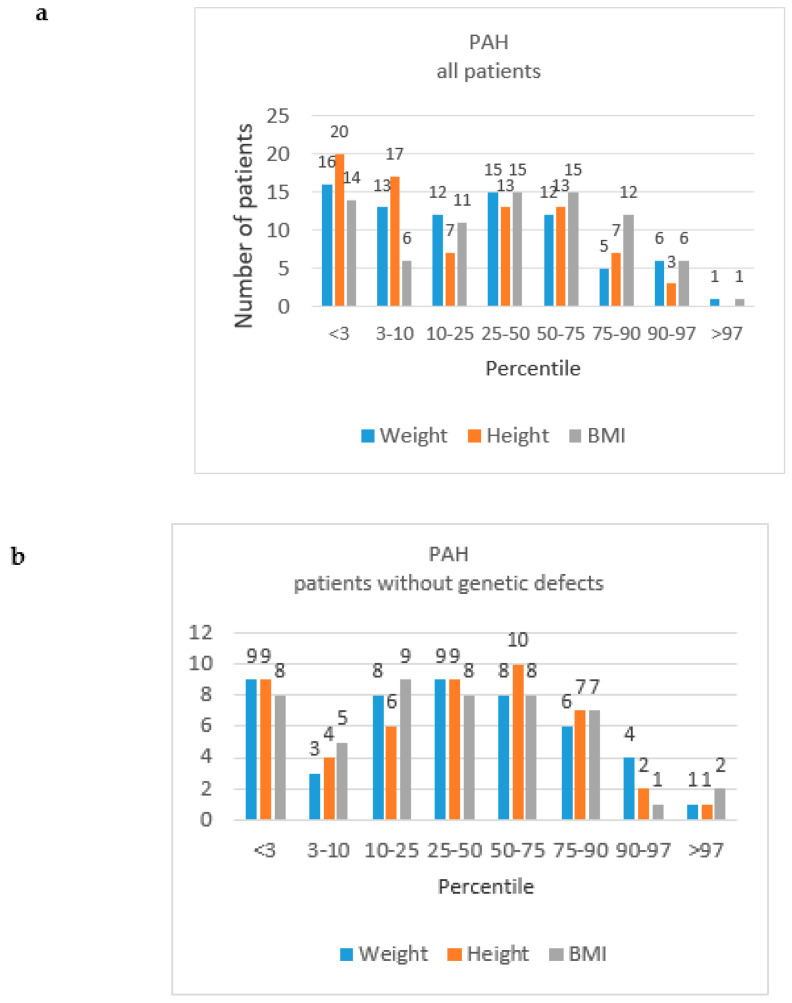
We present the results from the pediatric arm of the Polish Registry of Pulmonary Hypertension. We prospectively enrolled all pulmonary arterial hypertension (PAH) patients, between the ages of 3 months and 18 years, who had been under the care of each PAH center in Poland between 1 March 2018 and 30 September 2018. The mean prevalence of PAH was 11.6 per million, and the estimated incidence rate was 2.4 per million/year, but it was geographically heterogeneous. Among 80 enrolled children (females, = 40; 50%), 54 (67.5%) had PAH associated with congenital heart disease (CHD-PAH), 25 (31.25%) had idiopathic PAH (IPAH), and 1 (1.25%) had portopulmonary PAH. At the time of enrolment, 31% of the patients had significant impairment of physical capacity (WHO-FC III). The most frequent comorbidities included shortage of growth ( = 20; 25%), mental retardation ( = 32; 40%), hypothyroidism ( = 19; 23.8%) and Down syndrome ( = 24; 30%). The majority of children were treated with PAH-specific medications, but only half of them with double combination therapy, which improved after changing the reimbursement policy. The underrepresentation of PAH classes other than IPAH and CHD-PAH, and the geographically heterogeneous distribution of PAH prevalence, indicate the need for building awareness of PAH among pediatricians, while a frequent coexistence of PAH with other comorbidities calls for a multidisciplinary approach to the management of PAH children.
我们展示了波兰肺动脉高压注册研究中儿科部分的结果。我们前瞻性地纳入了2018年3月1日至2018年9月30日期间在波兰各肺动脉高压中心接受治疗的所有年龄在3个月至18岁之间的肺动脉高压(PAH)患者。PAH的平均患病率为每百万人口11.6例,估计发病率为每年每百万人口2.4例,但在地理上存在异质性。在80名纳入研究的儿童中(女性40名,占50%),54名(67.5%)患有与先天性心脏病相关的PAH(CHD-PAH),25名(31.25%)患有特发性PAH(IPAH),1名(1.25%)患有门脉性肺动脉高压。在入组时,31%的患者有明显的体能损害(世界卫生组织功能分级III级)。最常见的合并症包括生长发育迟缓(20例,占25%)、智力发育迟缓(32例,占40%)、甲状腺功能减退(19例,占23.8%)和唐氏综合征(24例,占30%)。大多数儿童接受了PAH特异性药物治疗,但只有一半接受了联合治疗,在报销政策改变后有所改善。IPAH和CHD-PAH以外的PAH类型代表性不足,以及PAH患病率在地理上的异质性分布,表明需要提高儿科医生对PAH的认识,而PAH与其他合并症的频繁共存则需要对PAH儿童进行多学科管理。