Department of Landscape Architecture, University of Illinois at Urbana-Champaign, Champaign, IL 61820, USA.
Int J Environ Res Public Health. 2020 Jun 3;17(11):3965. doi: 10.3390/ijerph17113965.
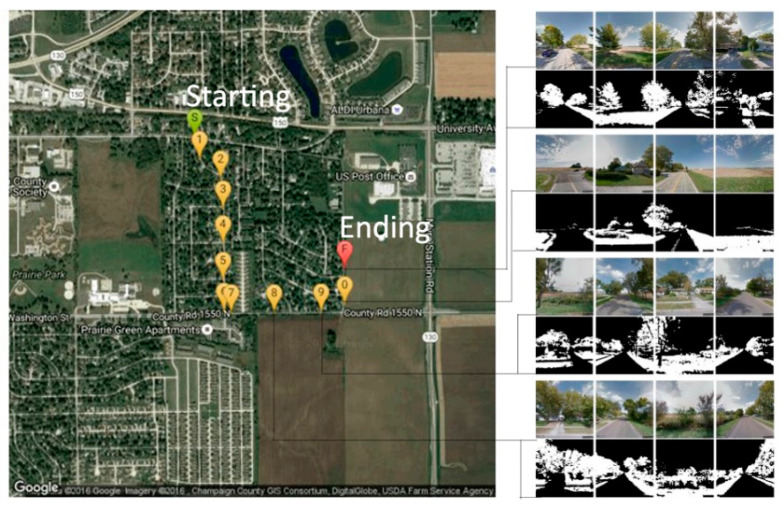
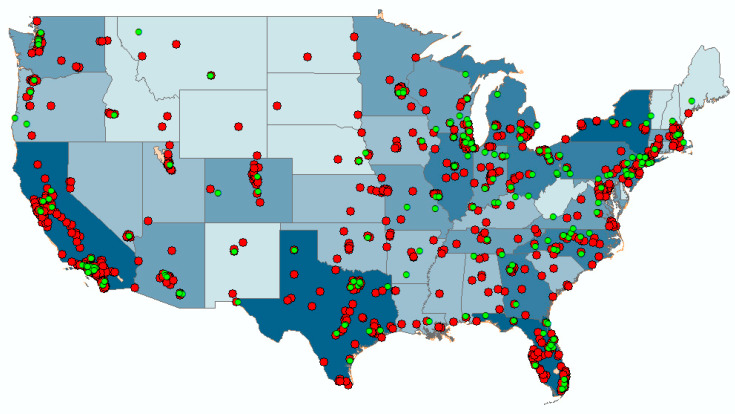
A compelling body of research demonstrates that exposure to nature, especially trees, is beneficial to human health. We know little, however, about the extent to which understory vegetation that does not reach the height of trees, impacts human health. An additional gap in our knowledge concerns the extent to which daily variations in exposure to various forms of vegetation are related to human health outcomes. Many previous findings describing such connections were achieved in laboratory settings or through semi-controlled experiments, which do not reflect the dynamic variations of people's daily exposure to nature. Thus, we conducted an online survey to address these questions. We used the National Land Cover Dataset 2011 and Google Street View images to estimate participants' daily exposure to nature, and two standard questionnaires (General Health SF-12 and the Perceived Stress Scale) to assess health. Results show that greater exposure to trees in daily life is associated with better health outcomes. Specifically, higher neighborhood concentrations of tree canopy are related to better physical health, overall health and an increased capacity to control stress. In contrast, the results exploring the health associations of understory vegetation were inconsistent. In most cases, understory vegetation had a negative relationship with stress and mental health measures.
大量研究表明,接触自然,尤其是树木,对人类健康有益。然而,我们对于达不到树木高度的林下植被对人类健康的影响程度知之甚少。我们知识中的另一个空白是,每日接触各种形式植被的差异与人类健康结果的相关程度。许多以前描述这些联系的发现都是在实验室环境或通过半控制实验中得出的,这些实验并不能反映人们日常接触自然的动态变化。因此,我们进行了一项在线调查来解决这些问题。我们使用了国家土地覆盖数据集 2011 年和谷歌街景图像来估计参与者日常接触自然的情况,并使用了两个标准问卷(一般健康 SF-12 和感知压力量表)来评估健康状况。结果表明,日常生活中更多地接触树木与更好的健康结果相关。具体来说,更高的街区树冠浓度与更好的身体健康、整体健康和更好地控制压力的能力有关。相比之下,探索林下植被与健康关联的结果并不一致。在大多数情况下,林下植被与压力和心理健康指标呈负相关。