Department of Pharmaceutical Biochemistry, Faculty of Pharmacy, Jagiellonian University Medical College, Medyczna 9, 30-688 Kraków, Poland.
Department of Medicinal Chemistry, Faculty of Pharmacy, Jagiellonian University Medical College, Medyczna 9, 30-688 Kraków, Poland.
Int J Mol Sci. 2020 Jun 3;21(11):4008. doi: 10.3390/ijms21114008.
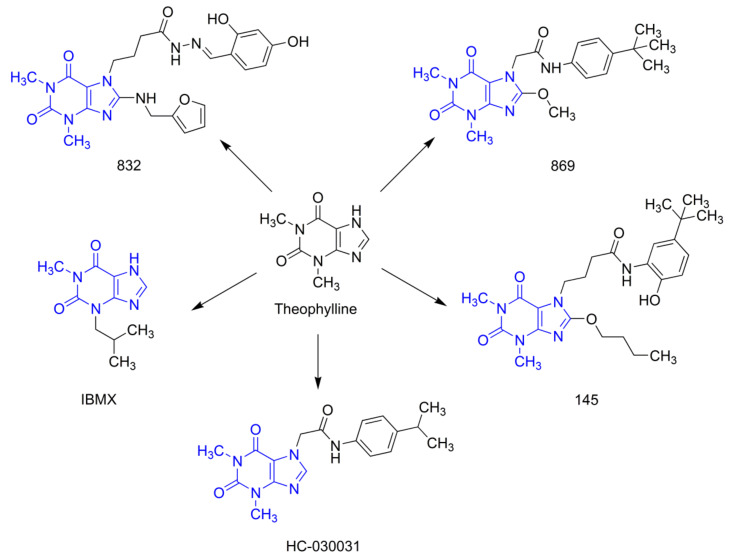
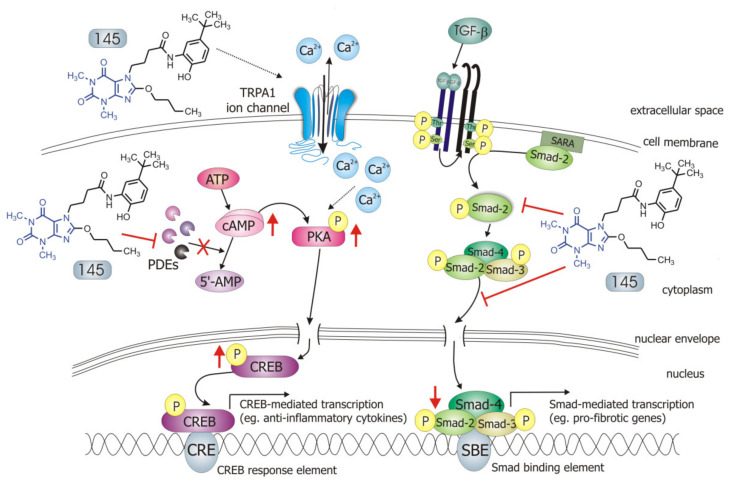
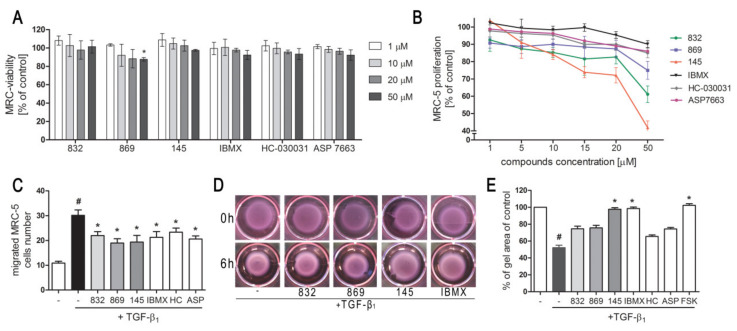
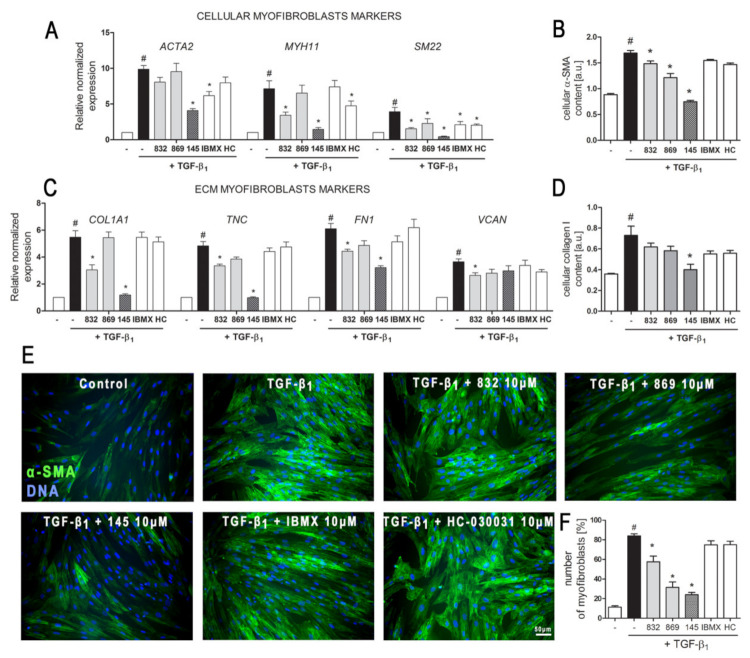
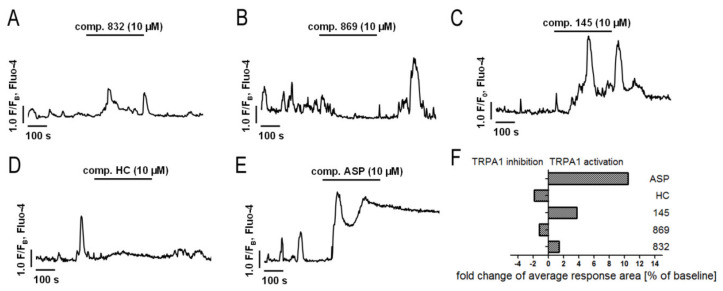
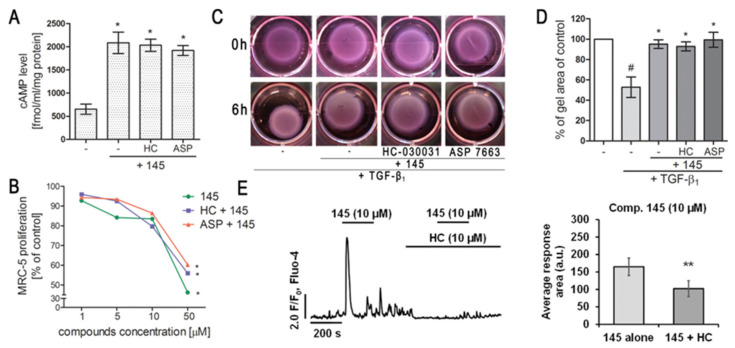
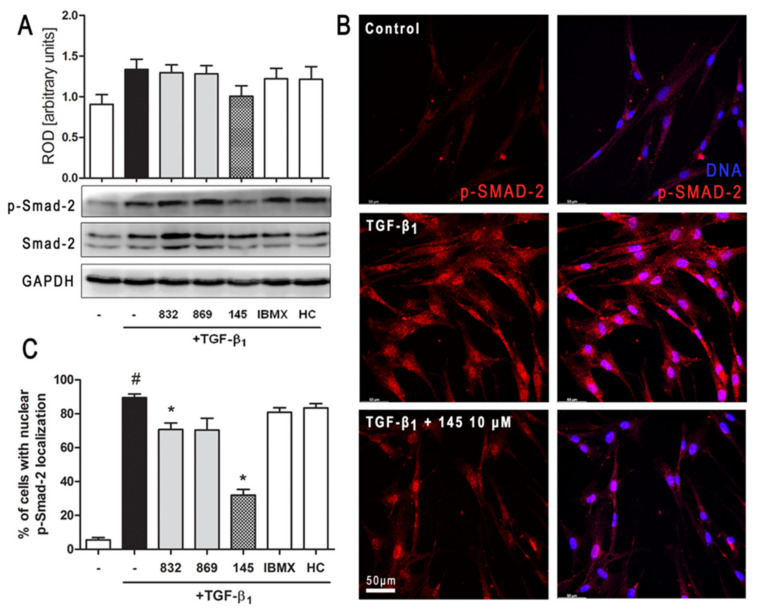
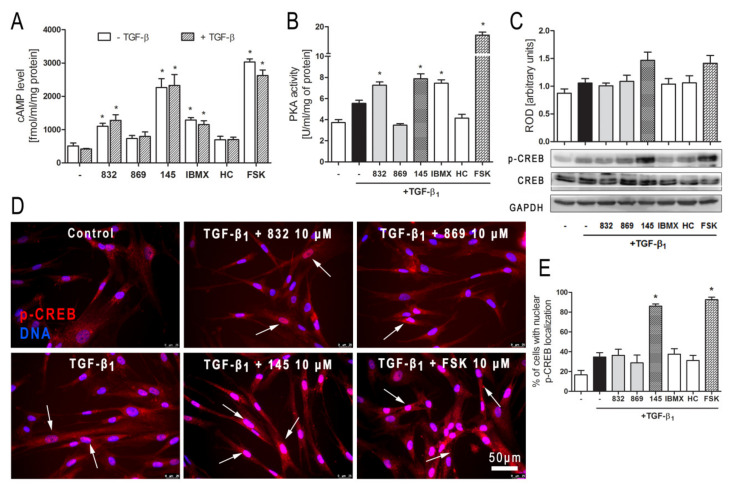
Phosphodiesterase (PDE) inhibitors are currently a widespread and extensively studied group of anti-inflammatory and anti-fibrotic compounds which may find use in the treatment of numerous lung diseases, including asthma and chronic obstructive pulmonary disease. Several PDE inhibitors are currently in clinical development, and some of them, e.g., roflumilast, are already recommended for clinical use. Due to numerous reports indicating that elevated intracellular cAMP levels may contribute to the alleviation of inflammation and airway fibrosis, new and effective PDE inhibitors are constantly being sought. Recently, a group of 7,8-disubstituted purine-2,6-dione derivatives, representing a novel and prominent pan-PDE inhibitors has been synthesized. Some of them were reported to modulate transient receptor potential ankyrin 1 (TRPA1) ion channels as well. In this study, we investigated the effect of selected derivatives (832-a pan-PDE inhibitor, 869-a TRPA1 modulator, and 145-a pan-PDE inhibitor and a weak TRPA1 modulator) on cellular responses related to airway remodeling using MRC-5 human lung fibroblasts. Compound 145 exerted the most considerable effect in limiting fibroblast to myofibroblasts transition (FMT) as well as proliferation, migration, and contraction. The effect of this compound appeared to depend mainly on its strong PDE inhibitory properties, and not on its effects on TRPA1 modulation. The strong anti-remodeling effects of 145 required activation of the cAMP/protein kinase A (PKA)/cAMP response element-binding protein (CREB) pathway leading to inhibition of transforming growth factor type β (TGF-β) and Smad-dependent signaling in MRC-5 cells. These data suggest that the TGF-β pathway is a major target for PDE inhibitors leading to inhibitory effects on cell responses involved in airway remodeling. These potent, pan-PDE inhibitors from the group of 7,8-disubstituted purine-2,6-dione derivatives, thus represent promising anti-remodeling drug candidates for further research.
磷酸二酯酶(PDE)抑制剂是目前广泛研究的一组抗炎和抗纤维化化合物,可能在治疗多种肺部疾病中发挥作用,包括哮喘和慢性阻塞性肺疾病。目前有几种 PDE 抑制剂正在临床开发中,其中一些,如罗氟司特,已经被推荐用于临床使用。由于许多报告表明,细胞内 cAMP 水平升高可能有助于缓解炎症和气道纤维化,因此不断寻求新的有效 PDE 抑制剂。最近,一组 7,8-二取代嘌呤-2,6-二酮衍生物被合成出来,代表了一种新型的、显著的泛 PDE 抑制剂。其中一些被报道可以调节瞬时受体电位锚蛋白 1(TRPA1)离子通道。在这项研究中,我们使用人肺成纤维细胞 MRC-5 研究了选定衍生物(泛 PDE 抑制剂 832、TRPA1 调节剂 869 和泛 PDE 抑制剂和弱 TRPA1 调节剂 145)对与气道重塑相关的细胞反应的影响。化合物 145 在限制成纤维细胞向肌成纤维细胞转化(FMT)以及增殖、迁移和收缩方面的作用最为显著。该化合物的作用似乎主要取决于其强大的 PDE 抑制特性,而不是其对 TRPA1 调节的作用。145 的强烈抗重塑作用需要激活 cAMP/蛋白激酶 A(PKA)/cAMP 反应元件结合蛋白(CREB)通路,从而抑制 MRC-5 细胞中的转化生长因子-β(TGF-β)和 Smad 依赖性信号通路。这些数据表明,TGF-β 通路是 PDE 抑制剂的主要靶点,导致对参与气道重塑的细胞反应的抑制作用。这些来自 7,8-二取代嘌呤-2,6-二酮衍生物的强效、泛 PDE 抑制剂,因此代表了进一步研究的有前途的抗重塑药物候选物。