Dietrich Alexander
Walther-Straub-Institute of Pharmacology and Toxicology, Member of the German Center for Lung Research(DZL), LMU Munich, Nussbaumstr. 26, D-80336 Munich, Germany.
Pharmaceuticals (Basel). 2019 Feb 1;12(1):23. doi: 10.3390/ph12010023.
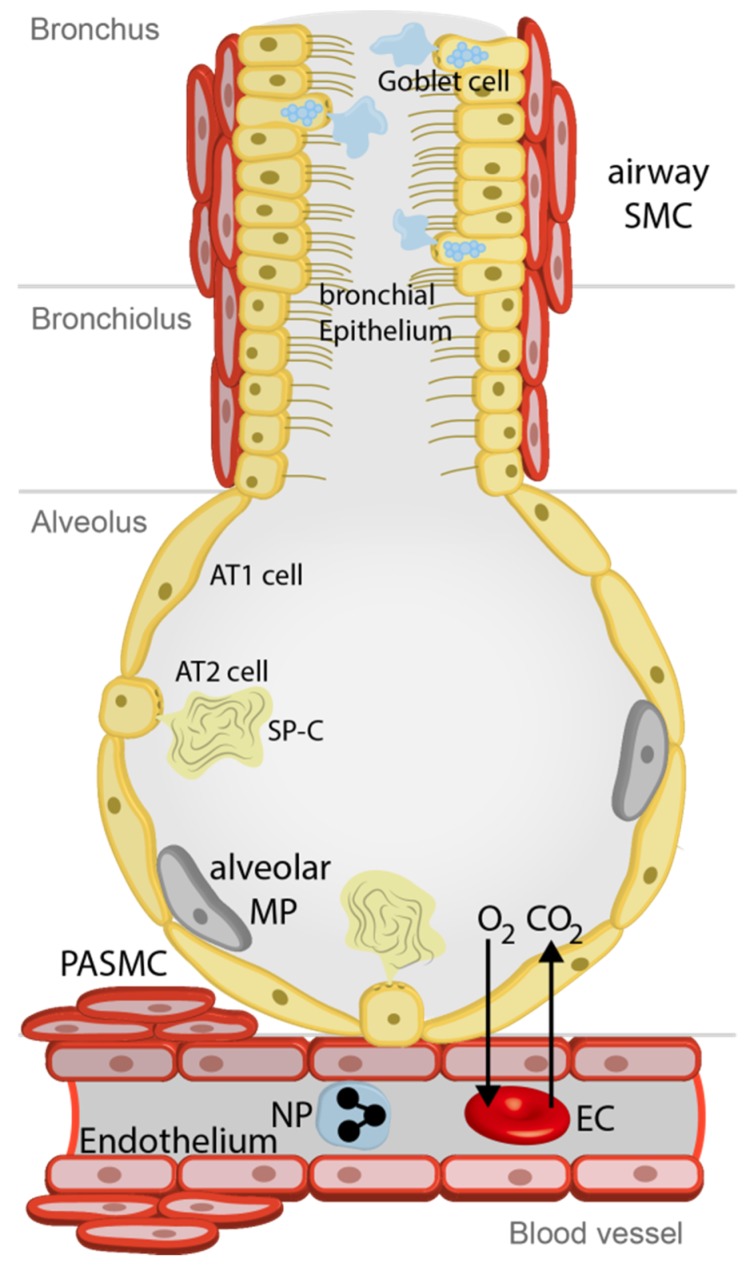
The lungs are essential for gas exchange and serve as the gateways of our body to the external environment. They are easily accessible for drugs from both sides, the airways and the vasculature. Recent literature provides evidence for a role of Transient Receptor Potential (TRP) channels as chemosensors and essential members of signal transduction cascades in stress-induced cellular responses. This review will focus on TRP channels (TRPA1, TRPC6, TRPV1, and TRPV4), predominantly expressed in non-neuronal lung tissues and their involvement in pathways associated with diseases like asthma, cystic fibrosis, chronic obstructive pulmonary disease (COPD), lung fibrosis, and edema formation. Recently identified specific modulators of these channels and their potential as new therapeutic options as well as strategies for a causal treatment based on the mechanistic understanding of molecular events will also be evaluated.
肺对于气体交换至关重要,是我们身体与外部环境的通道。从气道和脉管系统两侧来看,药物都很容易作用于肺。近期文献表明,瞬时受体电位(TRP)通道作为化学传感器以及应激诱导细胞反应中信号转导级联反应的重要成员发挥着作用。本综述将聚焦于主要在非神经肺组织中表达的TRP通道(TRPA1、TRPC6、TRPV1和TRPV4),以及它们参与哮喘、囊性纤维化、慢性阻塞性肺疾病(COPD)、肺纤维化和水肿形成等疾病相关通路的情况。还将评估最近发现的这些通道的特异性调节剂及其作为新治疗选择的潜力,以及基于对分子事件的机制理解进行因果治疗的策略。