Department of Internal Medicine, King Hussein Cancer Center, Queen Rania Al Abdullah Street, P.O. Box: 1269, Amman, 11941, Jordan.
School of Medicine, University of Jordan, Amman, Jordan.
BMC Womens Health. 2020 Jun 5;20(1):118. doi: 10.1186/s12905-020-00981-z.
Less than 10% of newly diagnosed breast cancer cases in Jordan are diagnosed in women 70 years or older. Treatment plans of such patients is less clear and could result in poor outcomes. In this paper, we describe clinical presentation, tumor characteristics and treatment outcomes in this population of breast cancer patients.
Consecutive patients aged 65 years or older with pathologically-confirmed diagnosis of breast cancer were included. Medical records and hospital databases were searched for patients' characteristics and treatment outcomes.
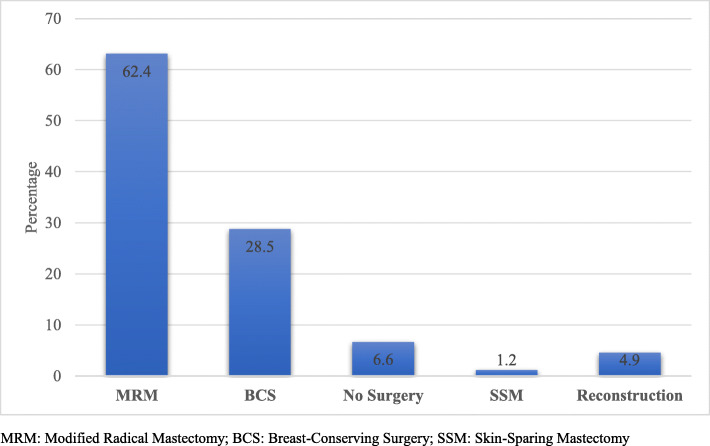
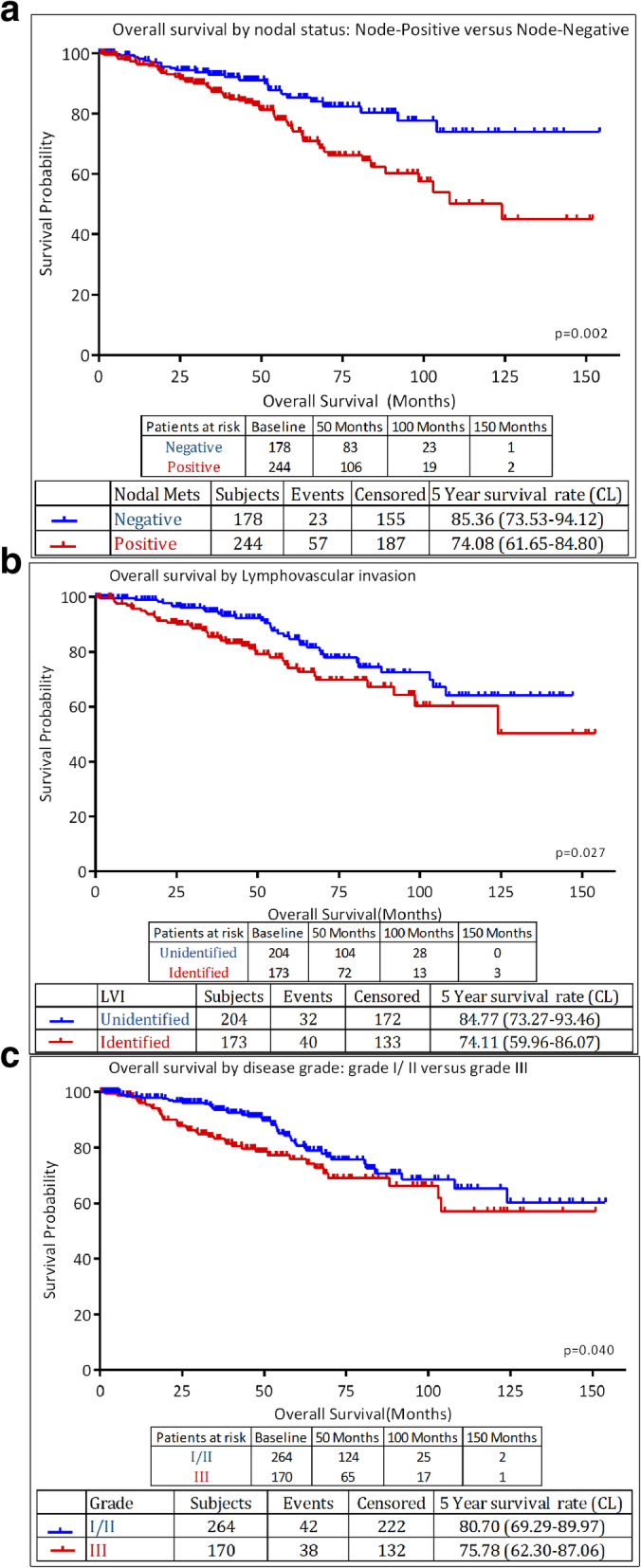
A total of 553 patients, mean age ± SD (71 ± 5.1) years, were included. On presentation, 114 (20.6%) patients had metastatic disease and was mostly visceral (81; 71.1%). Patients with non-metastatic disease had poor pathological features including node-positive in 244 (55.6%), high grade (grade III) in 170 (38.7%) and lymphovascular invasion in 173 (39.4%). Patients were treated less aggressively; 144 (32.8%) patients with early-stage disease and 98 (86.0%) with metastatic disease never had chemotherapy. After a median follow up of 45 months, 5-year overall survival for the whole group was 67.6%. Survival was better for patients with non-metastatic disease (78.8% vs. 25.4%, P < 0.001) and for those with node-negative compared to node-positive disease (85.4% vs. 74.1%, P = 0.002). On Cox regression, only positive lymph nodes were associated with poor outcome in patients with non-metastatic disease (Hazard Ratio [HR], 1.75; 95% CI: 1.006-3.034, P = 0.048).
Older Jordanian patients with breast cancer present with more aggressive features and advanced-stage disease that reflect poorly on treatment outcomes. Older patients were treated less aggressively with less than a third received any chemotherapy.
在约旦,新诊断的乳腺癌病例中,不足 10%的患者年龄在 70 岁或以上。这些患者的治疗方案不太明确,可能导致治疗效果不佳。本文描述了这部分乳腺癌患者的临床表现、肿瘤特征和治疗结果。
连续纳入经病理证实诊断为乳腺癌且年龄在 65 岁或以上的患者。检索了病历和医院数据库,以获取患者的特征和治疗结果。
共纳入 553 例患者,平均年龄±标准差(71±5.1)岁。就诊时,114 例(20.6%)患者有转移病灶,主要为内脏转移(81 例,71.1%)。无转移病灶的患者病理特征较差,包括淋巴结阳性 244 例(55.6%)、高级别(III 级)170 例(38.7%)和脉管侵犯 173 例(39.4%)。这些患者的治疗方案不够积极;144 例早期疾病患者和 98 例转移性疾病患者从未接受过化疗。中位随访 45 个月后,全组患者 5 年总生存率为 67.6%。无转移疾病患者的生存率优于有转移疾病患者(78.8%比 25.4%,P<0.001),淋巴结阴性患者的生存率优于淋巴结阳性患者(85.4%比 74.1%,P=0.002)。Cox 回归分析显示,仅淋巴结阳性与无转移疾病患者的不良预后相关(危险比 [HR],1.75;95%可信区间:1.006-3.034,P=0.048)。
约旦老年乳腺癌患者表现出更具侵袭性的特征和晚期疾病,这反映了治疗效果不佳。老年患者的治疗方案不够积极,不到三分之一的患者接受了化疗。