Cantonal Hospital St. Gallen, Institute of Legal Medicine, Rorschacherstrasse 95, CH-9007, St. Gallen, Switzerland.
Int J Legal Med. 2020 Jul;134(4):1285-1290. doi: 10.1007/s00414-020-02319-8. Epub 2020 Jun 5.
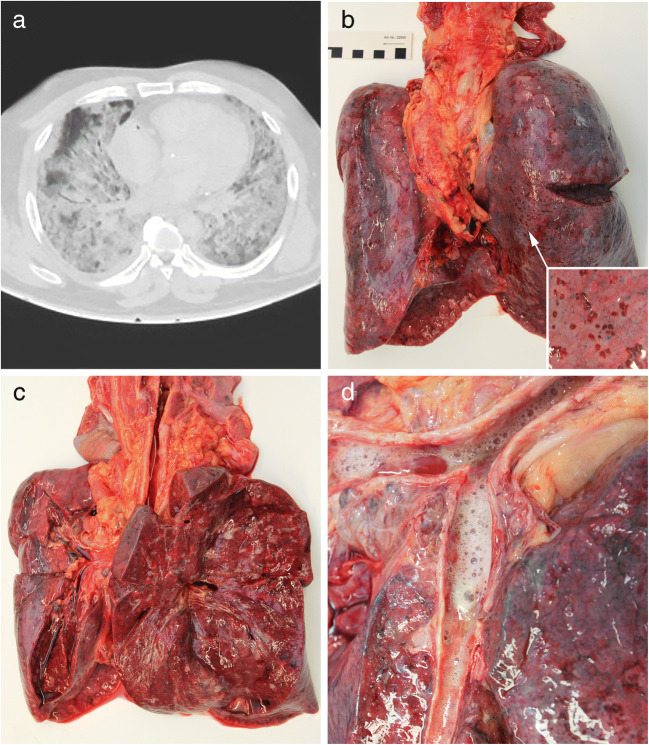
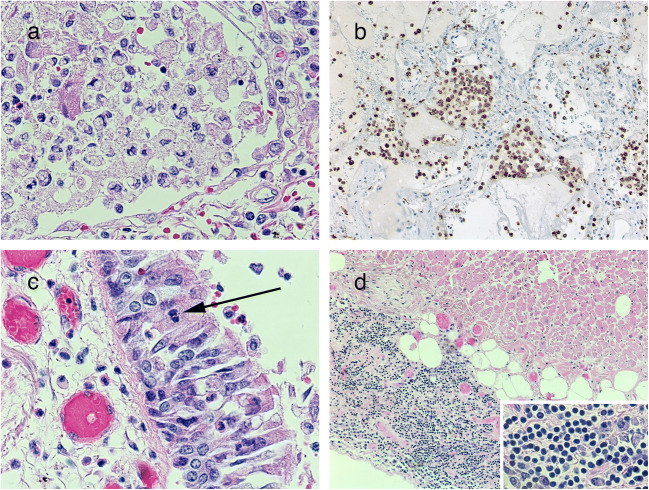
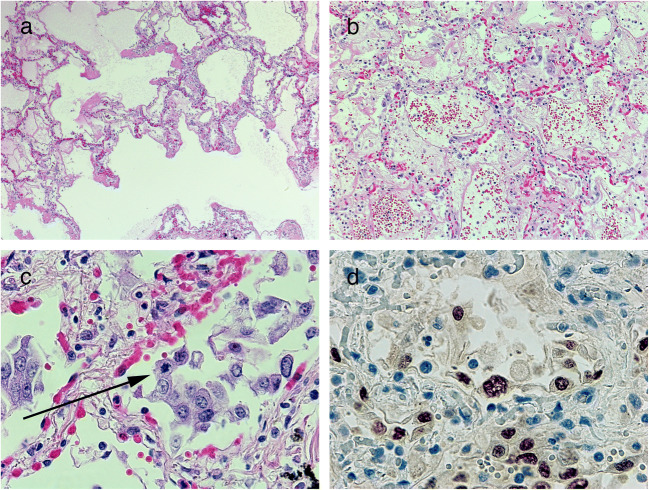
Forensic investigations generally contain extensive morphological examinations to accurately diagnose the cause of death. Thus, the appearance of a new disease often creates emerging challenges in morphological examinations due to the lack of available data from autopsy- or biopsy-based research. Since late December 2019, an outbreak of a novel seventh coronavirus disease has been reported in China caused by "severe acute respiratory syndrome coronavirus 2" (SARS-CoV-2). On March 11, 2020, the new clinical condition COVID-19 (Corona-Virus-Disease-19) was declared a pandemic by the World Health Organization (WHO). Patients with COVID-19 mainly have a mild disease course, but severe disease onset might result in death due to proceeded lung injury with massive alveolar damage and progressive respiratory failure. However, the detailed mechanisms that cause organ injury still remain unclear. We investigated the morphological findings of a COVID-19 patient who died during self-isolation. Pathologic examination revealed massive bilateral alveolar damage, indicating early-phase "acute respiratory distress syndrome" (ARDS). This case emphasizes the possibility of a rapid severe disease onset in previously mild clinical condition and highlights the necessity of a complete autopsy to gain a better understanding of the pathophysiological changes in SARS-CoV-2 infections.
法医调查通常包含广泛的形态学检查,以准确诊断死因。因此,由于缺乏基于尸检或活检的研究的可用数据,新疾病的出现常常给形态学检查带来新的挑战。自 2019 年 12 月底以来,中国报告了一种新型第七种冠状病毒疾病的爆发,由“严重急性呼吸系统综合征冠状病毒 2”(SARS-CoV-2)引起。2020 年 3 月 11 日,世界卫生组织(WHO)宣布新的临床状况 COVID-19(冠状病毒病 19)为大流行。COVID-19 患者主要有轻度疾病过程,但严重疾病发作可能因大量肺泡损伤和进行性呼吸衰竭导致肺部损伤而死亡。然而,导致器官损伤的详细机制仍不清楚。我们调查了一名在自我隔离期间死亡的 COVID-19 患者的形态学发现。病理检查显示大量双侧肺泡损伤,表明早期“急性呼吸窘迫综合征”(ARDS)。该病例强调了在先前轻度临床情况下迅速出现严重疾病的可能性,并突出了进行完整尸检以更好地了解 SARS-CoV-2 感染的病理生理变化的必要性。