• 文献检索
  • 文档翻译
  • 深度研究
  • 学术资讯
  • Suppr Zotero 插件Zotero 插件
  • 邀请有礼
  • 套餐&价格
  • 历史记录
应用&插件
Suppr Zotero 插件Zotero 插件浏览器插件Mac 客户端Windows 客户端微信小程序
定价
高级版会员购买积分包购买API积分包
服务
文献检索文档翻译深度研究API 文档MCP 服务
关于我们
关于 Suppr公司介绍联系我们用户协议隐私条款
关注我们

Suppr 超能文献

核心技术专利:CN118964589B侵权必究
粤ICP备2023148730 号-1Suppr @ 2026

文献检索

告别复杂PubMed语法,用中文像聊天一样搜索,搜遍4000万医学文献。AI智能推荐,让科研检索更轻松。

立即免费搜索

文件翻译

保留排版,准确专业,支持PDF/Word/PPT等文件格式,支持 12+语言互译。

免费翻译文档

深度研究

AI帮你快速写综述,25分钟生成高质量综述,智能提取关键信息,辅助科研写作。

立即免费体验

日本启动二线治疗的2型糖尿病患者的基线特征:J-DISCOVER研究结果

Baseline Characteristics of Patients with Type 2 Diabetes Initiating Second-Line Treatment in Japan: Findings from the J-DISCOVER Study.

作者信息

Katakami Naoto, Mita Tomoya, Takahara Mitsuyoshi, Yajima Toshitaka, Wada Fumitaka, Kawashima Masaru, Shimomura Iichiro, Watada Hirotaka

机构信息

Department of Metabolism and Atherosclerosis, Graduate School of Medicine, Osaka University, Osaka, Japan.

Department of Metabolism and Endocrinology, Juntendo University Graduate School of Medicine, Tokyo, Japan.

出版信息

Diabetes Ther. 2020 Jul;11(7):1563-1578. doi: 10.1007/s13300-020-00846-6. Epub 2020 Jun 5.

DOI:10.1007/s13300-020-00846-6
PMID:32504219
原文链接:https://pmc.ncbi.nlm.nih.gov/articles/PMC7324455/
Abstract

INTRODUCTION

J-DISCOVER aims to research the treatment reality of Japanese patients with type 2 diabetes mellitus who begin second-line treatment. Here we report baseline characteristics and factors associated with selection of second-line treatment.

METHODS

J-DISCOVER is a prospective, observational, multicenter, cohort study in patients with type 2 diabetes (aged ≥ 20 years) beginning second-line treatment after first-line oral monotherapy. Baseline characteristics and treatment patterns were descriptively summarized. Logistic regression models were used to identify factors associated with specific second-line treatments.

RESULTS

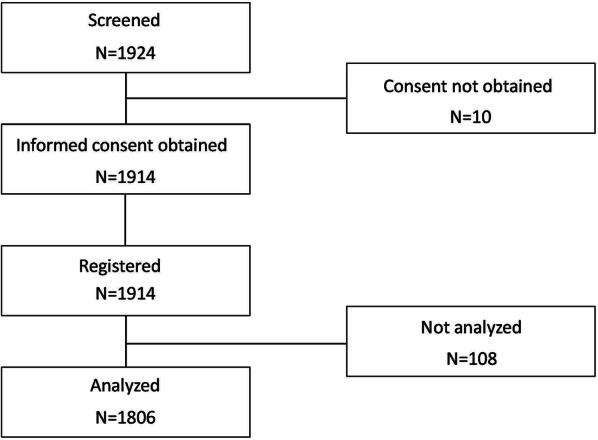
A total of 1806 patients (mean age 61.7 years) were enrolled between September 2014 and December 2015. Mean ± standard deviation of baseline glycated hemoglobin (HbA1c) and body mass index (BMI) were 7.7 ± 1.3% and 25.5 ± 4.6 kg/m, respectively. The most prescribed medication as first-line treatment was dipeptidyl peptidase 4 inhibitors (53.7% of patients) followed by biguanides (21.4%), sulfonylureas (7.2%), and alpha-glucosidase inhibitors (6.8%). Second-line treatments included dipeptidyl peptidase 4 inhibitors (31.0%), biguanides (27.9%), sodium-glucose cotransporter 2 inhibitors (12.2%), and sulfonylureas (10.9%). First- and second-line treatments had different modes of action in 76.3% of patients. Those receiving first-line dipeptidyl peptidase 4 inhibitors were more likely to receive second-line biguanides and vice versa. Selection of second-line treatment was also associated with age, BMI, HbA1c, and renal function.

CONCLUSIONS

This study showed the treatment reality and factors associated with choice of second-line treatment in Japanese patients with type 2 diabetes mellitus. The choice of second-line treatment was associated with age, BMI, HbA1c, renal function, and the mode of action of the first-line treatment.

TRIAL REGISTRATION

ClinicalTrials.gov NCT02226822.

摘要

引言

J-DISCOVER旨在研究开始二线治疗的日本2型糖尿病患者的治疗现状。在此,我们报告基线特征以及与二线治疗选择相关的因素。

方法

J-DISCOVER是一项针对2型糖尿病患者(年龄≥20岁)的前瞻性、观察性、多中心队列研究,这些患者在一线口服单药治疗后开始二线治疗。对基线特征和治疗模式进行了描述性总结。使用逻辑回归模型来确定与特定二线治疗相关的因素。

结果

2014年9月至2015年12月期间共纳入1806例患者(平均年龄61.7岁)。基线糖化血红蛋白(HbA1c)和体重指数(BMI)的平均值±标准差分别为7.7±1.3%和25.5±4.6kg/m²。一线治疗中最常处方的药物是二肽基肽酶4抑制剂(53.7%的患者),其次是双胍类药物(21.4%)、磺脲类药物(7.2%)和α-葡萄糖苷酶抑制剂(6.8%)。二线治疗包括二肽基肽酶4抑制剂(31.0%)、双胍类药物(27.9%)、钠-葡萄糖协同转运蛋白2抑制剂(12.2%)和磺脲类药物(10.9%)。76.3%的患者一线和二线治疗的作用方式不同。接受一线二肽基肽酶4抑制剂治疗的患者更有可能接受二线双胍类药物治疗,反之亦然。二线治疗的选择还与年龄、BMI、HbA1c和肾功能有关。

结论

本研究显示了日本2型糖尿病患者的治疗现状以及与二线治疗选择相关的因素。二线治疗的选择与年龄、BMI、HbA1c、肾功能以及一线治疗的作用方式有关。

试验注册

ClinicalTrials.gov NCT02226822。

https://cdn.ncbi.nlm.nih.gov/pmc/blobs/a64f/7324455/60a3fa18c944/13300_2020_846_Fig3a_HTML.jpg
https://cdn.ncbi.nlm.nih.gov/pmc/blobs/a64f/7324455/b45b84a4fb11/13300_2020_846_Fig1_HTML.jpg
https://cdn.ncbi.nlm.nih.gov/pmc/blobs/a64f/7324455/ec4110d60103/13300_2020_846_Fig2_HTML.jpg
https://cdn.ncbi.nlm.nih.gov/pmc/blobs/a64f/7324455/60a3fa18c944/13300_2020_846_Fig3a_HTML.jpg
https://cdn.ncbi.nlm.nih.gov/pmc/blobs/a64f/7324455/b45b84a4fb11/13300_2020_846_Fig1_HTML.jpg
https://cdn.ncbi.nlm.nih.gov/pmc/blobs/a64f/7324455/ec4110d60103/13300_2020_846_Fig2_HTML.jpg
https://cdn.ncbi.nlm.nih.gov/pmc/blobs/a64f/7324455/60a3fa18c944/13300_2020_846_Fig3a_HTML.jpg

相似文献

1
Baseline Characteristics of Patients with Type 2 Diabetes Initiating Second-Line Treatment in Japan: Findings from the J-DISCOVER Study.日本启动二线治疗的2型糖尿病患者的基线特征:J-DISCOVER研究结果
Diabetes Ther. 2020 Jul;11(7):1563-1578. doi: 10.1007/s13300-020-00846-6. Epub 2020 Jun 5.
2
Three-Year Glycaemic Control and Management in Patients with Type 2 Diabetes Initiating Second-Line Treatment in Japan: A Prospective Observational Study, J-DISCOVER.日本2型糖尿病患者启动二线治疗后的三年血糖控制与管理:一项前瞻性观察性研究,J-DISCOVER
Diabetes Ther. 2022 Feb;13(2):251-264. doi: 10.1007/s13300-021-01192-x. Epub 2021 Dec 28.
3
Rationale and Design for the J-DISCOVER Study: DISCOVERing the Treatment Reality of Type 2 Diabetes in a Real-World Setting in Japan-A Protocol.J-DISCOVER研究的原理与设计:在日本真实世界环境中探索2型糖尿病的治疗现状——一项研究方案
Diabetes Ther. 2018 Feb;9(1):165-175. doi: 10.1007/s13300-017-0351-7. Epub 2017 Dec 19.
4
Retrospective nationwide study on the trends in first-line antidiabetic medication for patients with type 2 diabetes in Japan.回顾性全国研究:日本 2 型糖尿病患者一线抗糖尿病药物的趋势。
J Diabetes Investig. 2022 Feb;13(2):280-291. doi: 10.1111/jdi.13636. Epub 2021 Aug 17.
5
Treatment of type 2 diabetes mellitus worldwide: Baseline patient characteristics in the global DISCOVER study.全球 2 型糖尿病治疗:全球 DISCOVER 研究中的基线患者特征。
Diabetes Res Clin Pract. 2019 May;151:20-32. doi: 10.1016/j.diabres.2019.03.024. Epub 2019 Mar 20.
6
Characteristics and Treatment Patterns of Patients with Type 2 Diabetes Mellitus in the Middle East and Africa Cohort of the DISCOVER Study Program: a Prospective Study.糖尿病探索研究项目中东和非洲队列中2型糖尿病患者的特征及治疗模式:一项前瞻性研究。
Diabetes Ther. 2022 Jul;13(7):1339-1352. doi: 10.1007/s13300-022-01272-6. Epub 2022 Jun 11.
7
Factors Influencing the Prescribing Preferences of Physicians for Drug-Naive Patients with Type 2 Diabetes Mellitus in the Real-World Setting in Japan: Insight from a Web Survey.日本现实环境中影响初治2型糖尿病患者医生处方偏好的因素:来自网络调查的见解
Diabetes Ther. 2018 Jun;9(3):1185-1199. doi: 10.1007/s13300-018-0431-3. Epub 2018 Apr 25.
8
Efficacy and safety of luseogliflozin added to various oral antidiabetic drugs in Japanese patients with type 2 diabetes mellitus.在日本2型糖尿病患者中,将鲁索格列净添加至各种口服抗糖尿病药物后的疗效及安全性。
J Diabetes Investig. 2015 Jul;6(4):443-53. doi: 10.1111/jdi.12316. Epub 2015 Jan 10.
9
Impact of insulin sensitivity, beta-cell function and glycaemic control on initiation of second-line glucose-lowering treatment in newly diagnosed type 2 diabetes.新诊断 2 型糖尿病患者起始二线降糖治疗时胰岛素敏感性、β细胞功能和血糖控制的影响。
Diabetes Obes Metab. 2017 Jun;19(6):866-873. doi: 10.1111/dom.12894. Epub 2017 Feb 23.
10
Baseline characteristic differences between patients prescribed sitagliptin vs. other oral antihyperglycemic agents: analysis of a US electronic medical record database.服用西他列汀与其他口服降糖药的患者基线特征差异:一项美国电子病历数据库分析。
Curr Med Res Opin. 2010 Jul;26(7):1697-703. doi: 10.1185/03007995.2010.489029.

引用本文的文献

1
Comparison of the Risk of Diabetic Retinopathy Between Sodium-Glucose Cotransporter-2 Inhibitors and Dipeptidyl Peptidase-4 Inhibitors in Patients with Type 2 Diabetes Mellitus in Japan: A Retrospective Analysis of Real-World Data.日本2型糖尿病患者中钠-葡萄糖协同转运蛋白2抑制剂与二肽基肽酶-4抑制剂治疗糖尿病视网膜病变风险的比较:真实世界数据的回顾性分析
Diabetes Ther. 2024 Nov;15(11):2401-2416. doi: 10.1007/s13300-024-01649-9. Epub 2024 Sep 30.
2
Use of diabetes medications in adults with T2D and CVD in Japan: secondary analysis of the CAPTURE study.日本2型糖尿病和心血管疾病成年患者糖尿病药物的使用:CAPTURE研究的二次分析
Diabetol Int. 2023 Jun 15;14(4):363-371. doi: 10.1007/s13340-023-00638-w. eCollection 2023 Oct.
3

本文引用的文献

1
Recommendations on the proper use of SGLT2 inhibitors.关于钠-葡萄糖协同转运蛋白2(SGLT2)抑制剂正确使用的建议。
Diabetol Int. 2019 Nov 15;11(1):1-5. doi: 10.1007/s13340-019-00415-8. eCollection 2020 Jan.
2
2019 ESC Guidelines on diabetes, pre-diabetes, and cardiovascular diseases developed in collaboration with the EASD.2019年欧洲心脏病学会(ESC)与欧洲糖尿病研究协会(EASD)合作制定的糖尿病、糖尿病前期和心血管疾病指南。
Eur Heart J. 2020 Jan 7;41(2):255-323. doi: 10.1093/eurheartj/ehz486.
3
SGLT2 inhibitors for the prevention of kidney failure in patients with type 2 diabetes: a systematic review and meta-analysis.
Long-term efficacy and safety of early alogliptin initiation in subjects with type 2 diabetes: an extension of the SPEAD-A study.
在 2 型糖尿病患者中早期使用阿格列汀的长期疗效和安全性:SPEAD-A 研究的扩展。
Sci Rep. 2023 Sep 5;13(1):14649. doi: 10.1038/s41598-023-41036-1.
4
Changes in Treatment Satisfaction Over 3 Years in Patients With Type 2 Diabetes After Initiating Second-line Treatment.接受二线治疗的 2 型糖尿病患者治疗满意度 3 年变化。
J Clin Endocrinol Metab. 2022 Aug 18;107(9):2424-2432. doi: 10.1210/clinem/dgac420.
5
Cost-Effectiveness Analysis of Initiating Type 2 Diabetes Therapy with a Sodium-Glucose Cotransporter 2 Inhibitor Versus Conventional Therapy in Japan.在日本,使用钠-葡萄糖协同转运蛋白2抑制剂启动2型糖尿病治疗与传统治疗的成本效益分析。
Diabetes Ther. 2022 Jul;13(7):1367-1381. doi: 10.1007/s13300-022-01270-8. Epub 2022 Jun 16.
6
Dipeptidyl peptidase-4 inhibitors reduced long-term cardiovascular risk in diabetic patients after percutaneous coronary intervention via insulin-like growth factor-1 axis.二肽基肽酶-4 抑制剂通过胰岛素样生长因子-1 轴降低经皮冠状动脉介入治疗后糖尿病患者的长期心血管风险。
Sci Rep. 2022 Mar 24;12(1):5129. doi: 10.1038/s41598-022-09059-2.
7
Patient characteristics associated with improvement in glycemic control following addition of an oral antidiabetic drug to DPP-4 inhibitor monotherapy in Japanese patients with type 2 diabetes mellitus (JDDM 60).在日本2型糖尿病患者(JDDM 60)中,在二肽基肽酶-4抑制剂单药治疗基础上加用口服抗糖尿病药物后血糖控制改善相关的患者特征。
Diabetol Int. 2021 Jul 15;13(1):132-141. doi: 10.1007/s13340-021-00514-5. eCollection 2022 Jan.
SGLT2 抑制剂预防 2 型糖尿病患者肾衰竭:系统评价和荟萃分析。
Lancet Diabetes Endocrinol. 2019 Nov;7(11):845-854. doi: 10.1016/S2213-8587(19)30256-6. Epub 2019 Sep 5.
4
Treatment patterns and associated factors in 14 668 people with type 2 diabetes initiating a second-line therapy: Results from the global DISCOVER study programme.在启动二线治疗的 14668 名 2 型糖尿病患者中治疗模式及相关因素:来自全球 DISCOVER 研究项目的结果。
Diabetes Obes Metab. 2019 Nov;21(11):2474-2485. doi: 10.1111/dom.13830. Epub 2019 Aug 5.
5
Canagliflozin and Renal Outcomes in Type 2 Diabetes and Nephropathy.卡格列净与 2 型糖尿病和肾病患者的肾脏结局。
N Engl J Med. 2019 Jun 13;380(24):2295-2306. doi: 10.1056/NEJMoa1811744. Epub 2019 Apr 14.
6
Japanese Clinical Practice Guideline for Diabetes 2016.《2016年日本糖尿病临床实践指南》
Diabetol Int. 2018 Mar 27;9(1):1-45. doi: 10.1007/s13340-018-0345-3. eCollection 2018 Feb.
7
Glycemic targets for elderly patients with diabetes.老年糖尿病患者的血糖目标
Diabetol Int. 2016 Nov 29;7(4):331-333. doi: 10.1007/s13340-016-0293-8. eCollection 2016 Dec.
8
SGLT2 inhibitors for primary and secondary prevention of cardiovascular and renal outcomes in type 2 diabetes: a systematic review and meta-analysis of cardiovascular outcome trials.SGLT2 抑制剂用于 2 型糖尿病的心血管和肾脏结局的一级和二级预防:心血管结局试验的系统评价和荟萃分析。
Lancet. 2019 Jan 5;393(10166):31-39. doi: 10.1016/S0140-6736(18)32590-X. Epub 2018 Nov 10.
9
Dapagliflozin and Cardiovascular Outcomes in Type 2 Diabetes.达格列净与 2 型糖尿病患者的心血管结局
N Engl J Med. 2019 Jan 24;380(4):347-357. doi: 10.1056/NEJMoa1812389. Epub 2018 Nov 10.
10
Management of Hyperglycemia in Type 2 Diabetes, 2018. A Consensus Report by the American Diabetes Association (ADA) and the European Association for the Study of Diabetes (EASD).2018 年美国糖尿病协会(ADA)和欧洲糖尿病研究协会(EASD)共识报告:2 型糖尿病患者高血糖管理。
Diabetes Care. 2018 Dec;41(12):2669-2701. doi: 10.2337/dci18-0033. Epub 2018 Oct 4.