Takahara Mitsuyoshi, Mita Tomoya, Katakami Naoto, Wada Fumitaka, Morita Naru, Kidani Yoko, Yajima Toshitaka, Shimomura Iichiro, Watada Hirotaka
Department of Diabetes Care Medicine, Graduate School of Medicine, Osaka University, Osaka, Japan.
Department of Metabolism and Endocrinology, Juntendo University Graduate School of Medicine, Tokyo, Japan.
Diabetes Ther. 2022 Feb;13(2):251-264. doi: 10.1007/s13300-021-01192-x. Epub 2021 Dec 28.
J-DISCOVER is a prospective, observational cohort study that aimed to understand characteristics, glycaemic control, comorbidities and real-world management of patients with early-stage type 2 diabetes mellitus (T2DM) in Japan, by enrolling patients initiating second-line treatment from both diabetes specialist and non-specialist care settings.
As part of the global DISCOVER programme, J-DISCOVER enrolled 1798 patients with T2DM aged at least 20 years old from 142 sites across Japan, from September 2014 to December 2015, and followed these patients for 3 years. Glycaemic control, body mass index (BMI), blood pressure, lipid profiles, treatment patterns, and prevalence of CKD and retinopathy were examined from baseline to 6, 12, 24 and 36 months, stratified by class of second-line treatment.
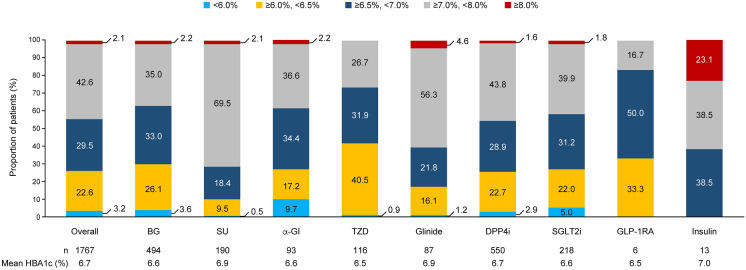
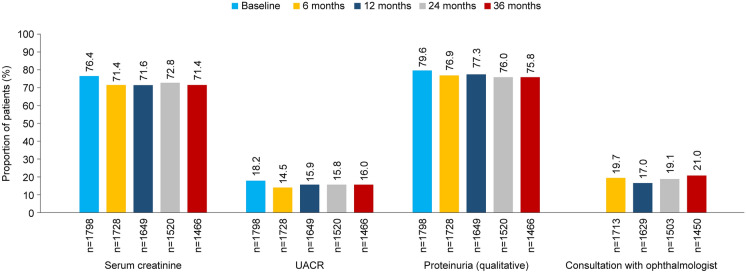
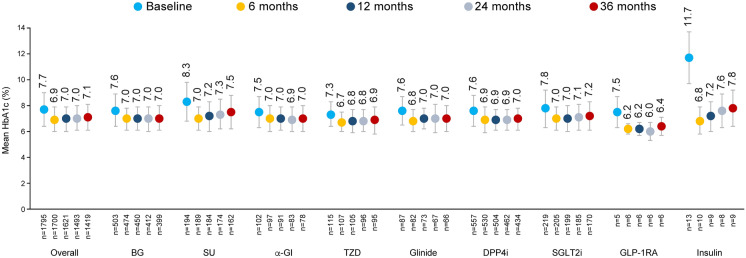
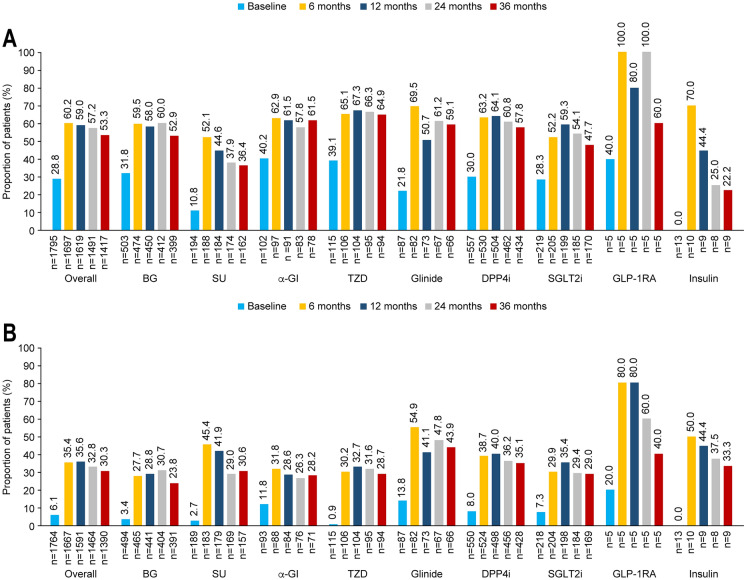
At baseline, the median time after T2DM diagnosis was 3.1 years and mean glycated haemoglobin (HbA1c) was 7.7%. The mean individualized HbA1c target was 6.7 ± 0.5%, and 55.3% of patients were set the target of < 7.0%. HbA1c reductions were noted from 6 months and mean HbA1c was 7.1% at 36 months. The proportion of patients with HbA1c < 7.0% increased from 28.8% at baseline to 53.3% at 36 months, and the achievement rate of individualized HbA1c targets increased from 6.1% to 30.3%. Only two cases of severe hypoglycaemia occurred during the study. No major changes in BMI, blood pressure, lipid profile or prescription of antihypertensive or dyslipidaemia medications were observed. The frequencies of screening to detect retinopathy and chronic kidney disease (CKD) were 17.0-21.0% and 14.5-16.0%, respectively, during the follow-up period. The prevalence of CKD, but not retinopathy, increased over the follow-up period.
This study provided an overview of the 3-year management of early-stage T2DM in patients initiating second-line treatment. Contemporary management improved glycaemic control with an acceptable risk-benefit balance, although hurdles remain to sufficient implementation of guideline-recommended treatments in current clinical practice.
ClinicalTrials.gov identifier, NCT02226822.
J-DISCOVER是一项前瞻性观察性队列研究,旨在通过纳入来自糖尿病专科和非专科护理机构开始二线治疗的患者,了解日本早期2型糖尿病(T2DM)患者的特征、血糖控制、合并症及实际治疗情况。
作为全球DISCOVER项目的一部分,J-DISCOVER在2014年9月至2015年12月期间,从日本全国142个地点招募了1798例年龄至少20岁的T2DM患者,并对这些患者进行了3年的随访。从基线到6、12、24和36个月,按二线治疗类别分层,检查血糖控制、体重指数(BMI)、血压、血脂谱、治疗模式以及慢性肾脏病(CKD)和视网膜病变的患病率。
基线时,T2DM诊断后的中位时间为3.1年,平均糖化血红蛋白(HbA1c)为7.7%。平均个体化HbA1c目标为6.7±0.5%,55.3%的患者设定的目标为<7.0%。从6个月起HbA1c开始下降,36个月时平均HbA1c为7.1%。HbA1c<7.0%的患者比例从基线时的28.8%增至36个月时的53.3%,个体化HbA1c目标的达成率从6.1%增至30.3%。研究期间仅发生2例严重低血糖事件。未观察到BMI、血压、血脂谱或抗高血压或血脂异常药物处方有重大变化。随访期间,检测视网膜病变和慢性肾脏病(CKD)的筛查频率分别为17.0 - 21.0%和14.5 - 16.0%。随访期间,CKD的患病率上升,但视网膜病变的患病率未上升。
本研究概述了开始二线治疗的早期T2DM患者的3年治疗情况。当代治疗改善了血糖控制,风险效益平衡可接受,尽管在当前临床实践中充分实施指南推荐治疗仍存在障碍。
ClinicalTrials.gov标识符,NCT02226822。