Zhu Man, Gong Zhengyan, Wu Qing, Shi Xianpeng, Su Qi, Zhang Yanmin
School of Pharmacy, Health Science Center, Xi'an Jiaotong University, Xi'an, P.R. China.
Clin Transl Med. 2020 Jan;10(1):1-12. doi: 10.1002/ctm2.1. Epub 2020 Apr 14.
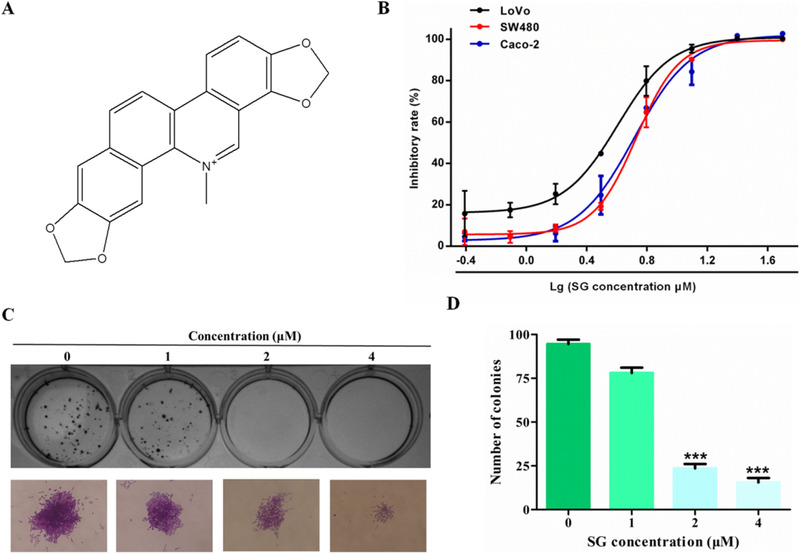
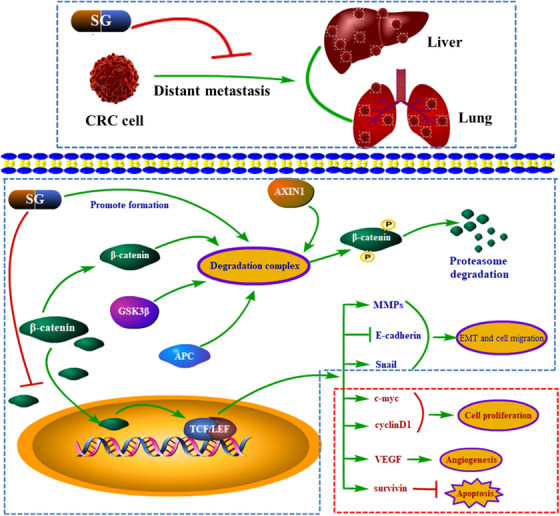
Unresectable lung or liver organ metastases of colorectal carcinoma (CRC) remain a major obstacle in clinical therapeutics. Epithelial to mesenchymal transition (EMT), a major cause of highly frequent metastasis in tumor, can be promoted by the Wnt/β-catenin pathway that is aberrantly activated in approximately 90% of CRC. This research aimed to elucidate the antimetastatic potential of sanguinarine (SG) in CRC and the underlying molecular mechanism.
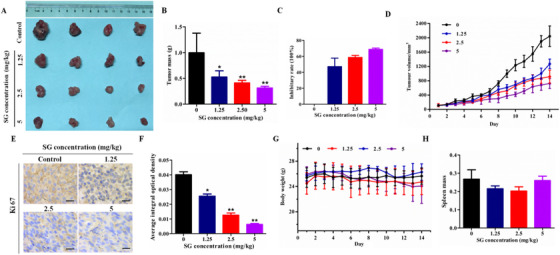
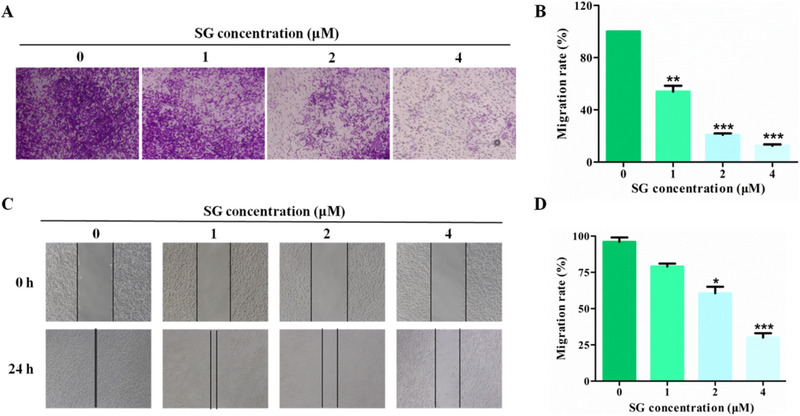
The in vitro anticancer effect of SG was determined via cell viability experiment and colony formation assay. Xenograft model of nude mice was used to confirm the antitumor effect of SG in vivo. The antimetastatic potential of SG was investigated by the metastasis model of nude mice, hematoxylin and eosin (H&E) staining, migration assay, and wound-healing analysis. Immunoblotting analysis, immunofluorescence staining, and immunohistochemistry assay were conducted to elucidate the molecular mechanism.
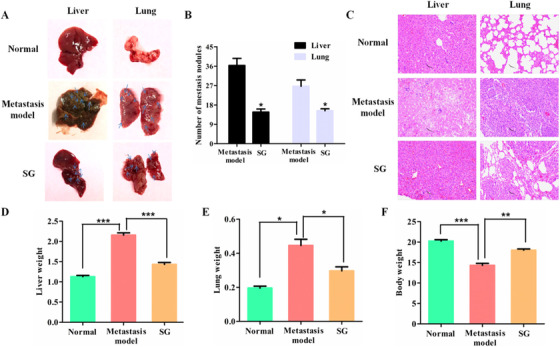
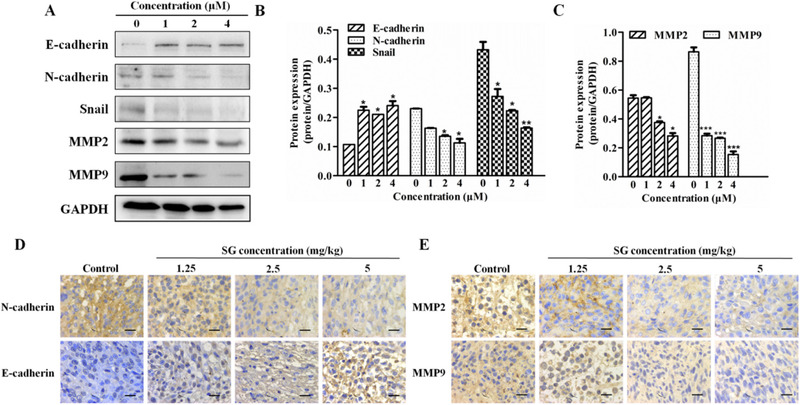
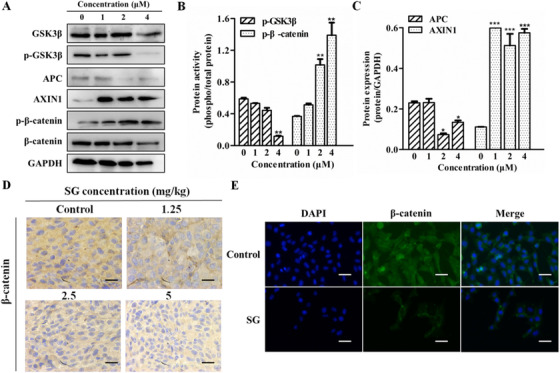
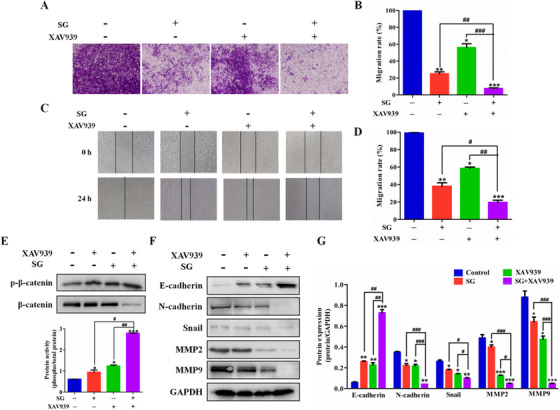
In this study, we reported that SG has a selective inhibitory effect on LoVo cells with metastatic characteristics. Furthermore, our results showed attenuation in the migration and metastatic ability of SG-treated LoVo cells and also decreased metastatic nodules of liver and lung in mice metastasis model. This was also confirmed at the molecular level via H&E staining. Further study revealed that SG had negative impacts on the Wnt/β-catenin pathway and EMT markers in LoVo cells both in vitro and in vivo.
Taken together, the antimetastatic potential of SG attributed to the suppression of the Wnt/β-catenin signaling, which further prevented EMT progression. SG may be of value in a potential therapy for the management of metastasis CRC.
结直肠癌(CRC)不可切除的肺或肝器官转移仍然是临床治疗中的主要障碍。上皮-间质转化(EMT)是肿瘤中高频率转移的主要原因,约90%的CRC中异常激活的Wnt/β-连环蛋白通路可促进其发生。本研究旨在阐明血根碱(SG)在CRC中的抗转移潜力及其潜在的分子机制。
通过细胞活力实验和集落形成试验测定SG的体外抗癌作用。采用裸鼠异种移植模型在体内证实SG的抗肿瘤作用。通过裸鼠转移模型、苏木精-伊红(H&E)染色、迁移试验和伤口愈合分析研究SG的抗转移潜力。进行免疫印迹分析、免疫荧光染色和免疫组织化学检测以阐明分子机制。
在本研究中,我们报道SG对具有转移特性的LoVo细胞具有选择性抑制作用。此外,我们的结果显示,SG处理的LoVo细胞的迁移和转移能力减弱,并且在小鼠转移模型中肝和肺的转移结节也减少。这也通过H&E染色在分子水平上得到证实。进一步研究表明,SG在体外和体内对LoVo细胞中的Wnt/β-连环蛋白通路和EMT标志物均有负面影响。
综上所述,SG的抗转移潜力归因于对Wnt/β-连环蛋白信号的抑制,这进一步阻止了EMT进程。SG在转移性CRC的潜在治疗中可能具有价值。