Wellcome Centre for Human Neuroimaging, UCL Queen Square Institute of Neurology, University College London, London, United Kingdom.
Department of Neurodegenerative Diseases and Geriatric Psychiatry, University Hospital Bonn, Bonn, Germany.
Elife. 2020 Jun 8;9:e56211. doi: 10.7554/eLife.56211.
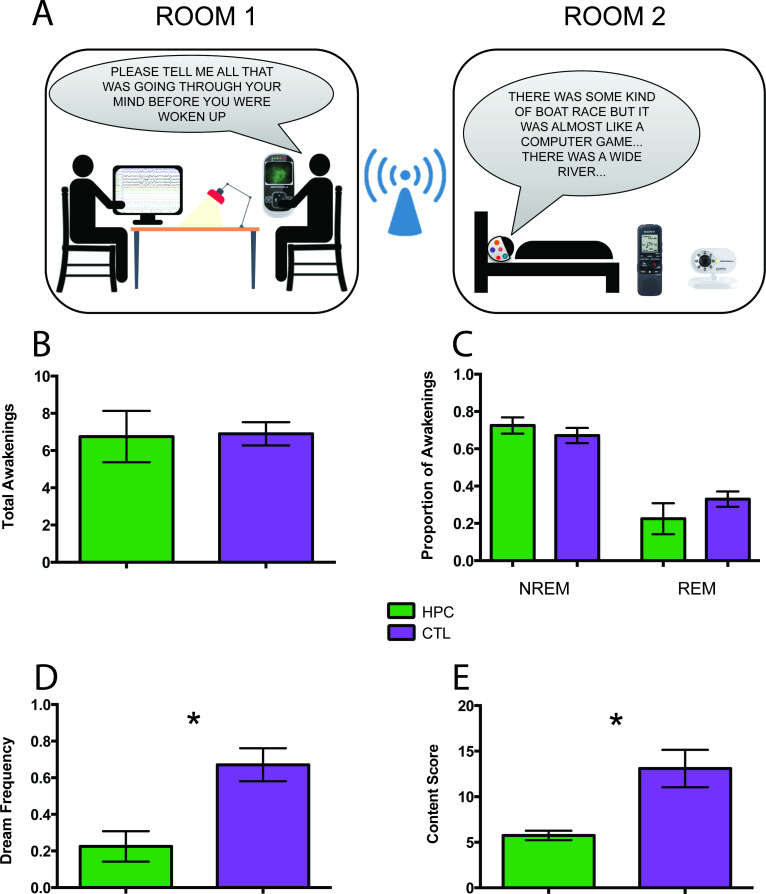
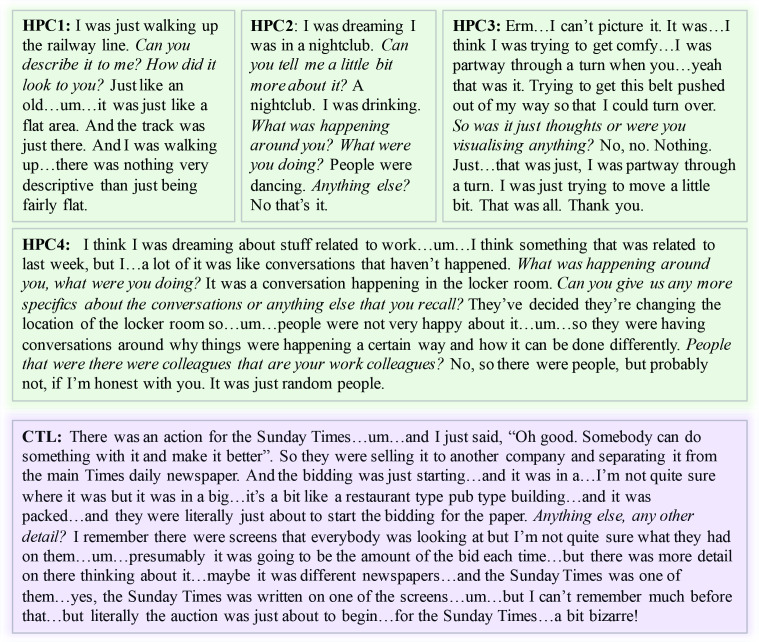
The hippocampus is linked with both sleep and memory, but there is debate about whether a salient aspect of sleep - dreaming - requires its input. To address this question, we investigated if human patients with focal bilateral hippocampal damage and amnesia engaged in dreaming. We employed a provoked awakening protocol where participants were woken up at various points throughout the night, including during non-rapid eye movement and rapid eye movement sleep, to report their thoughts in that moment. Despite being roused a similar number of times, dream frequency was reduced in the patients compared to control participants, and the few dreams they reported were less episodic-like in nature and lacked content. These results suggest that hippocampal integrity may be necessary for typical dreaming to occur, and aligns dreaming with other hippocampal-dependent processes such as episodic memory that are central to supporting our mental life.
海马体与睡眠和记忆都有关联,但关于睡眠的一个重要方面——做梦——是否需要它的参与,这仍然存在争议。为了解决这个问题,我们调查了患有局灶性双侧海马体损伤和健忘症的人类患者是否会做梦。我们采用了一种诱发觉醒的方案,让参与者在夜间的不同时间点被唤醒,包括非快速眼动睡眠和快速眼动睡眠期间,以报告他们当时的想法。尽管被唤醒的次数相似,但与对照组参与者相比,患者的梦境频率降低了,而且他们报告的少数梦境在性质上不那么具有情景性,并且缺乏内容。这些结果表明,海马体的完整性可能是典型梦境发生所必需的,这使得做梦与其他海马体依赖的过程(如情景记忆)相一致,而这些过程对于支持我们的心理生活至关重要。