Huang Biao, Han Wei, Sheng Zu-Feng, Shen Guo-Liang
Department of Burn and Plastic Surgery, The First Affiliated Hospital of Soochow University, No. 188 Shizi Street, Suzhou, 215000 People's Republic of China.
Department of Surgery, Soochow University, Suzhou, 215000 People's Republic of China.
Cancer Cell Int. 2020 May 25;20:195. doi: 10.1186/s12935-020-01271-2. eCollection 2020.
Skin cutaneous melanoma (SKCM) is one of the most malignant and aggressive cancers, causing about 72% of deaths in skin carcinoma. Although extensive study has explored the mechanism of recurrence and metastasis, the tumorigenesis of cutaneous melanoma remains unclear. Exploring the tumorigenesis mechanism may help identify prognostic biomarkers that could serve to guide cancer therapy.
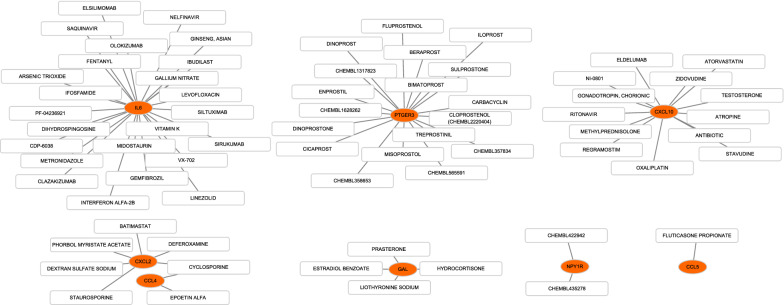
Integrative bioinformatics analyses, including GEO database, TCGA database, DAVID, STRING, Metascape, GEPIA, cBioPortal, TRRUST, TIMER, TISIDB and DGIdb, were performed to unveil the hub genes participating in tumor progression and cancer-associated immunology of SKCM. Furthermore, immunohistochemistry (IHC) staining was performed to validate differential expression levels of hub genes between SKCM tissue and normal tissues from the First Affiliated Hospital of Soochow University cohort.
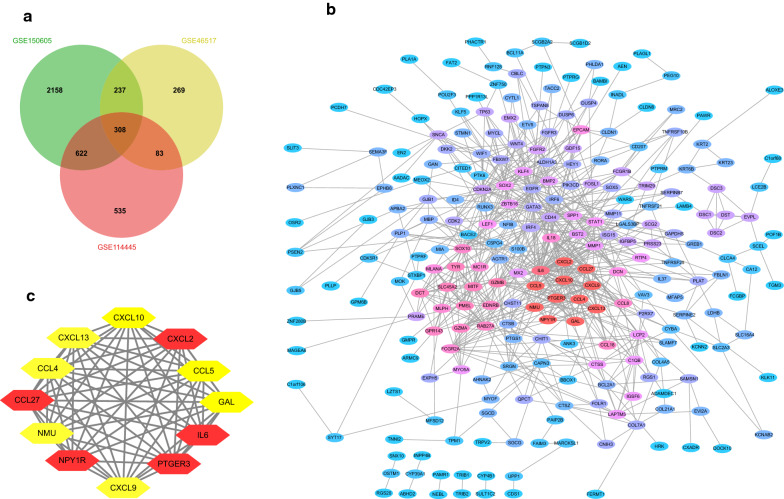
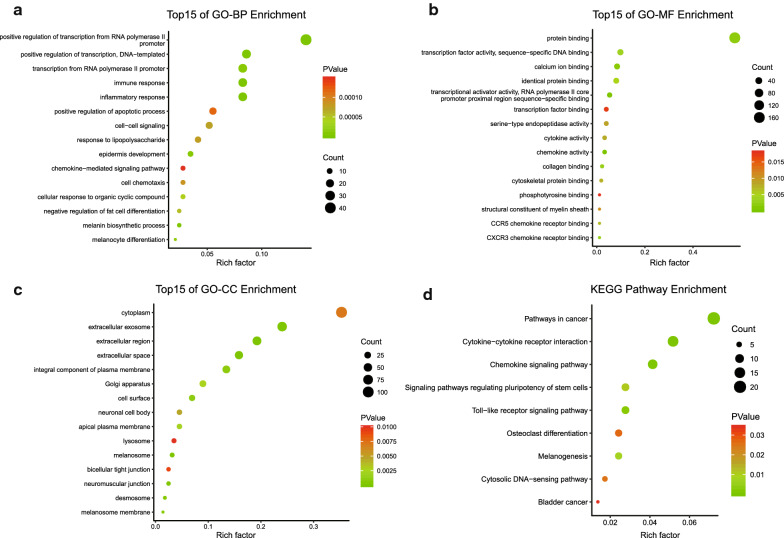
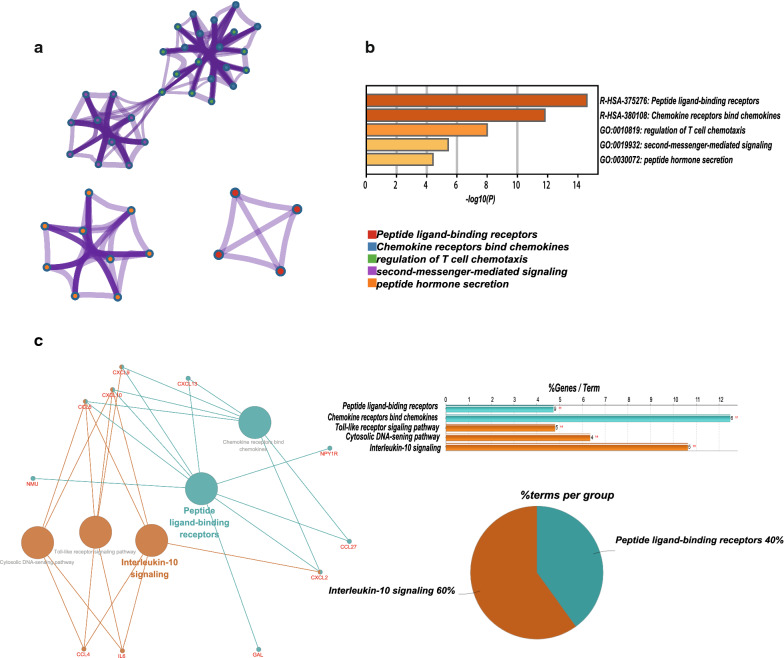
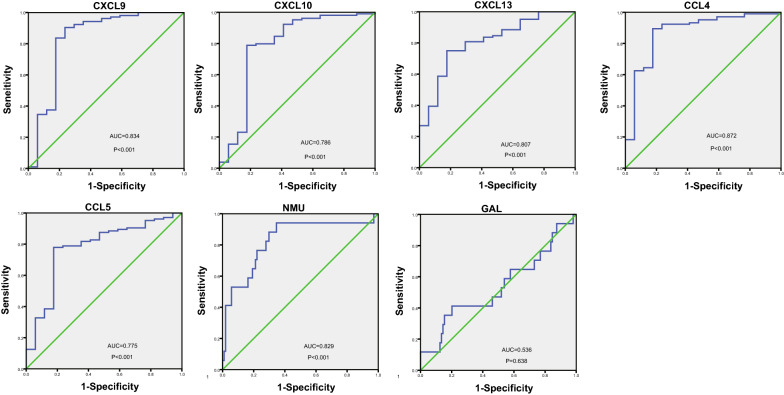
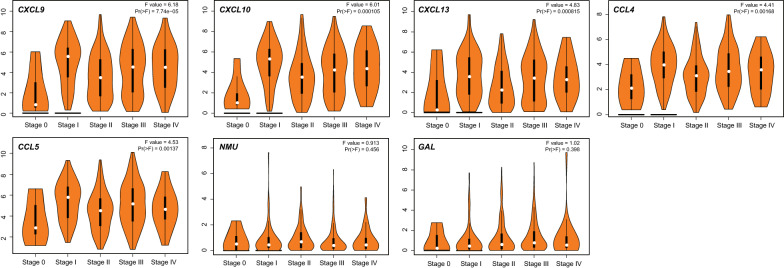
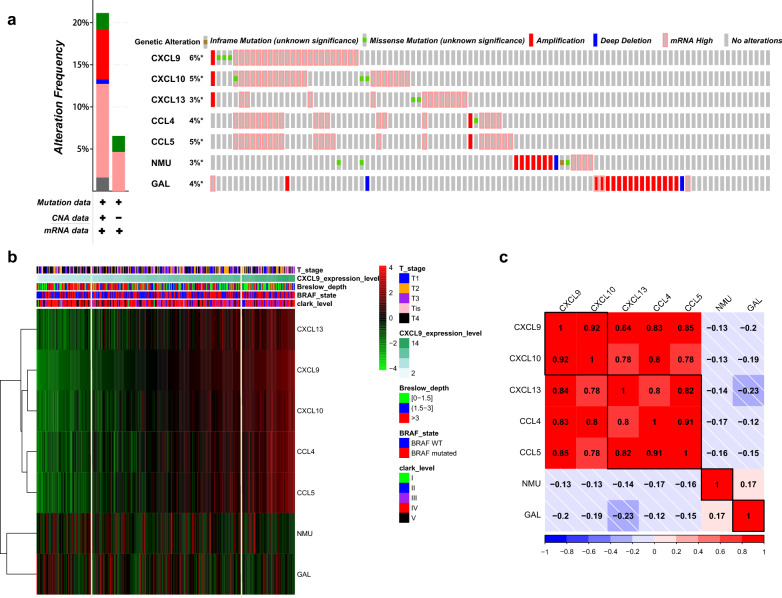
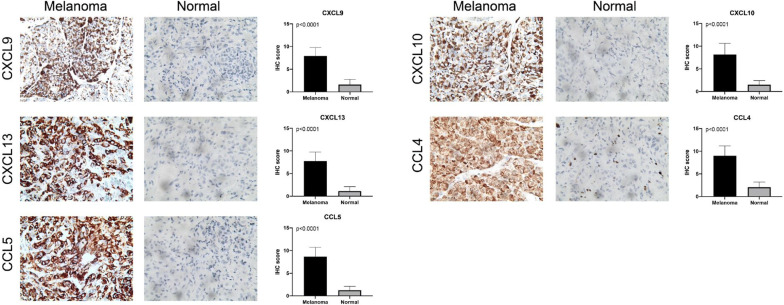
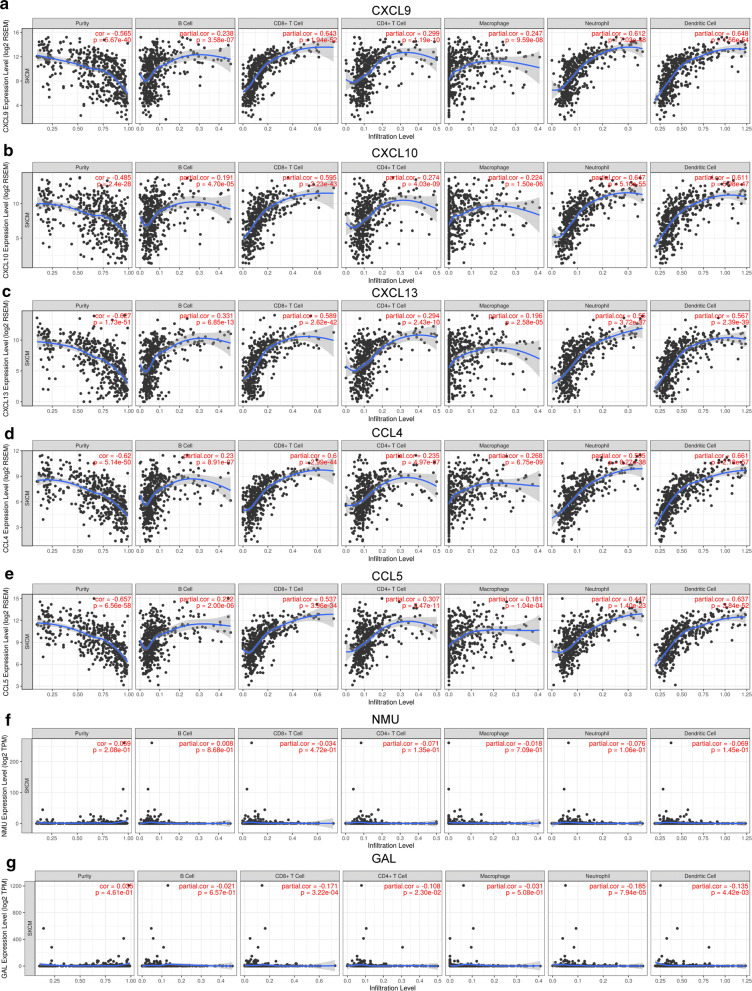
A total of 308 differentially expressed genes (DEGs) and 12 hub genes were found significantly differentially expressed between SKCM and normal skin tissues. Functional annotation indicated that inflammatory response, immune response was closely associated with SKCM tumorigenesis. KEGG pathways in hub genes include IL-10 signaling and chemokine receptors bind chemokine signaling. Five chemokines members (CXCL9, CXCL10, CXCL13, CCL4, CCL5) were associated with better overall survival and pathological stages. IHC results suggested that significantly elevated CXCL9, CXCL10, CXCL13, CCL4 and CCL5 proteins expressed in the SKCM than in the normal tissues. Moreover, our findings suggested that IRF7, RELA, NFKB1, IRF3 and IRF1 are key transcription factors for CCL4, CCL5, CXCL10. In addition, the expressions of CXCL9, CXCL10, CXCL13, CCL4 and CCL5 were positively correlated with infiltration of six immune cells (B cell, CD8T cells, CD4T cells, macrophages, neutrophils, dendritic cells) and 28 types of TILs. Among them, high levels of B cells, CD8T cells, neutrophils and dendritic cells were significantly related to longer SKCM survival time.
In summary, this study mainly identified five chemokine members (CXCL9, CXCL10, CXCL13, CCL4, CCL5) associated with SKCM tumorigenesis, progression, prognosis and immune infiltrations, which might help us evaluate several immune-related targets for cutaneous melanoma therapy.
皮肤黑色素瘤(SKCM)是最具恶性和侵袭性的癌症之一,导致约72%的皮肤癌死亡。尽管广泛的研究探索了复发和转移机制,但皮肤黑色素瘤的肿瘤发生仍不清楚。探索肿瘤发生机制可能有助于识别可用于指导癌症治疗的预后生物标志物。
进行综合生物信息学分析,包括GEO数据库、TCGA数据库、DAVID、STRING、Metascape、GEPIA、cBioPortal、TRRUST、TIMER、TISIDB和DGIdb,以揭示参与SKCM肿瘤进展和癌症相关免疫学的核心基因。此外,进行免疫组织化学(IHC)染色,以验证苏州大学第一附属医院队列中SKCM组织与正常组织之间核心基因的差异表达水平。
共发现308个差异表达基因(DEG)和12个核心基因在SKCM与正常皮肤组织之间存在显著差异表达。功能注释表明,炎症反应、免疫反应与SKCM肿瘤发生密切相关。核心基因中的KEGG通路包括IL-10信号通路和趋化因子受体结合趋化因子信号通路。五个趋化因子成员(CXCL9、CXCL10、CXCL13、CCL4、CCL5)与更好的总生存期和病理分期相关。IHC结果表明,SKCM中CXCL9、CXCL10、CXCL13、CCL4和CCL5蛋白的表达明显高于正常组织。此外,我们的研究结果表明,IRF7、RELA、NFKB1、IRF3和IRF1是CCL4、CCL5、CXCL10的关键转录因子。此外,CXCL9、CXCL10、CXCL13、CCL4和CCL5的表达与六种免疫细胞(B细胞、CD8T细胞、CD4T细胞、巨噬细胞、中性粒细胞、树突状细胞)和28种肿瘤浸润淋巴细胞(TIL)的浸润呈正相关。其中,高水平的B细胞、CD8T细胞、中性粒细胞和树突状细胞与SKCM较长的生存时间显著相关。
总之,本研究主要鉴定了五个与SKCM肿瘤发生、进展、预后和免疫浸润相关的趋化因子成员(CXCL9、CXCL10、CXCL13、CCL4、CCL5),这可能有助于我们评估皮肤黑色素瘤治疗的几个免疫相关靶点。