Bonensteffen Florian, Zebel Sven, Giebels Ellen
Faculty of Behavioral, Management and Social Sciences, Department of Psychology of Conflict, Risk and Safety, University of Twente, Enschede, Netherlands.
Front Psychol. 2020 May 20;11:835. doi: 10.3389/fpsyg.2020.00835. eCollection 2020.
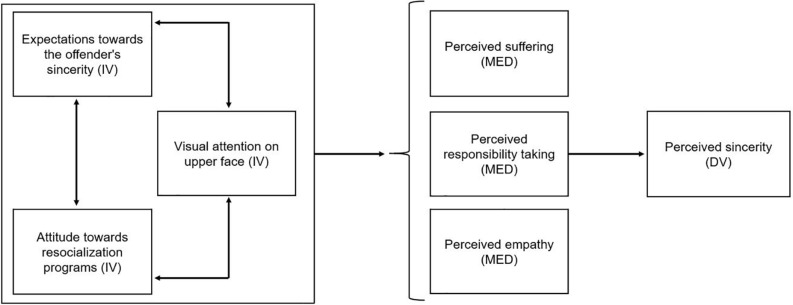
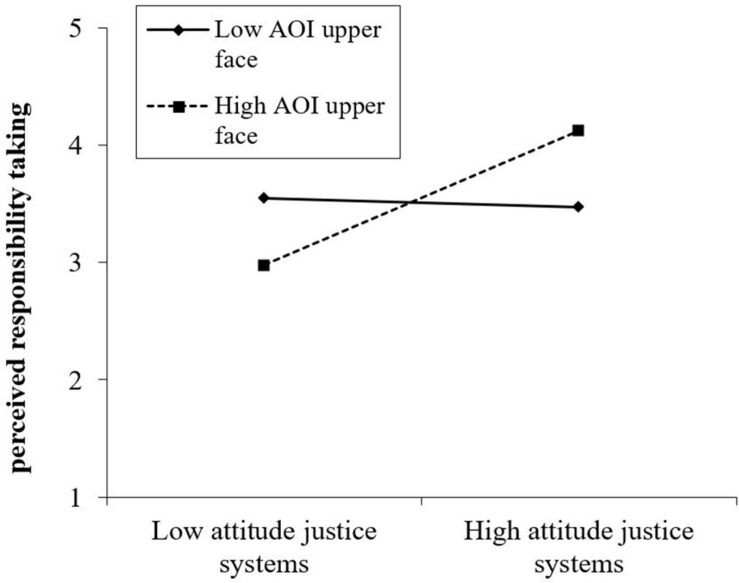
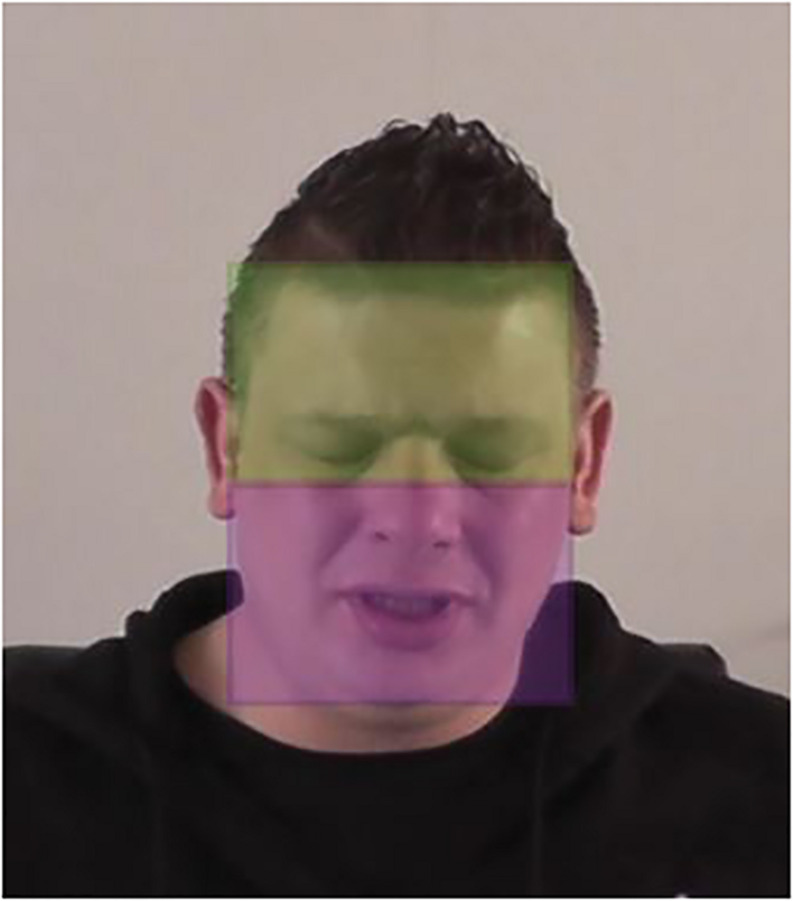
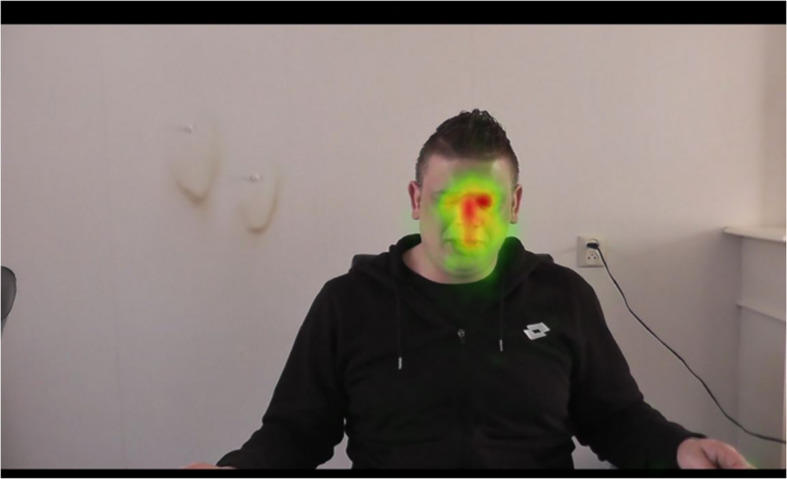
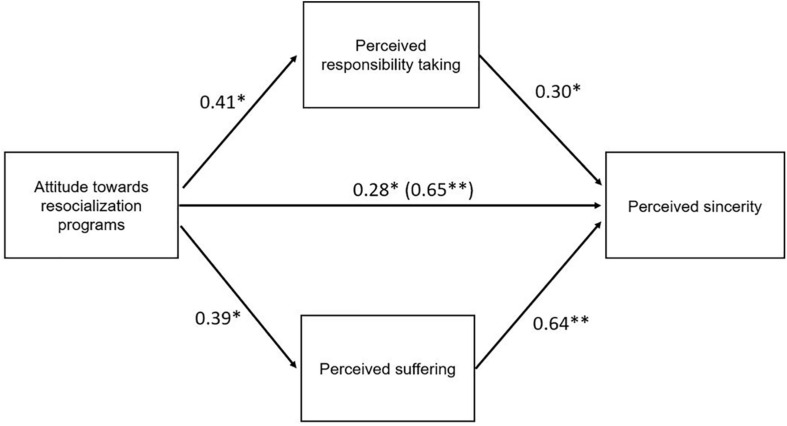
The objective of this study was to gain insights into how victims use their visual attention to determine the sincerity of an offender's apology during simulated victim-offender mediation. We hypothesized that the victims' visual attention (gaze fixation duration) would be focused more on the offender's upper (than lower) face area, especially the eyes and the eyebrows, to infer the degree to which the offender suffers, takes responsibility, and has empathy for the victim. In turn, we expected these inferences to positively predict the perceived sincerity of the apology. Additionally, we took into account the victims' expectations regarding the sincerity of the apology and (positive) attitudes toward resocialization programs (ARPs). We expected both variables to enhance the above proposed process through which victims determine the sincerity of the apology. Fifty-eight students took the victim's role in a fictitious crime scenario and watched a video in which the offender offered a remorseful apology. We obtained eye tracking data to determine the participants' fixation and attention distribution. As expected, the participants' gaze fixated significantly longer on the upper face. The results also showed that their prior expectations, positive ARPs, and inferences of suffering and responsibility taking after the apology all positively predicted the perceived sincerity. However, unexpectedly, gaze duration was not directly associated with these inferences. The fixation duration on the upper face instead appeared to moderate how ARPs predicted inferences of responsibility taking. More concretely, the exploratory path model analyses revealed that when the participants had more positive ARPs, the longer they focused on the offender's eyes and eyebrows and the more they concluded that he took responsibility for his actions (which in turn predicted sincerity). However, for those with relatively negative ARPs, it was the other way around: the more they focused on the eyes and the eyebrows, the stronger they inferred that the offender did take responsibility (which predicted sincerity). Our findings demonstrate the vital role of the victims' attitudes, expectations, and eye gaze behavior in understanding the reception and the evaluation of offenders' apologies. This study also suggests how novel technology can be used to investigate gaze behavior in the field of victim-offender mediation.
本研究的目的是深入了解在模拟的受害者 - 犯罪者调解过程中,受害者如何利用视觉注意力来判断犯罪者道歉的诚意。我们假设,受害者的视觉注意力(注视持续时间)会更多地集中在犯罪者的上半脸(而非下半脸)区域,尤其是眼睛和眉毛,以推断犯罪者遭受痛苦、承担责任以及对受害者产生同理心的程度。相应地,我们预期这些推断能够正向预测所感知到的道歉诚意。此外,我们还考虑了受害者对道歉诚意的期望以及对重新社会化项目(ARP)的(积极)态度。我们预期这两个变量都能增强上述受害者判断道歉诚意的过程。58名学生在一个虚构的犯罪场景中扮演受害者的角色,并观看一段视频,视频中犯罪者进行了懊悔的道歉。我们获取了眼动追踪数据,以确定参与者的注视和注意力分布情况。正如预期的那样,参与者对上半脸的注视时间明显更长。结果还表明,他们先前的期望、积极的ARP以及道歉后对痛苦和承担责任的推断,都正向预测了所感知到的诚意。然而,出乎意料的是,注视持续时间与这些推断并无直接关联。相反,对上半脸的注视持续时间似乎调节了ARP对承担责任推断的预测方式。更具体地说,探索性路径模型分析表明,当参与者对ARP的态度更积极时,他们注视犯罪者眼睛和眉毛的时间就越长,并且越倾向于得出犯罪者对其行为承担责任的结论(这反过来又预测了诚意)。然而,对于那些对ARP态度相对消极的人来说,情况则相反:他们注视眼睛和眉毛的时间越长,就越强烈地推断犯罪者没有承担责任(这预测了诚意)。我们的研究结果证明了受害者的态度、期望和目光注视行为在理解犯罪者道歉的接受和评估方面的重要作用。这项研究还提出了如何利用新技术来研究受害者 - 犯罪者调解领域中的注视行为。