
尿路上皮膀胱癌中游离DNA热点突变分析的临床意义
Clinical Significance of Hotspot Mutation Analysis of Urinary Cell-Free DNA in Urothelial Bladder Cancer.
作者信息
Hayashi Yujiro, Fujita Kazutoshi, Matsuzaki Kyosuke, Eich Marie-Lisa, Tomiyama Eisuke, Matsushita Makoto, Koh Yoko, Nakano Kosuke, Wang Cong, Ishizuya Yu, Kato Taigo, Hatano Koji, Kawashima Atsunari, Ujike Takeshi, Uemura Motohide, Imamura Ryoichi, Netto George J, Nonomura Norio
机构信息
Department of Urology, Osaka University Graduate School of Medicine, Suita, Japan.
Department Pathology, University of Alabama at Birmingham, Birmingham, AL, United States.
出版信息
Front Oncol. 2020 May 19;10:755. doi: 10.3389/fonc.2020.00755. eCollection 2020.
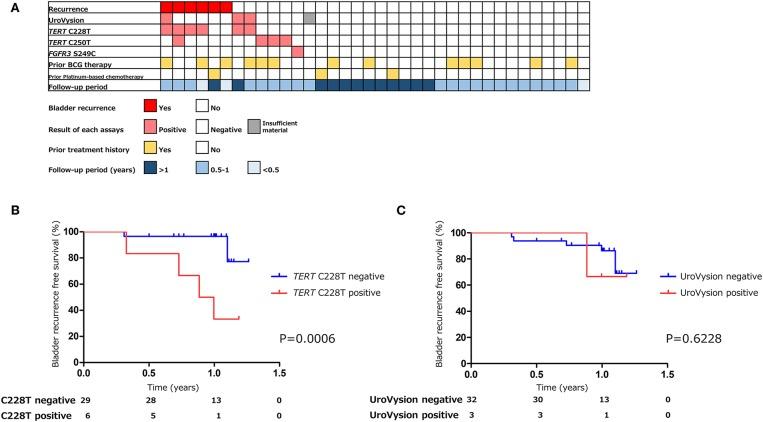
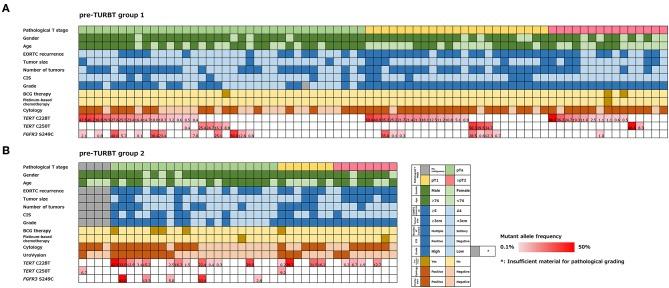
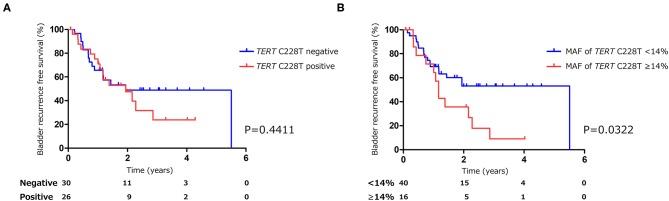
Recent studies showed the clinical utility of next-generation sequencing of urinary cell-free DNA (cfDNA) from patients with urothelial bladder cancer (UBC). In this study, we aimed to develop urinary cfDNA analysis by droplet digital PCR (ddPCR) as a high-throughput and rapid assay for UBC detection and prognosis. We analyzed urinary cfDNA of 202 samples from 2 cohorts. Test cohort was designed for investigating clinical utility of urinary cfDNA, and was composed of 74 samples from patients with UBC, and 52 samples of benign hematuria patients. Validation cohort was designed for validation and assessment of clinical utility comparing urinary cfDNA with UroVysion (Abbott, Illinois, USA), and was composed of 40 samples from patients with UBC, and 36 prospectively collected samples from patients under surveillance after surgery for urothelial carcinoma. We performed ddPCR analysis of hotspot gene mutations ( promoter and ). In the test cohort, the sensitivity of urinary cfDNA diagnosis was 68.9% (51/74) and the specificity was 100% in patients with UBC. The sensitivity increased to 85.9% when used in conjunction with urine cytology. In addition, patients with high C228T allele frequency (≥14%) had significantly worse prognosis in bladder tumor recurrence than patients with low C228T allele frequency or negative C228T ( = 0.0322). In the validation cohort, the sensitivity of urinary cfDNA was 57.5% (23/40) and the specificity was 100% in UBC patients. The sensitivity of the combination of urine cytology with our hotspot analysis (77.5%) was higher than that of urine cytology with UroVysion (68.9%). In the post-surgical surveillance group, patients positive for the C228T mutation had significantly worse prognosis for bladder tumor recurrence than mutation negative patients ( < 0.001). In conclusion, ddPCR analysis of urinary cfDNA is a simple and promising assay for the clinical setting, surpassing UroVysion for detection and prognosis determination in UBC.
近期研究显示了对尿路上皮膀胱癌(UBC)患者的尿游离DNA(cfDNA)进行二代测序的临床应用价值。在本研究中,我们旨在通过液滴数字PCR(ddPCR)开展尿cfDNA分析,作为一种用于UBC检测和预后评估的高通量快速检测方法。我们分析了来自2个队列的202份样本的尿cfDNA。测试队列旨在研究尿cfDNA的临床应用价值,由74份UBC患者样本和52份良性血尿患者样本组成。验证队列旨在通过将尿cfDNA与UroVysion(美国伊利诺伊州雅培公司)进行比较来验证和评估临床应用价值,由40份UBC患者样本和36份尿路上皮癌手术后接受监测患者的前瞻性收集样本组成。我们对热点基因突变(启动子和)进行了ddPCR分析。在测试队列中,UBC患者尿cfDNA诊断的敏感性为68.9%(51/74),特异性为100%。与尿细胞学联合使用时,敏感性增至85.9%。此外,C228T等位基因频率高(≥14%)的患者膀胱肿瘤复发的预后明显比C228T等位基因频率低或C228T阴性的患者差(P = 0.0322)。在验证队列中,UBC患者尿cfDNA的敏感性为57.5%(23/40),特异性为100%。尿细胞学与我们的热点分析联合使用的敏感性(77.5%)高于尿细胞学与UroVysion联合使用的敏感性(68.9%)。在手术后监测组中,C228T突变阳性的患者膀胱肿瘤复发的预后明显比突变阴性的患者差(P < 0.001)。总之,尿cfDNA的ddPCR分析是一种简单且有前景的临床检测方法,在UBC的检测和预后判定方面优于UroVysion。

 Zotero 插件