Dassing Romane, Allé Mélissa C, Cerbai Mathieu, Obrecht Alexandre, Meyer Nicolas, Vidailhet Pierre, Danion Jean-Marie, Mengin Amaury C, Berna Fabrice
INSERM U1114 Neuropsychologie Cognitive et Physiopathologie de la Schizophrénie, Strasbourg, France.
Faculté de Médecine, Université de Strasbourg, Strasbourg, France.
Front Psychiatry. 2020 May 8;11:397. doi: 10.3389/fpsyt.2020.00397. eCollection 2020.
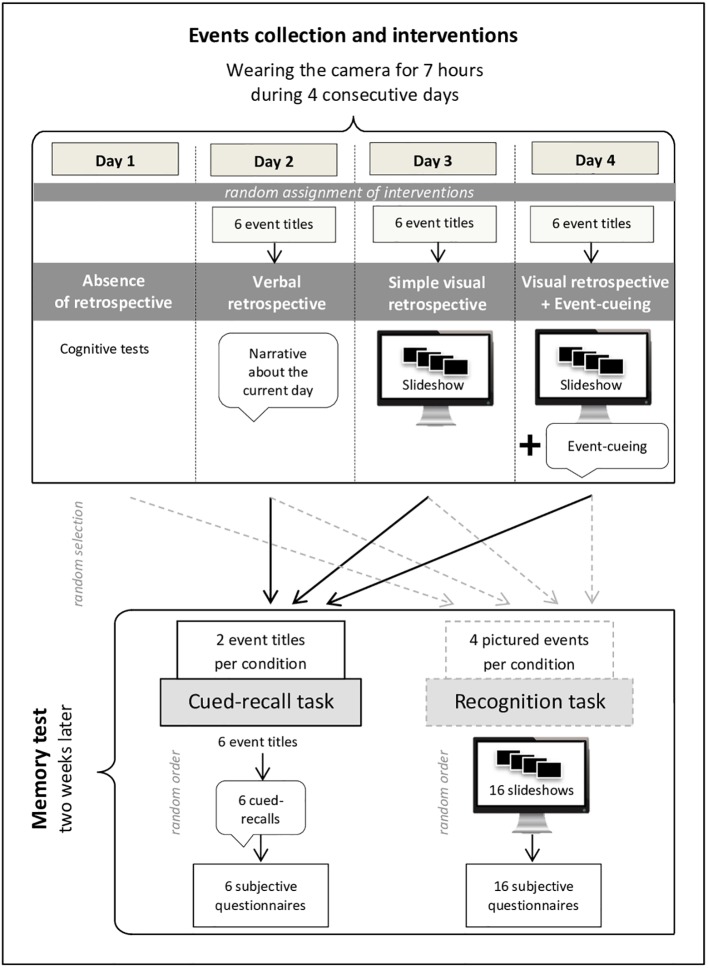
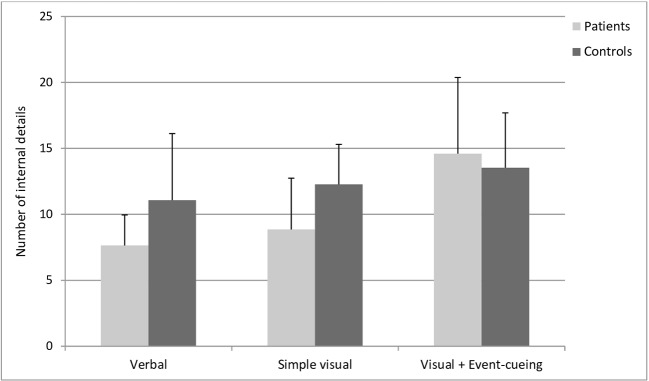
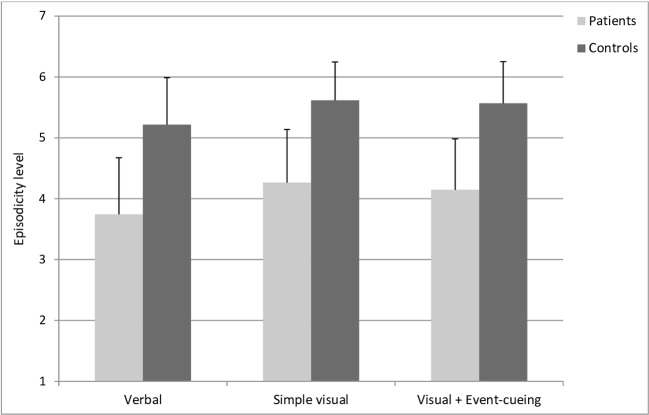
Autobiographical memory (AM) impairment in schizophrenia affects the richness of detail in personal memories and is one of the major predictors of patients' social functioning. Despite the empirical evidence attributing these difficulties to a defective encoding process, cognitive remediation interventions targeting AM in schizophrenia often focus on the remote past, making it difficult to address the consequences of poor encoding. Our study evaluated the efficacy of an innovative approach using a wearable camera (NarrativeClip) in reinforcing the encoding of recent daily life events in patients with schizophrenia. Seventeen patients with schizophrenia and 15 control participants wore the camera during four consecutive days. Then, memories of events experienced during these days were reinforced using different types of retrospective, i.e. interventions designed to promote a re-encoding of the event. We evaluated two types of retrospective using the camera pictures: a simple visual retrospective and a visual retrospective associated with a specific event-cueing (VisR+EC). These two techniques were compared to a verbal retrospective and to the absence of retrospective. Our results showed that the VisR+EC allowed patients to retrieve as many details as the control group at a two-week interval. However, patients' memories remained impaired when a simple visual or a verbal retrospective was used. Our study provides encouraging results to foster the use of a wearable camera in individualized cognitive remediation programs for AM impairment in schizophrenia.
精神分裂症患者的自传体记忆(AM)受损会影响个人记忆细节的丰富程度,并且是患者社会功能的主要预测因素之一。尽管有实证证据将这些困难归因于编码过程存在缺陷,但针对精神分裂症患者AM的认知康复干预措施往往侧重于遥远的过去,因此难以解决编码不佳的后果。我们的研究评估了一种创新方法的效果,即使用可穿戴相机(NarrativeClip)来强化精神分裂症患者近期日常生活事件的编码。17名精神分裂症患者和15名对照参与者连续四天佩戴该相机。然后使用不同类型的回顾方式,即旨在促进事件重新编码的干预措施,来强化对这些日子里所经历事件的记忆。我们使用相机照片评估了两种回顾方式:简单视觉回顾和与特定事件提示相关的视觉回顾(VisR+EC)。将这两种技术与言语回顾以及无回顾的情况进行了比较。我们的结果表明,VisR+EC使患者在两周后能检索到与对照组一样多的细节。然而,当使用简单视觉回顾或言语回顾时,患者的记忆仍然受损。我们的研究为在针对精神分裂症患者AM损伤的个性化认知康复计划中推广使用可穿戴相机提供了令人鼓舞的结果。