Department of Comprehensive Oral Health, Periodontology, Adams School of Dentistry, University of North Carolina, Chapel Hill, NC.
J Periodontol. 2020 Oct;91 Suppl 1(Suppl 1):S6-S11. doi: 10.1002/JPER.20-0157. Epub 2020 Aug 6.
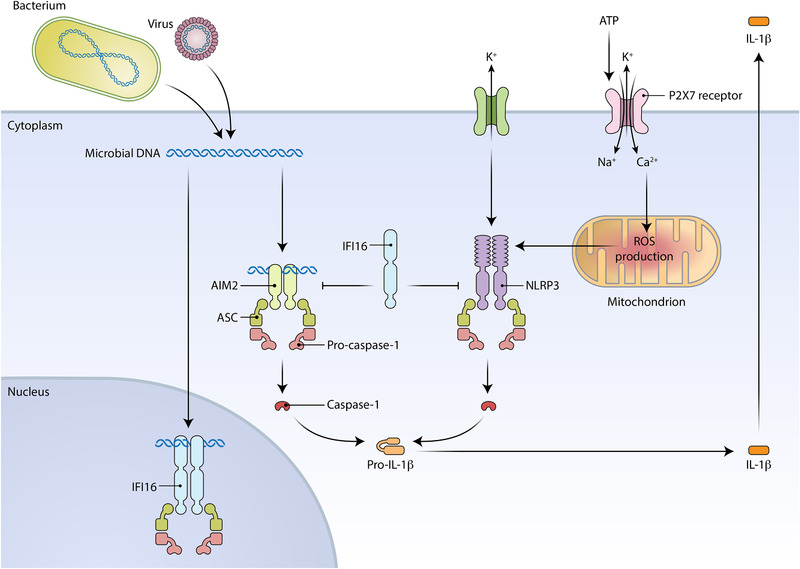
A genome-wide association study of ≈2.5 million markers identified unique biologically informed periodontal complex traits with distinct microbial communities and interleukin-1β (IL-1β) levels. Each trait was associated with different single nucleotide polymorphisms. These variants include genes associated with immune responses, microbial colonization, and the epithelial barrier function. The specific set of variants leads to individual biological paths that converge into an overlapping clinical phenotype of periodontal tissue destruction. This concept suggests that periodontal disease is a group of distinct conditions. We identified polymorphisms in inflammasome genes interferon gamma inducible protein 16 (IFI16) and absent in melanoma 2 (AIM2) that were associated with increased severity of periodontal disease. Inflammasomes respond to pathogen or tissue "danger" signals and assemble into multiprotein "machineries" that are essential for the cleavage of proinflammatory mediator IL-1β into an active form. Thus, understanding how variants of IFI16 and AIM2 contribute to periodontal disease pathogenesis may lead to treatment options that address individual biological variations and precision therapies for oral health.
一项针对约 250 万个标记物的全基因组关联研究,确定了具有独特微生物群落和白细胞介素-1β(IL-1β)水平的独特生物学牙周复合体特征。每个特征都与不同的单核苷酸多态性有关。这些变体包括与免疫反应、微生物定植和上皮屏障功能相关的基因。特定的变体集合导致个体生物途径汇聚成牙周组织破坏的重叠临床表型。这一概念表明,牙周病是一组不同的疾病。我们在干扰素γ诱导蛋白 16(IFI16)和黑色素瘤缺失蛋白 2(AIM2)的炎症小体基因中发现了与牙周病严重程度增加相关的多态性。炎症小体对病原体或组织“危险”信号作出反应,并组装成多蛋白“机器”,对于促炎介质白细胞介素-1β(IL-1β)的切割成活性形式至关重要。因此,了解 IFI16 和 AIM2 的变体如何导致牙周病发病机制,可能会为针对个体生物变异的治疗选择和口腔健康的精准治疗提供线索。