Department of OBS & GYN, BenQ Medical Center, Suzhou, China.
Department of OBS & GYN, Sex Hormone Research Center, Research Center for Tumor Medicine, Chinese Medicine Research and Development Center, China Medical University Hospital, Taichung, Taiwan.
J Cell Mol Med. 2020 Jul;24(13):7187-7200. doi: 10.1111/jcmm.15218. Epub 2020 Jun 16.
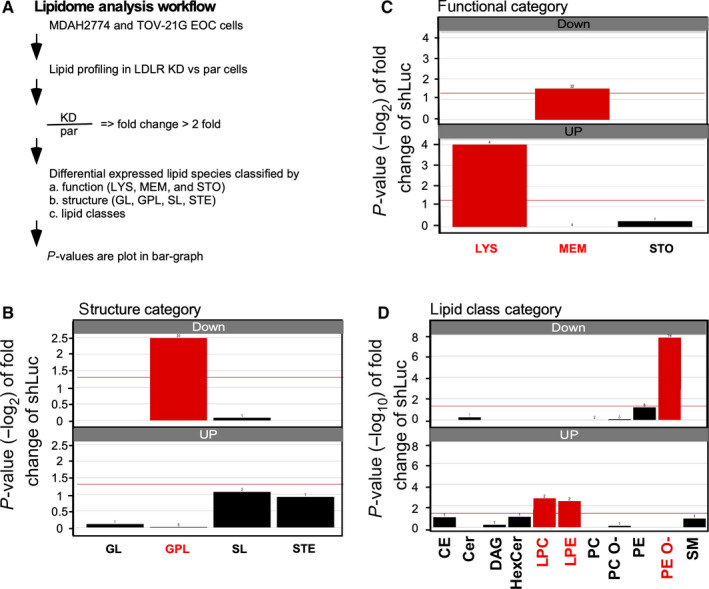
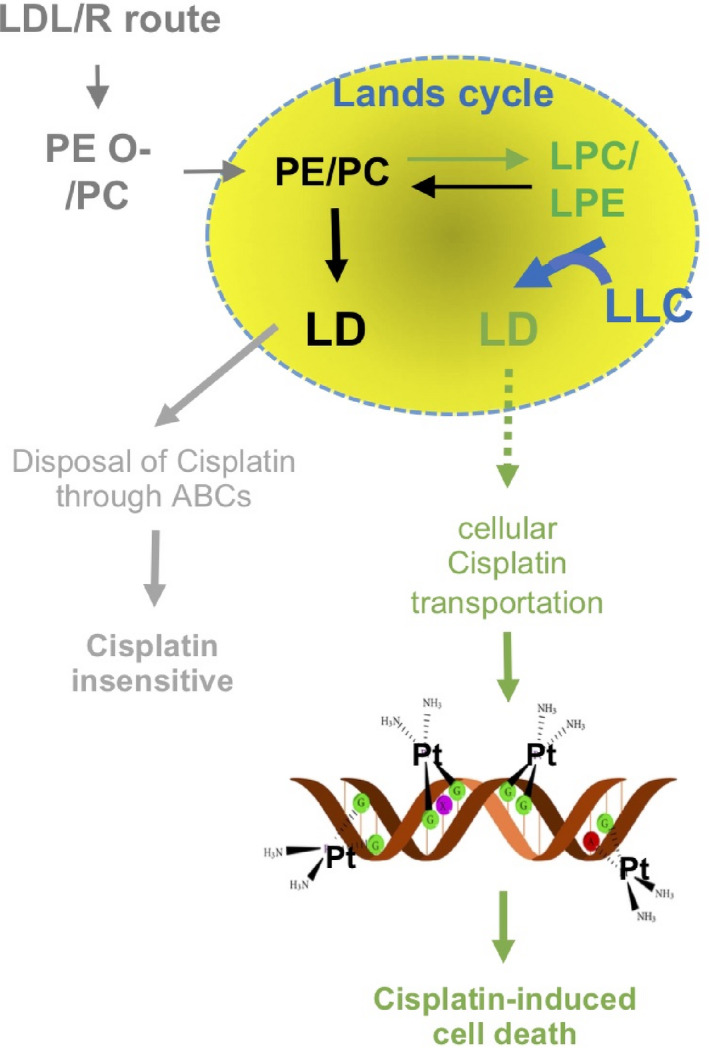
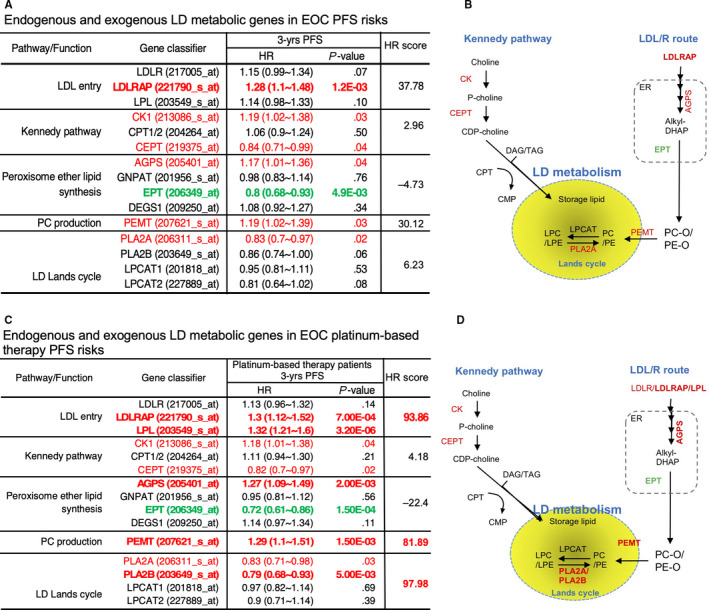
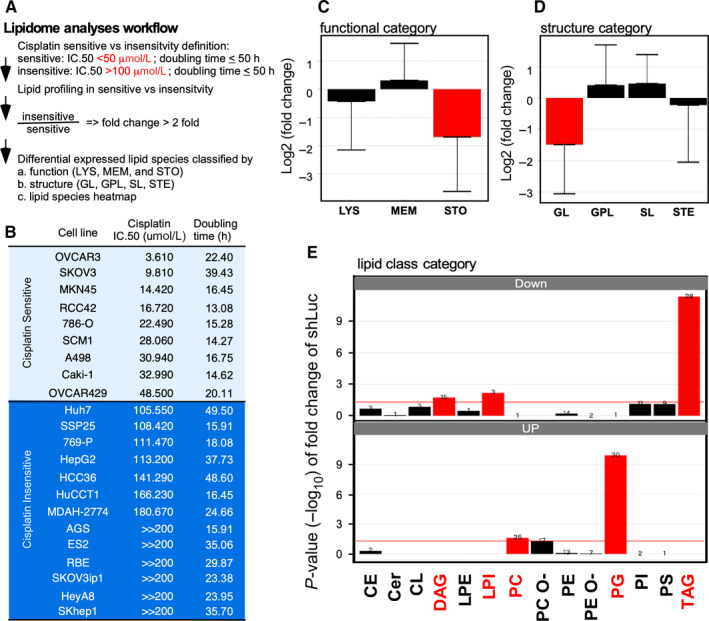
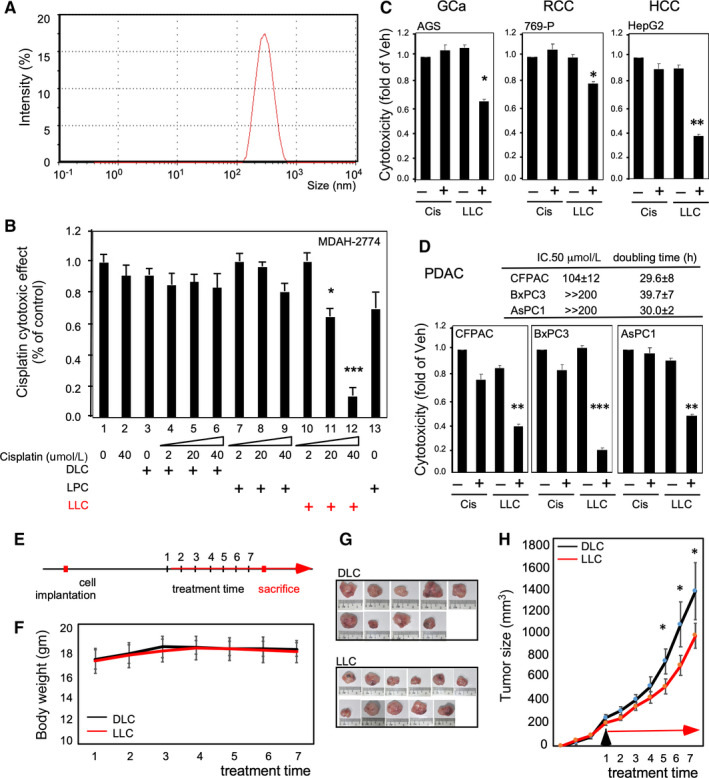
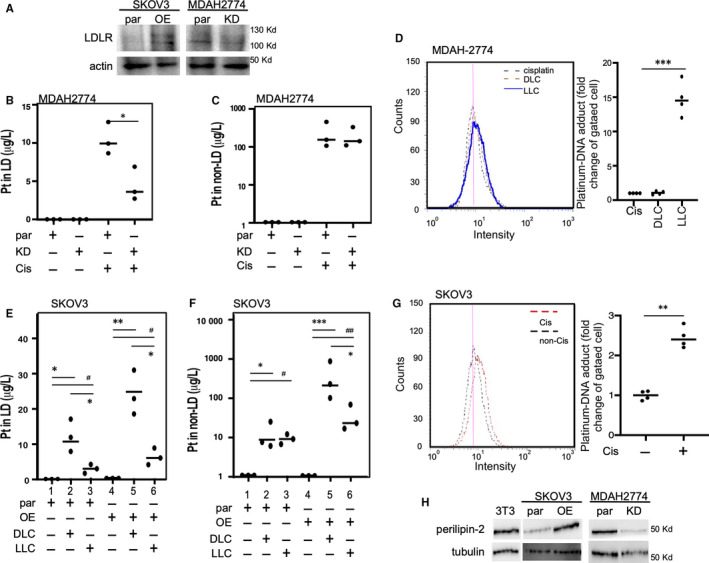
This study aims to explore lipidic mechanism towards low-density lipoprotein receptor (LDLR)-mediated platinum chemotherapy resistance. By using the lipid profiling technology, LDLR knockdown was found to increase lysosomal lipids and decrease membranous lipid levels in EOC cells. LDLR knockdown also down-regulated ether-linked phosphatidylethanolamine (PE-O, lysosomes or peroxisomes) and up-regulated lysophosphatidylcholine [LPC, lipid droplet (LD)]. This implies that the manner of using Lands cycle (conversion of lysophospholipids) for LDs might affect cisplatin sensitivity. The bioinformatics analyses illustrated that LDLR-related lipid entry into LD, rather than an endogenous lipid resource (eg Kennedy pathway), controls the EOC prognosis of platinum chemotherapy patients. Moreover, LDLR knockdown increased the number of platinum-DNA adducts and reduced the LD platinum amount. By using a manufactured LPC-liposome-cisplatin (LLC) drug, the number of platinum-DNA adducts increased significantly in LLC-treated insensitive cells. Moreover, the cisplatin content in LDs increased upon LLC treatment. Furthermore, lipid profiles of 22 carcinoma cells with differential cisplatin sensitivity (9 sensitive vs 13 insensitive) were acquired. These profiles revealed low storage lipid levels in insensitive cells. This result recommends that LD lipidome might be a common pathway in multiple cancers for platinum sensitivity in EOC. Finally, LLC suppressed both cisplatin-insensitive human carcinoma cell training and testing sets. Thus, LDLR-platinum insensitivity can be due to a defective Lands cycle that hinders LPC production in LDs. Using lipidome assessment with the newly formulated LLC can be a promising cancer chemotherapy method.
本研究旨在探讨脂质机制在低密度脂蛋白受体(LDLR)介导的铂类化疗耐药中的作用。通过脂质谱分析技术,发现 LDLR 敲低可增加 EOC 细胞溶酶体中的脂质含量,降低膜脂质水平。LDLR 敲低还下调醚连接的磷脂酰乙醇胺(PE-O,溶酶体或过氧化物酶体),上调溶血磷脂酰胆碱[LPC,脂滴(LD)]。这意味着使用 Land 循环(溶血磷脂的转化)来合成 LD 的方式可能会影响顺铂的敏感性。生物信息学分析表明,LDLR 相关的脂质进入 LD,而不是内源性脂质资源(如 Kennedy 途径),控制了铂类化疗患者的 EOC 预后。此外,LDLR 敲低增加了铂-DNA 加合物的数量,减少了 LD 中的铂含量。通过使用合成的 LPC-脂质体-顺铂(LLC)药物,在 LLC 处理的不敏感细胞中,铂-DNA 加合物的数量显著增加。此外,LLC 处理后 LD 中的顺铂含量增加。进一步获得了 22 种具有不同顺铂敏感性(9 种敏感与 13 种不敏感)的癌细胞的脂质谱。这些谱图显示不敏感细胞中的储存脂质水平较低。这一结果表明,LD 脂质组可能是 EOC 中多种癌症中铂类敏感性的共同途径。最后,LLC 抑制了顺铂不敏感的人癌细胞训练集和测试集。因此,LDLR-铂不敏感可能是由于 Land 循环缺陷,阻碍了 LPC 在 LD 中的生成。使用新配方的 LLC 进行脂质组评估可能是一种很有前途的癌症化疗方法。