Oto Julia, Plana Emma, Solmoirago María José, Fernández-Pardo Álvaro, Hervás David, Cana Fernando, España Francisco, Artoni Andrea, Bucciarelli Paolo, Carrabba Giorgio, Navarro Silvia, Merati Giuliana, Medina Pilar
Haemostasis, Thrombosis, Atherosclerosis and Vascular Biology Research Group, Medical Research Institute Hospital La Fe (IIS La Fe), 46026 Valencia, Spain.
Angiology and Vascular Surgery Service, La Fe University and Polytechnic Hospital, 46026 Valencia, Spain.
Cancers (Basel). 2020 Jun 11;12(6):1536. doi: 10.3390/cancers12061536.
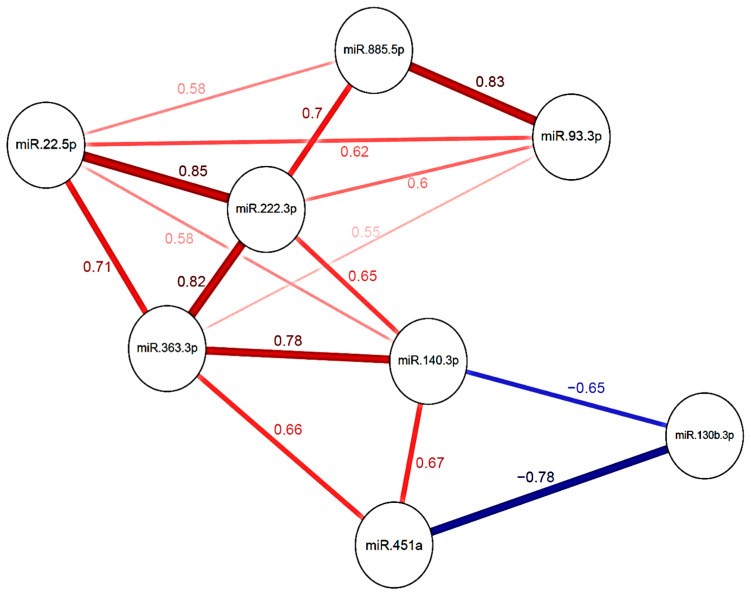
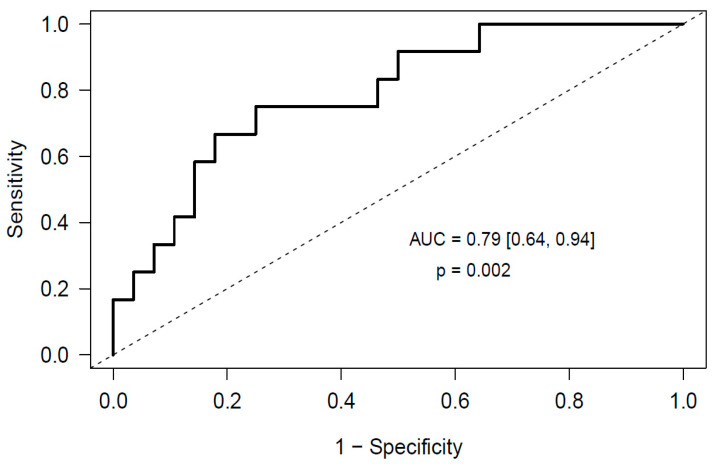
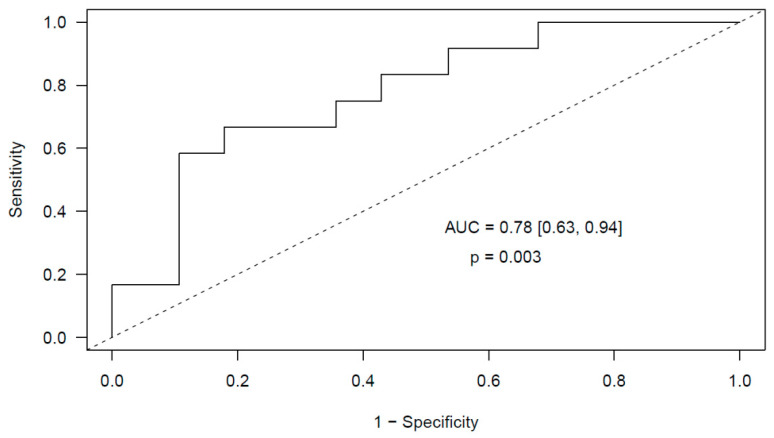
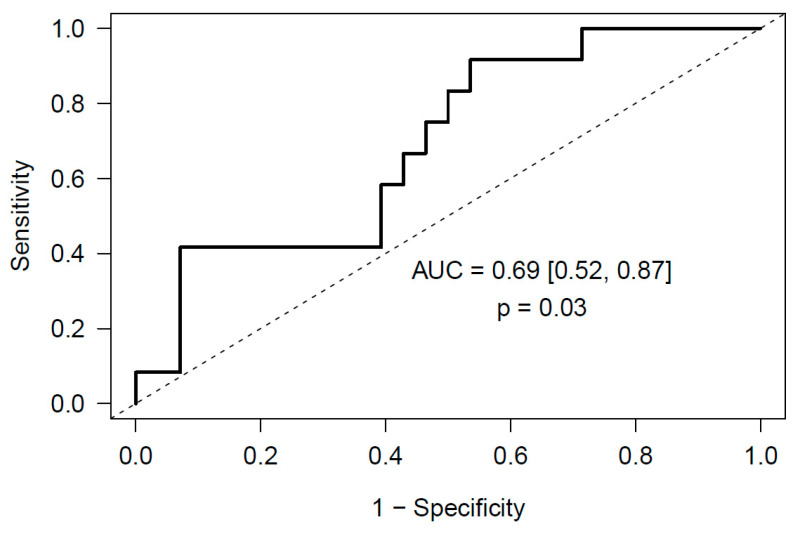
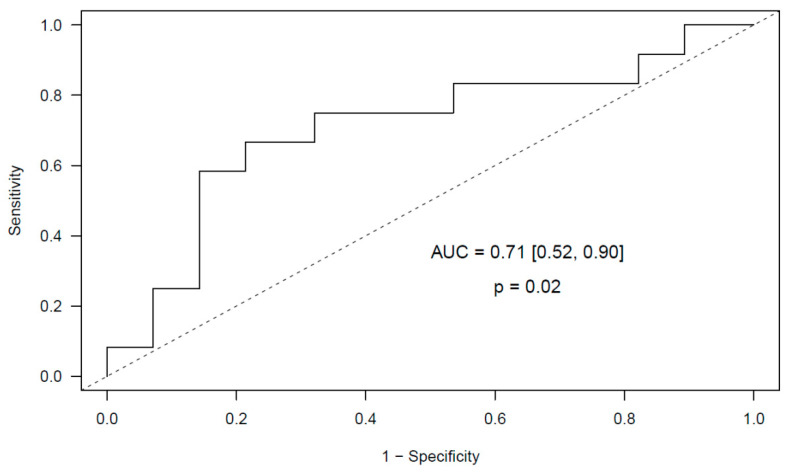
Venous thromboembolism (VTE) is a common complication of cancer that severely increases morbidity and mortality. Patients with intracranial tumors are more likely to develop VTE than patients with cancers at other sites. Conversely, limited tools exist to identify patients with high thrombotic risk. Upon activation, neutrophils release their content through different mechanisms triggering thrombosis. We explored the ability of microRNAs (miRNAs) and plasma markers of neutrophil activation measured before surgery to predict the risk of early post-surgical pulmonary embolism (PE) in glioma and meningioma patients. We recruited and prospectively followed 50 patients with glioma and 50 with meningioma, 34% of whom in each group developed an early objectively-diagnosed post-surgical PE. We measured miRNA expression and neutrophil markers (cell-free DNA, nucleosomes, calprotectin and myeloperoxidase) before surgery. In glioma patients, we adjusted and validated a predictive model for post-surgical PE with 6 miRNAs: miR-363-3p, miR-93-3p, miR-22-5p, miR-451a, miR-222-3p and miR-140-3p (AUC = 0.78; 95% Confidence Interval (CI) [0.63, 0.94]) and another with cfDNA and myeloperoxidase as predictors (AUC = 0.71; 95%CI [0.52, 0.90]). Furthermore, we combined both types of markers and obtained a model with myeloperoxidase and miR-140-3p as predictors (AUC = 0.79; 95%CI [0.64, 0.94]). In meningioma patients we fitted and validated a predictive model with 6 miRNAs: miR-29a-3p, miR-660-5p, miR-331-3p, miR-126-5p, miR-23a-3p and miR-23b-3p (AUC = 0.69; 95%CI [0.52, 0.87]). All our models outperformed the Khorana score. This is the first study that analyzes the capability of plasma miRNAs and neutrophil activation markers to predict early post-surgical PE in glioma and meningioma patients. The estimation of the thrombotic risk before surgery may promote a tailored thromboprophylaxis in a selected group of high-risk patients, in order to minimize the incidence of PE and avoid bleedings.
静脉血栓栓塞症(VTE)是癌症常见的并发症,会严重增加发病率和死亡率。与其他部位癌症患者相比,颅内肿瘤患者更易发生VTE。相反,用于识别高血栓形成风险患者的工具有限。激活后,中性粒细胞通过不同机制释放其内容物,从而引发血栓形成。我们探讨了手术前测量的微小RNA(miRNA)和中性粒细胞激活的血浆标志物预测神经胶质瘤和脑膜瘤患者术后早期肺栓塞(PE)风险的能力。我们招募并前瞻性随访了50例神经胶质瘤患者和50例脑膜瘤患者,每组中34%的患者发生了早期客观诊断的术后PE。我们在手术前测量了miRNA表达和中性粒细胞标志物(游离DNA、核小体、钙卫蛋白和髓过氧化物酶)。在神经胶质瘤患者中,我们用6种miRNA:miR-363-3p、miR-93-3p、miR-22-5p、miR-451a、miR-222-3p和miR-140-3p调整并验证了一个术后PE预测模型(AUC = 0.78;95%置信区间[CI][0.63,0.94]),并用游离DNA和髓过氧化物酶作为预测指标建立了另一个模型(AUC = 0.71;95%CI[0.52,0.90])。此外,我们将这两种标志物结合起来,得到了一个以髓过氧化物酶和miR-140-3p为预测指标的模型(AUC = 0.79;95%CI[0.64,0.94])。在脑膜瘤患者中,我们用6种miRNA:miR-29a-3p、miR-660-5p、miR-331-3p、miR-126-5p、miR-23a-3p和miR-23b-3p拟合并验证了一个预测模型(AUC = 0.69;95%CI[0.52,0.87])。我们所有的模型都优于Khorana评分。这是第一项分析血浆miRNA和中性粒细胞激活标志物预测神经胶质瘤和脑膜瘤患者术后早期PE能力的研究。术前评估血栓形成风险可能会促进对选定的高危患者群体进行个性化的血栓预防,以尽量减少PE的发生率并避免出血。