Department of Pharmacology and Toxicology, Faculty of Pharmacy, Comenius University in Bratislava, and Center of Experimental Medicine, Slovak Academy of Sciences, Institute for Heart Research, Odbojarov 10, 83232 Bratislava, Slovakia.
Department of Kinesiology, Nutrition and Food Science, California State University, Los Angeles, CA 90032, USA.
Int J Mol Sci. 2020 Jun 12;21(12):4200. doi: 10.3390/ijms21124200.
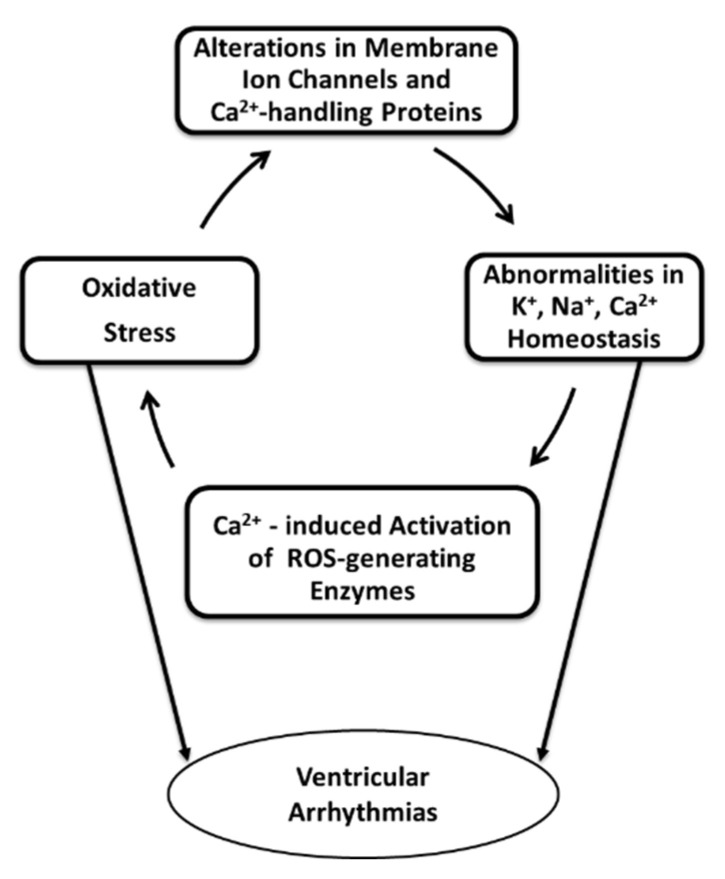
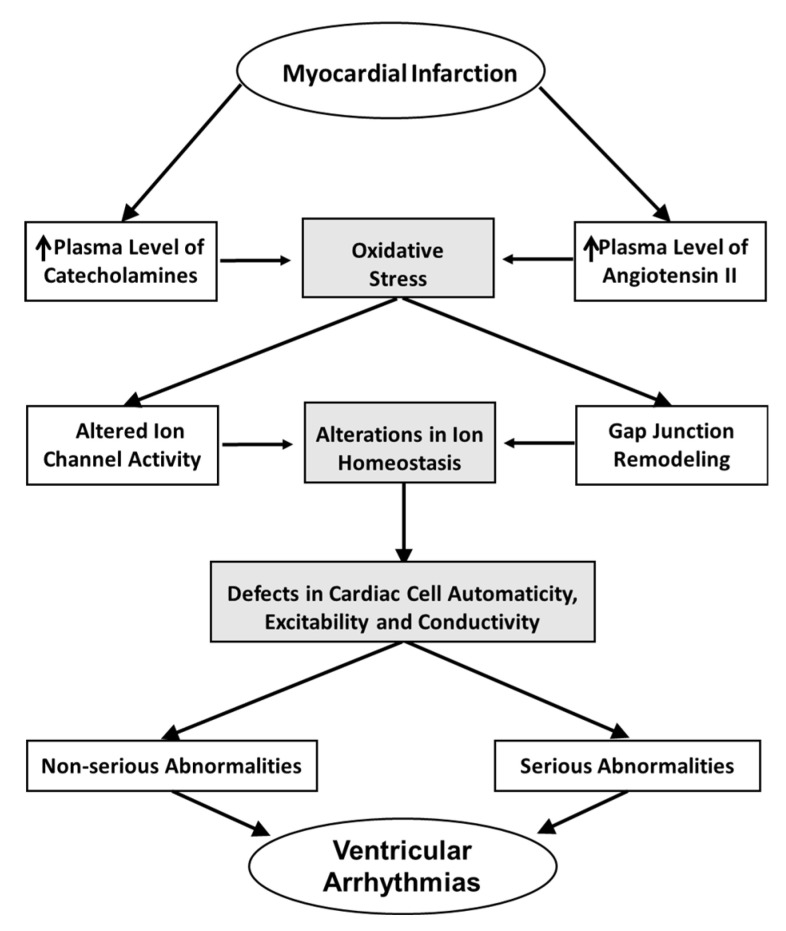
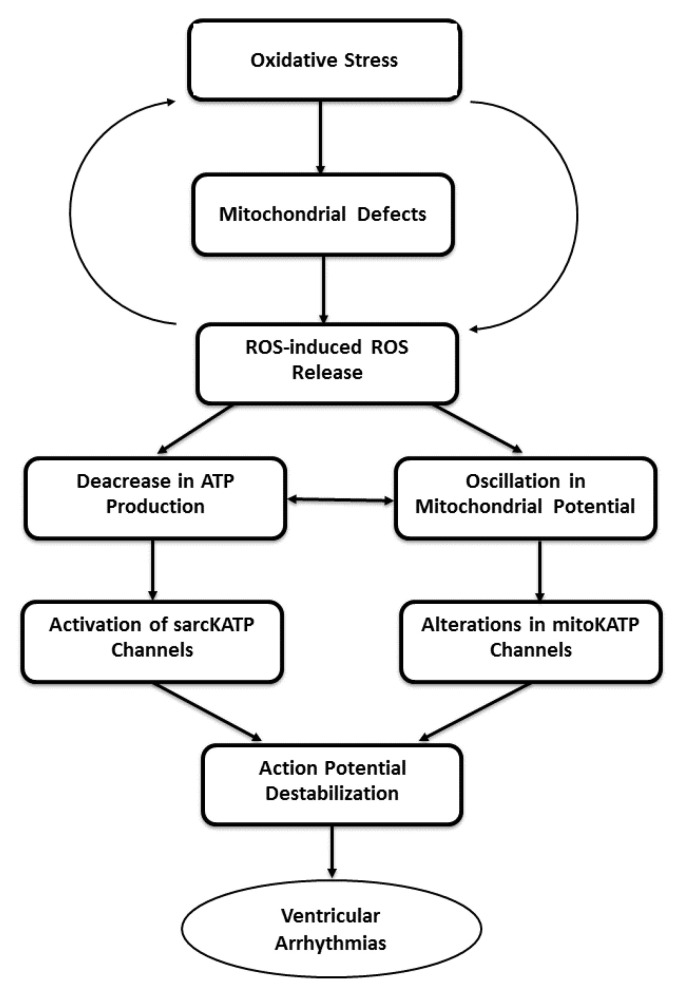
Ventricular arrhythmias, mainly lethal arrhythmias, such as ventricular tachycardia and fibrillation, may lead to sudden cardiac death. These are triggered as a result of cardiac injury due to chronic ischemia, acute myocardial infarction and various stressful conditions associated with increased levels of circulating catecholamines and angiotensin II. Several mechanisms have been proposed to underlie electrical instability of the heart promoting ventricular arrhythmias; however, oxidative stress which adversely affects ion homeostasis due to changes in the ion channel structure and function, seems to play a critical role in eliciting different types of ventricular arrhythmias. Prevention or mitigation of the severity of ventricular arrhythmias due to antioxidants has been indicated as the fundamental contribution in the field of preventive cardiology; however, novel interventions have to be developed for greater effectiveness and specificity in attenuating the adverse effects of oxidative stress. In this review, we have attempted to discuss proarrhythmic effects of oxidative stress differing in time and concentration dependence and highlight a molecular and cellular concept how it alters cardiac cell automaticity and conduction velocity sensitizing the probability of ventricular arrhythmias with resultant sudden cardiac death due to ischemic heart disease and other stressful situations. It is concluded that pharmacological approaches targeting multiple mechanisms besides oxidative stress might be more effective in the treatment of ventricular arrhythmias than current antiarrhythmic therapy.
室性心律失常,主要是致命性心律失常,如室性心动过速和心室颤动,可能导致心源性猝死。这些心律失常是由于慢性缺血、急性心肌梗死和各种与循环儿茶酚胺和血管紧张素 II 水平升高相关的应激状态引起的心脏损伤所致。已经提出了几种机制来解释心脏电不稳定导致室性心律失常;然而,氧化应激由于离子通道结构和功能的改变而对离子稳态产生不利影响,似乎在引发不同类型的室性心律失常方面发挥着关键作用。抗氧化剂预防或减轻室性心律失常的严重程度已被认为是预防心脏病学领域的基本贡献;然而,为了提高抗氧化应激的有效性和特异性,还需要开发新的干预措施。在这篇综述中,我们试图讨论氧化应激的致心律失常作用,这些作用在时间和浓度依赖性方面有所不同,并强调一个分子和细胞概念,即它如何改变心脏细胞的自动性和传导速度,使室性心律失常的发生概率敏感化,从而导致缺血性心脏病和其他应激状态下的心源性猝死。结论是,针对氧化应激以外的多种机制的药理学方法可能比目前的抗心律失常治疗更有效地治疗室性心律失常。