Atoji Y, Suzuki Y, Sugimura M
Department of Veterinary Anatomy, Faculty of Agriculture, Gifu University, Japan.
J Anat. 1988 Dec;161:159-70.
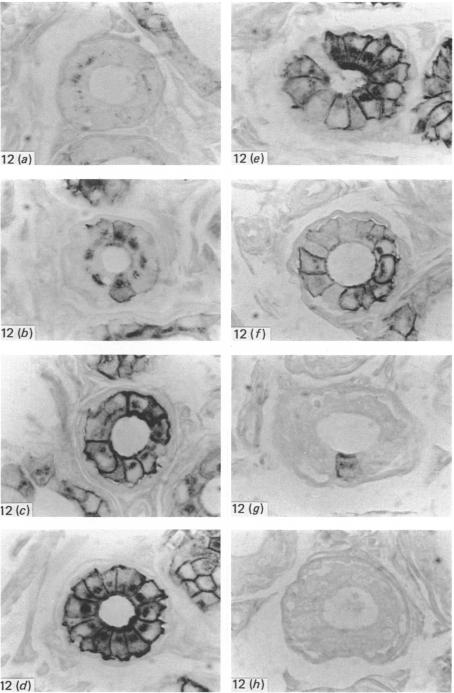
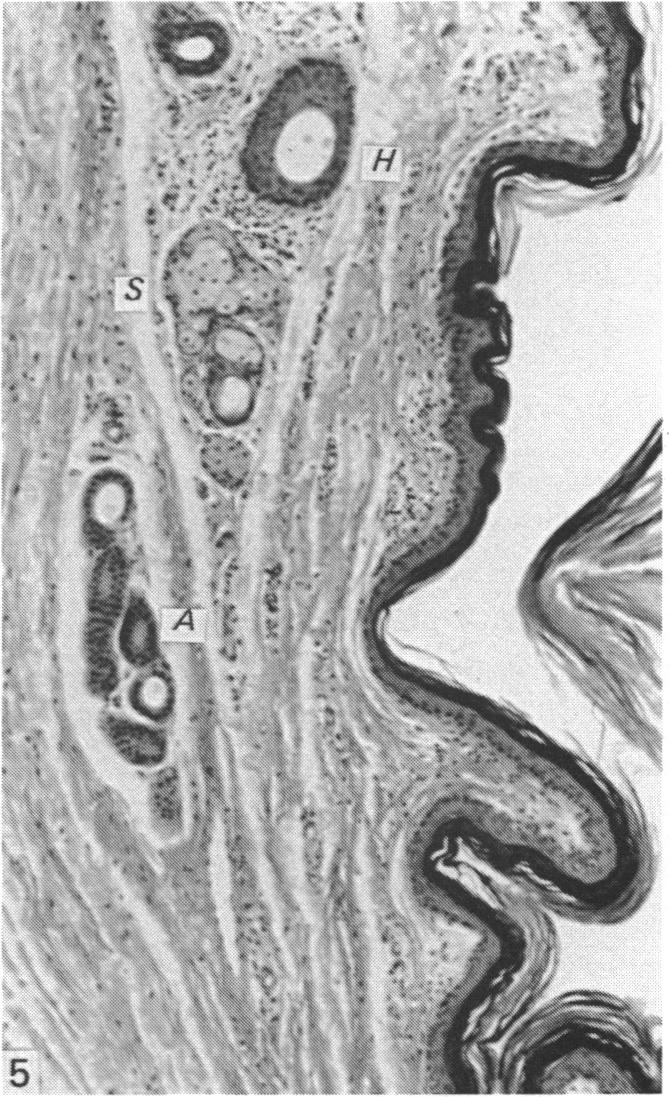
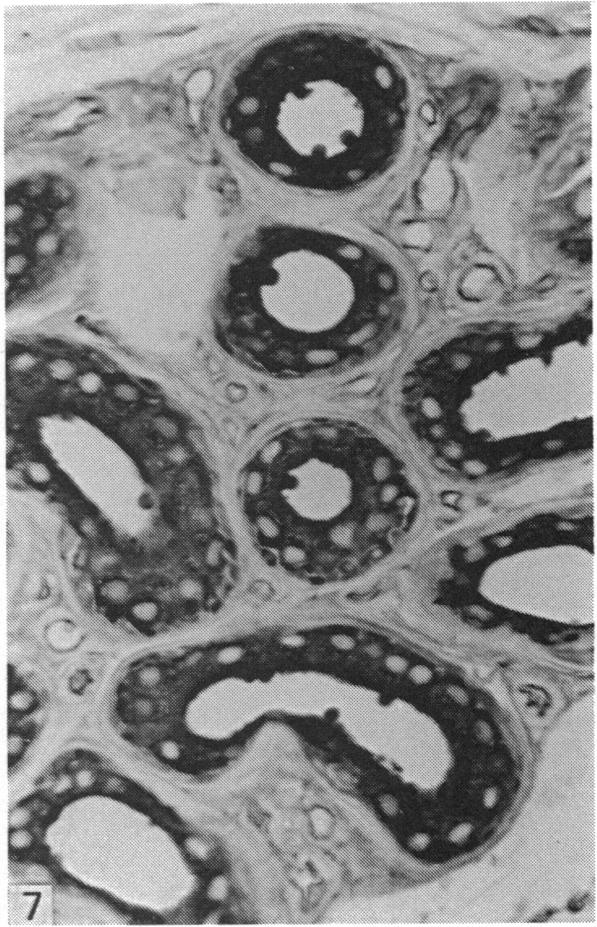
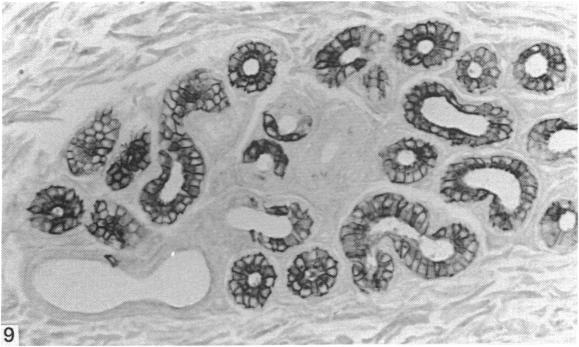
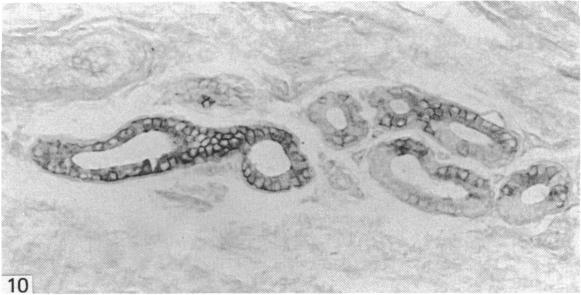
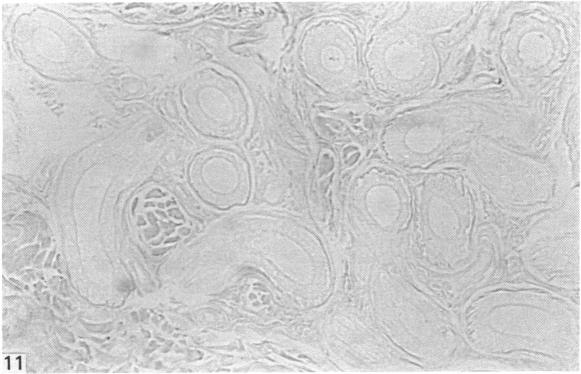
The interdigital gland of the Japanese serow was examined by histological and lectin histochemical techniques. The gland is composed of a thin-walled pouch and a duct. Both regions contain sebaceous and apocrine glands, but the development of each component was significantly less marked than those of the skin in the region. In particular, only a small amount of sebaceous and apocrine glandular elements was found in the pouch, although they were more abundant in the duct. Histochemical staining of the sebaceous and apocrine glands showed similar reactions to six lectins except for UEA in the interdigital gland and digital surface skin. UEA reacted with the apocrine part of the interdigital gland, but not with the gland in the digital surface skin. In addition, tubules in the apocrine gland revealed eight different staining patterns with UEA. These stainings possibly represent a cyclic activity of glandular tubules and suggest that the apocrine portion of the interdigital gland has a different function from that of the body skin.
采用组织学和凝集素组织化学技术对日本鬣羚的指间腺进行了研究。该腺体由一个薄壁囊袋和一条导管组成。两个区域均含有皮脂腺和顶泌汗腺,但各组成部分的发育明显不如该区域皮肤的发育显著。特别是,尽管导管中的皮脂腺和顶泌汗腺成分较多,但在囊袋中仅发现少量此类腺性成分。除了在指间腺和指面皮肤中对荆豆凝集素(UEA)的反应外,皮脂腺和顶泌汗腺的组织化学染色对六种凝集素显示出相似的反应。UEA与指间腺的顶泌部分发生反应,但不与指面皮肤中的腺体发生反应。此外,顶泌汗腺中的小管对UEA显示出八种不同的染色模式。这些染色可能代表腺性小管的周期性活动,并表明指间腺的顶泌部分具有与身体皮肤不同的功能。