Jantrapirom Salinee, Piccolo Luca Lo, Pruksakorn Dumnoensun, Potikanond Saranyapin, Nimlamool Wutigri
Department of Pharmacology, Faculty of Medicine, Chiang Mai University, Muang, Chiang Mai 50200, Thailand.
Omics Center for Health Science, Faculty of Medicine, Chiang Mai University, Muang, Chiang Mai 50200, Thailand.
Cancers (Basel). 2020 Jun 15;12(6):1586. doi: 10.3390/cancers12061586.
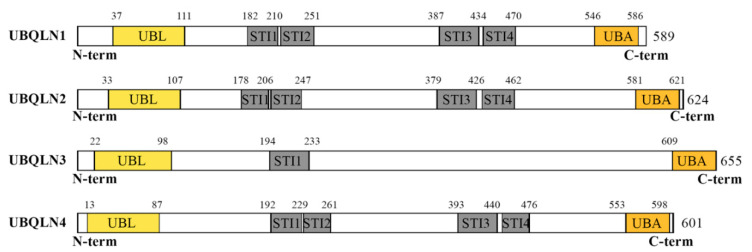
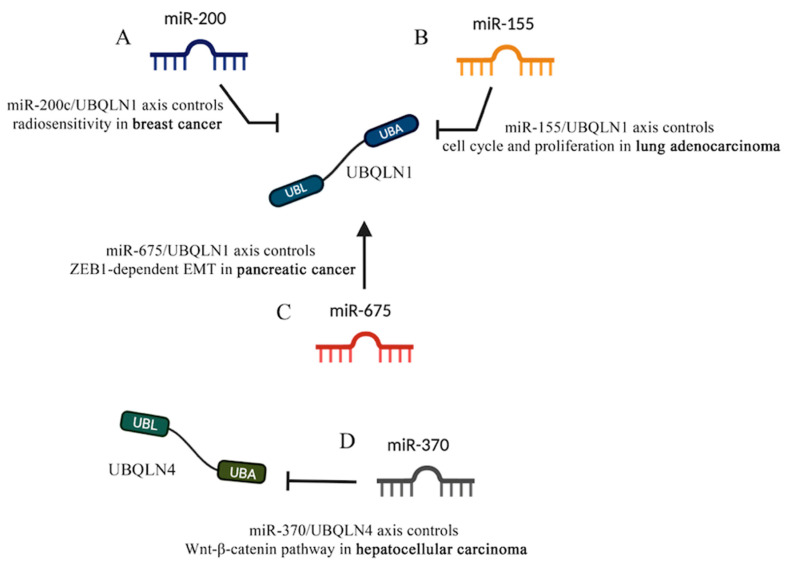
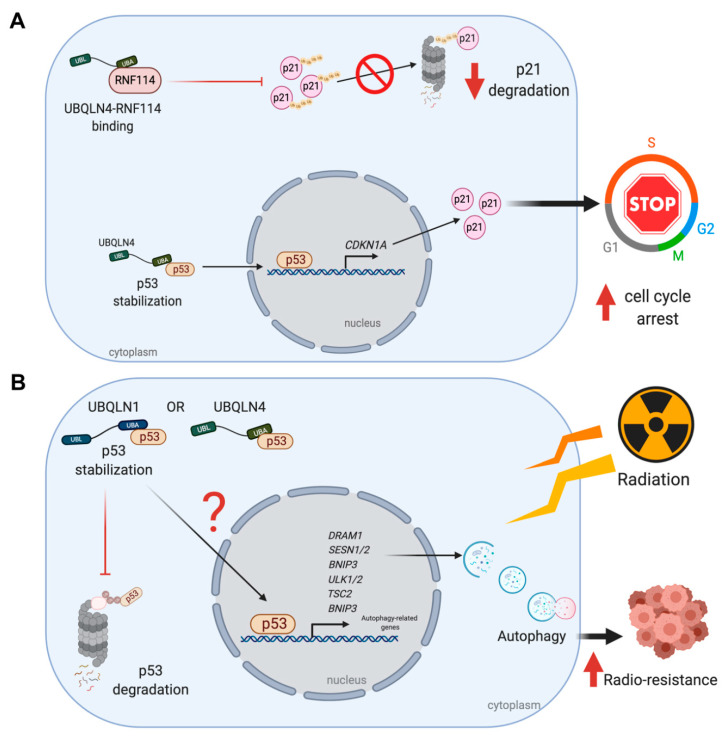
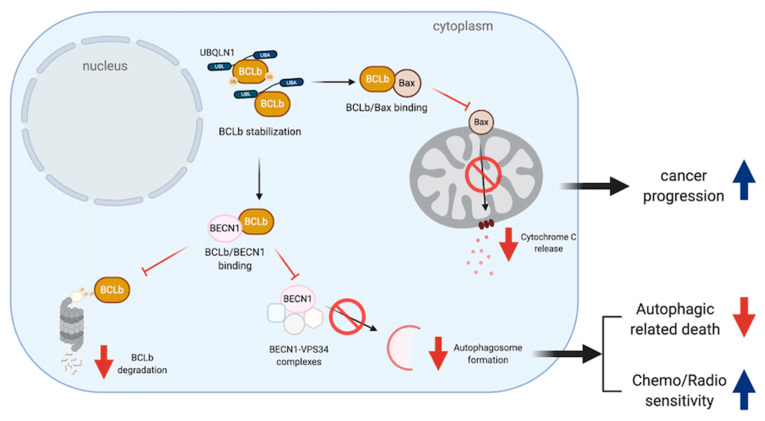
Ubiquilins or UBQLNs, members of the ubiquitin-like and ubiquitin-associated domain (UBL-UBA) protein family, serve as adaptors to coordinate the degradation of specific substrates via both proteasome and autophagy pathways. The UBQLN substrates reveal great diversity and impact a wide range of cellular functions. For decades, researchers have been attempting to uncover a puzzle and understand the role of UBQLNs in human cancers, particularly in the modulation of oncogene's stability and nucleotide excision repair. In this review, we summarize the UBQLNs' genetic variants that are associated with the most common cancers and also discuss their reliability as a prognostic marker. Moreover, we provide an overview of the UBQLNs networks that are relevant to cancers in different ways, including cell cycle, apoptosis, epithelial-mesenchymal transition, DNA repairs and miRNAs. Finally, we include a future prospective on novel ubiquilin-based cancer therapies.
泛素连接蛋白(Ubiquilins,简称UBQLNs)是泛素样和泛素相关结构域(UBL-UBA)蛋白家族的成员,作为衔接蛋白,通过蛋白酶体和自噬途径协调特定底物的降解。UBQLN的底物具有高度多样性,并影响广泛的细胞功能。几十年来,研究人员一直试图解开一个谜团,了解UBQLNs在人类癌症中的作用,特别是在调节癌基因稳定性和核苷酸切除修复方面的作用。在这篇综述中,我们总结了与最常见癌症相关的UBQLNs基因变异,并讨论了它们作为预后标志物的可靠性。此外,我们概述了以不同方式与癌症相关的UBQLNs网络,包括细胞周期、细胞凋亡、上皮-间质转化、DNA修复和微小RNA。最后,我们展望了基于新型泛素连接蛋白的癌症治疗的未来前景。