Li Jindong, Ling Ya, Yin Shengnan, Yang Shufang, Kong Min, Li Zhiqin
Department of Pharmacy, Hospital Affiliated 5 to Nantong University, Taizhou People's Hospital, Taizhou, Jiangsu 225300, P.R. China.
Department of Pharmacy, The First Affiliated Hospital of Soochow University, Suzhou, Jiangsu 215006, P.R. China.
Exp Ther Med. 2020 Jul;20(1):367-374. doi: 10.3892/etm.2020.8701. Epub 2020 Apr 29.
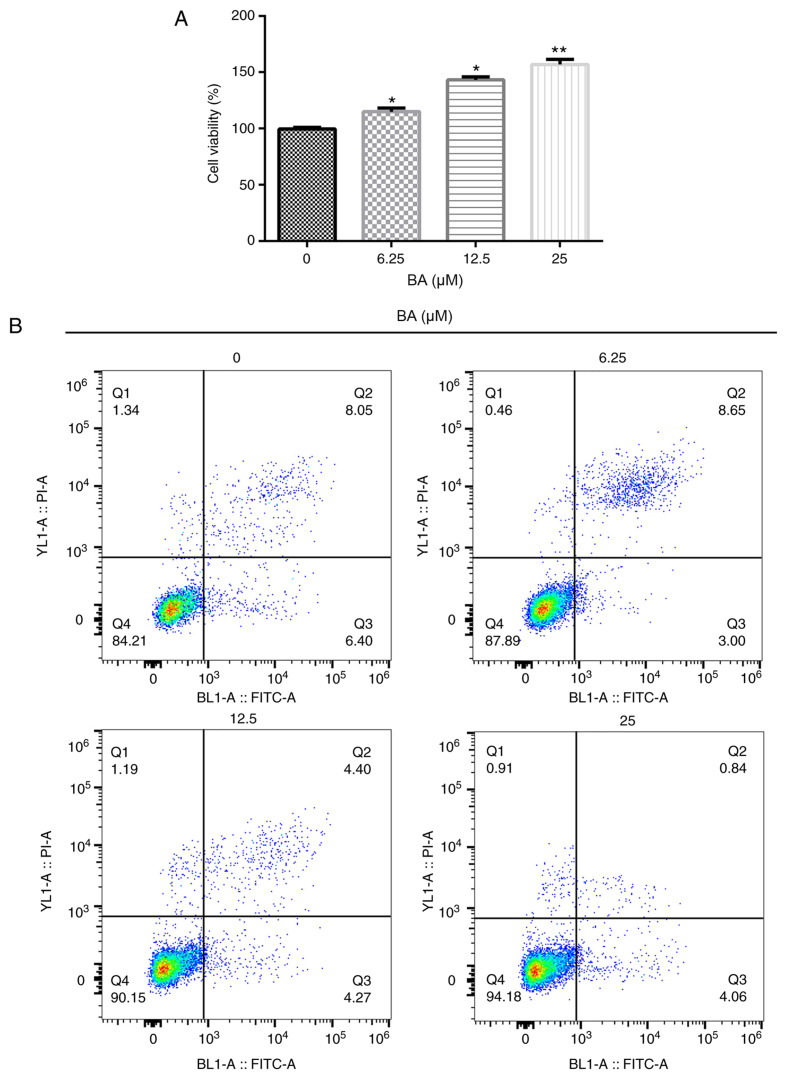
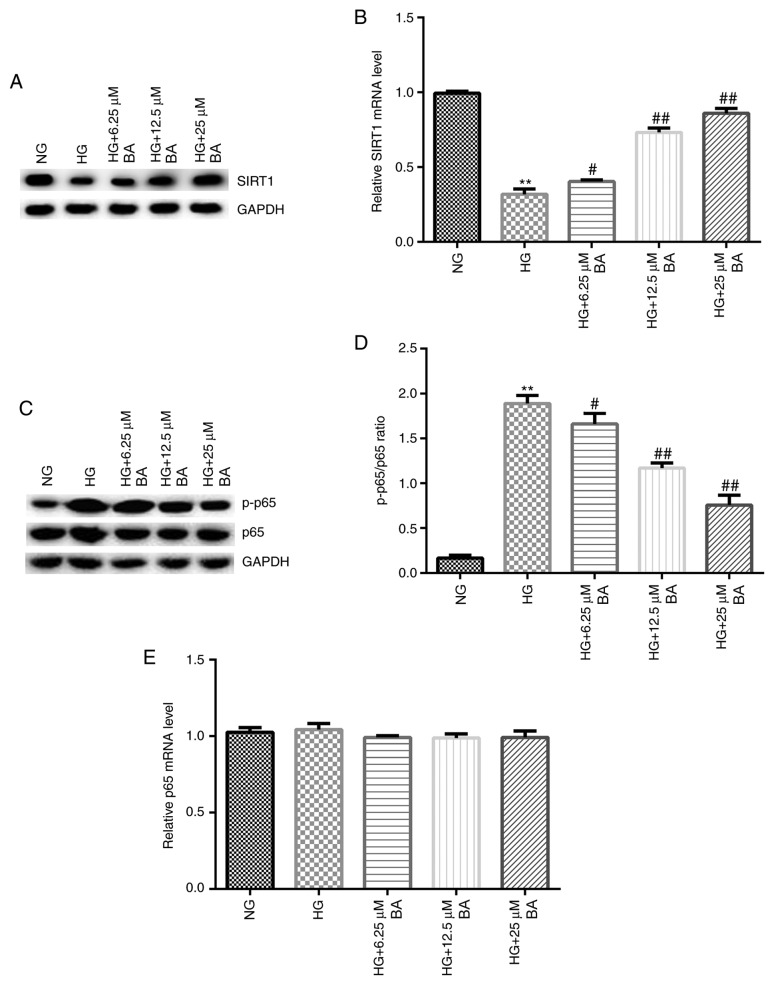
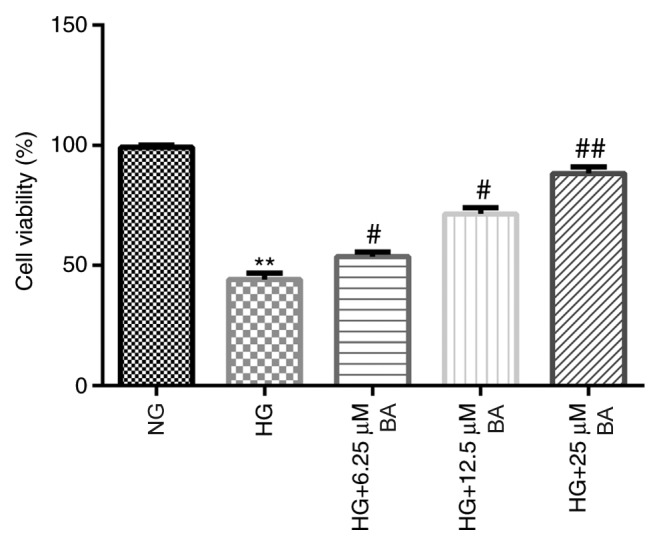
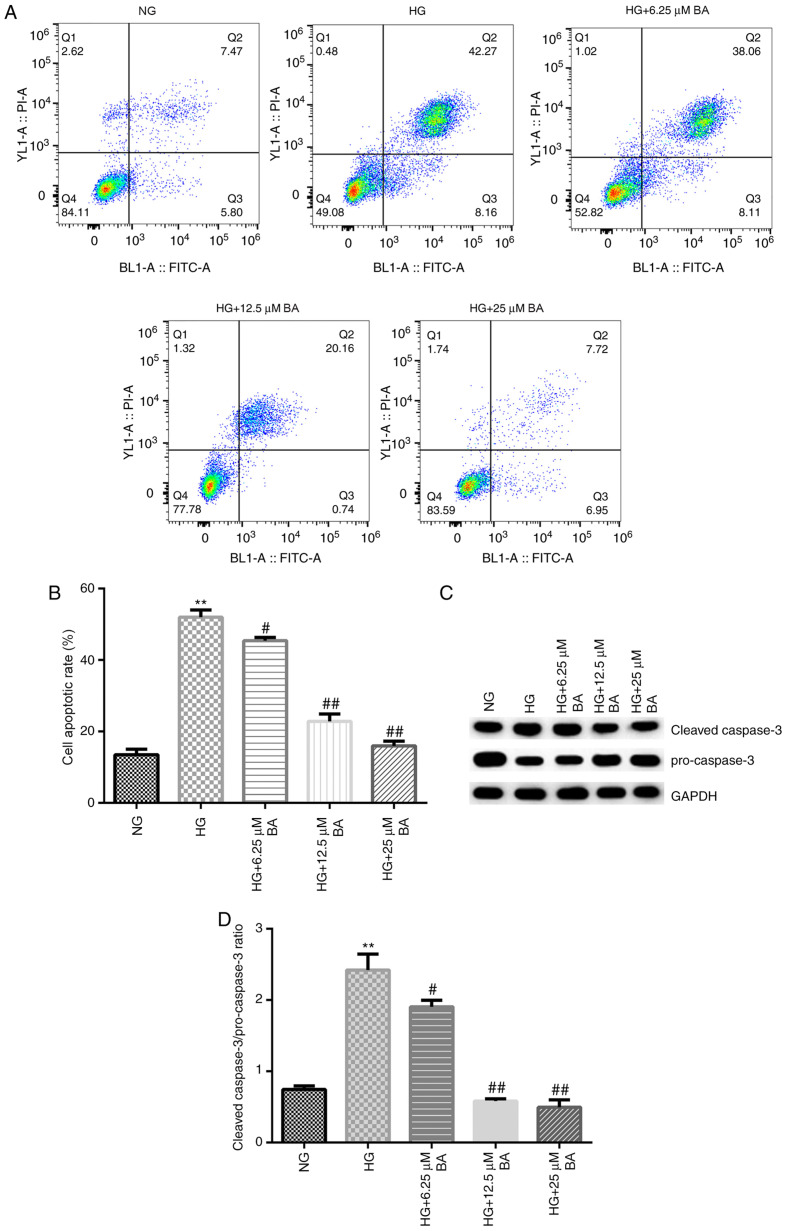
Diabetic nephropathy (DN) is one of the late complications of diabetes, which seriously affects the lives of patients. Baicalin (BA) is a flavone glycoside that has been identified to improve renal function in patients with DN. The present study aimed to investigate the roles and mechanisms of BA in DN. For that purpose, podocytes were cultured for 48 h under conditions of high glucose (HG; 30 mM D-glucose) or normal glucose (NG; 5 mM D-glucose). Then, the cells were treated with different concentrations of BA (6.25, 12.5 and 25 µM) for 24 h. Cell viability and apoptosis were determined using an MTT assay and flow cytometry, respectively. Protein and mRNA expression levels were analyzed using western blotting and reverse transcription-quantitative PCR, respectively. BA treatment was identified to promote the viability of podocytes and suppress cell apoptosis in a dose-dependent manner. Compared with the results in the NG group, HG stimulation significantly decreased the viability of podocytes and increased the apoptotic rate, whereas BA treatment following HG stimulation increased the viability of podocytes and decreased the apoptotic rate. Moreover, the effect of BA was revealed to be associated with the sirtuin 1/NF-κB signaling pathway in DN. In conclusion, the results of the present study suggested that BA treatment may significantly decrease HG-induced podocyte apoptosis, which indicated that BA might be a promising agent for DN treatment.
糖尿病肾病(DN)是糖尿病的晚期并发症之一,严重影响患者的生活。黄芩苷(BA)是一种黄酮苷,已被证实可改善DN患者的肾功能。本研究旨在探讨BA在DN中的作用及机制。为此,将足细胞在高糖(HG;30 mM D-葡萄糖)或正常葡萄糖(NG;5 mM D-葡萄糖)条件下培养48小时。然后,用不同浓度的BA(6.25、12.5和25 μM)处理细胞24小时。分别使用MTT法和流式细胞术测定细胞活力和凋亡情况。分别使用蛋白质印迹法和逆转录-定量PCR分析蛋白质和mRNA表达水平。结果表明,BA处理可促进足细胞活力并以剂量依赖方式抑制细胞凋亡。与NG组结果相比,HG刺激显著降低了足细胞活力并增加了凋亡率,而HG刺激后进行BA处理则增加了足细胞活力并降低了凋亡率。此外,BA的作用被发现与DN中的沉默调节蛋白1/NF-κB信号通路有关。总之,本研究结果表明,BA处理可能显著降低HG诱导的足细胞凋亡,这表明BA可能是一种有前途的DN治疗药物。