Kasraeian Maryam, Hessami Kamran, Vafaei Homeira, Asadi Nasrin, Foroughinia Leila, Roozmeh Shohreh, Bazrfashan Khadije
Maternal-Fetal Medicine Research Center, Shiraz University of Medical Sciences, Shiraz, Iran.
Student Research Committee, Shiraz University of Medical Sciences, Shiraz, Iran.
Gynecol Oncol Rep. 2020 Jun 5;33:100596. doi: 10.1016/j.gore.2020.100596. eCollection 2020 Aug.
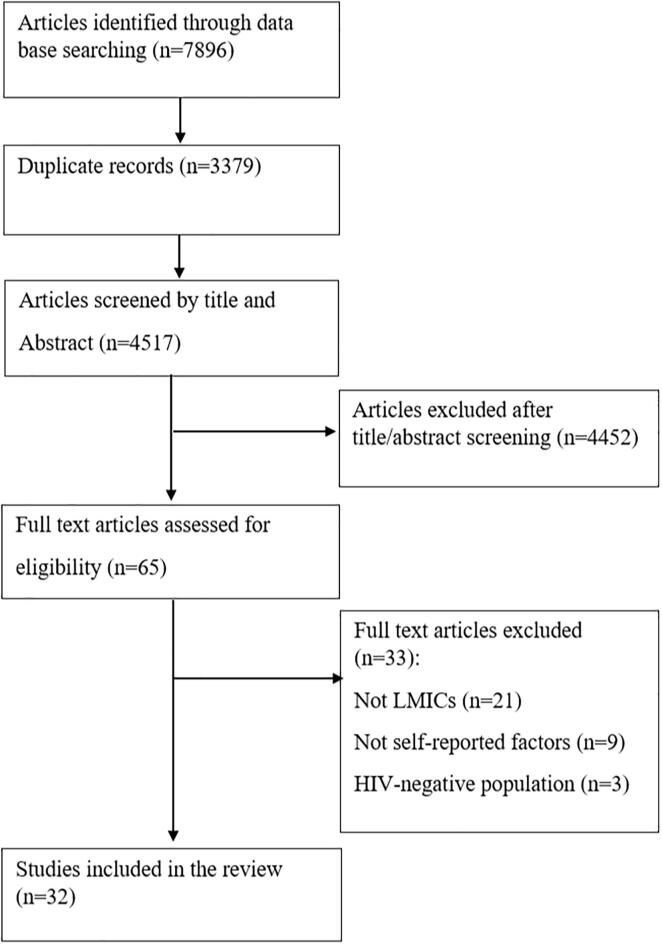
Cervical cancer is among the most common causes of cancer-related deaths in low- and middle-income countries (LMICs). Despite the strong evidence regarding cervical cancer screening cost-effectiveness, its utilization remains low especially in high risk populations such as HIV-positive women. The aim of this review was to provide an overview on the patient-reported factors influencing cervical cancer screening uptake among HIV-positive women living in LMICs. We systematically searched EMBASE, PUBMED/MEDLINE and Web of Science databases to identify all quantitative and qualitative studies investigating the patient-reported barriers or facilitators to cervical cancer screening uptake among HIV-positive population from LMICs. A total of 32 studies met the inclusion criteria. A large number of barriers/facilitators were identified and then grouped into three categories of personal, social and structural variables. However, the most common influential factors include knowledge and attitude toward cervical cancer or its screening, embarrassment, fear of cervical cancer screening and test results, patient-healthcare provider relationship, social support, screening costs and time constraints. This review's findings highlighted the need for multi-level participation of policy makers, health professionals, patients and their families in order to overcome the barriers to uptake of cervical cancer screening among HIV-positive women, who are of special concern in LMICs.
宫颈癌是低收入和中等收入国家(LMICs)癌症相关死亡的最常见原因之一。尽管有充分证据表明宫颈癌筛查具有成本效益,但其利用率仍然很低,尤其是在艾滋病毒阳性女性等高风险人群中。本综述的目的是概述影响LMICs地区艾滋病毒阳性女性接受宫颈癌筛查的患者报告因素。我们系统检索了EMBASE、PUBMED/MEDLINE和科学网数据库,以识别所有调查LMICs地区艾滋病毒阳性人群接受宫颈癌筛查的患者报告障碍或促进因素的定量和定性研究。共有32项研究符合纳入标准。识别出大量障碍/促进因素,然后将其分为个人、社会和结构变量三类。然而,最常见的影响因素包括对宫颈癌或其筛查的知识和态度、尴尬、对宫颈癌筛查和检测结果的恐惧、患者与医护人员的关系、社会支持、筛查成本和时间限制。本综述的结果强调,政策制定者、卫生专业人员、患者及其家庭需要多层次参与,以克服LMICs地区特别关注的艾滋病毒阳性女性接受宫颈癌筛查的障碍。